

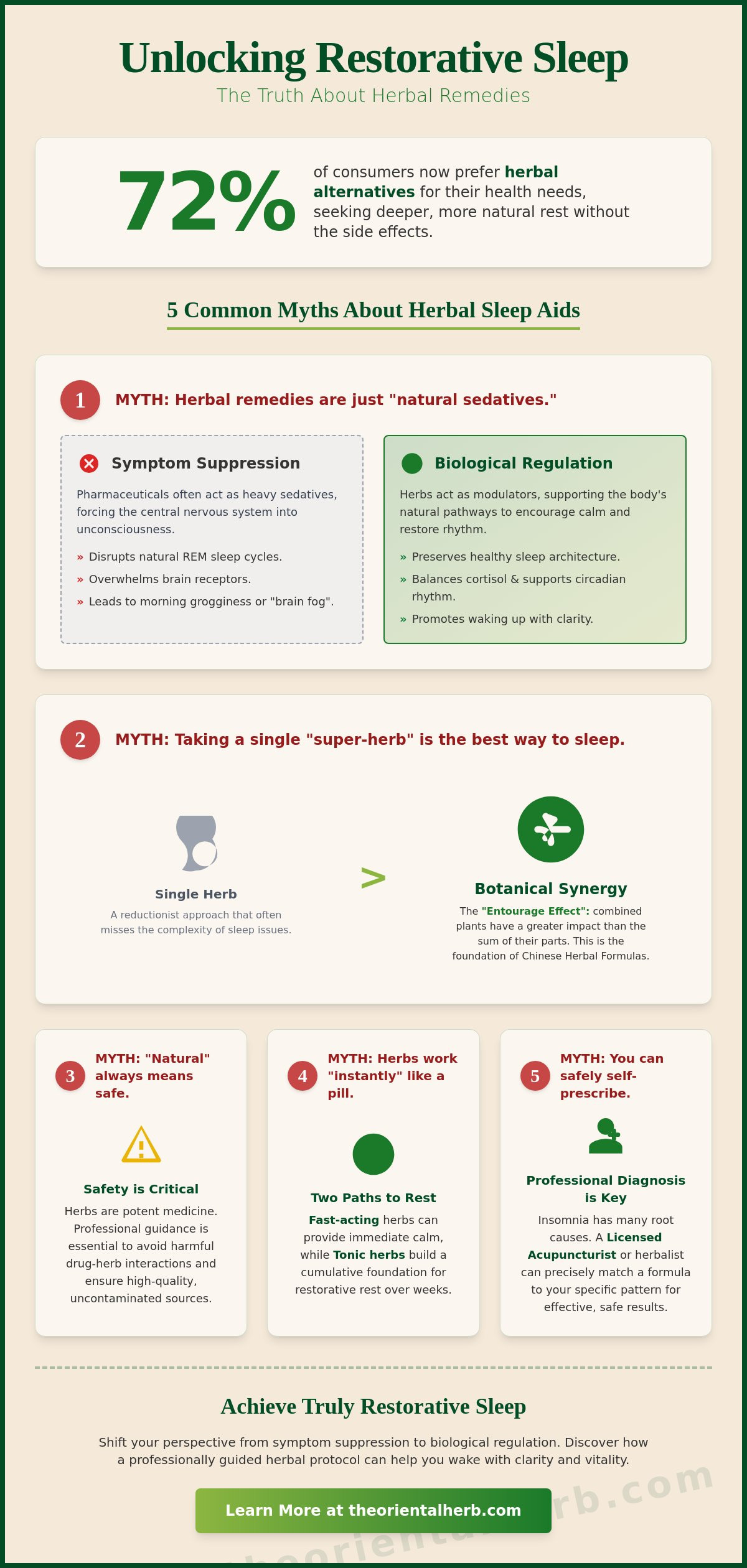
If you believe a heavy sedative is the only path to a full night of rest, you might be sacrificing your long-term vitality for a few hours of artificial unconsciousness. It’s a common struggle for those who feel trapped between the exhaustion of insomnia and the heavy, groggy “brain fog” that follows a night of melatonin or pharmaceutical aids. This experience is shared by many seekers of natural health; indeed, recent research indicates that 72% of consumers now prefer herbal alternatives for their health needs. Finding the right herbal remedies for sleep requires moving past marketing noise to understand how specific plants actually interact with your nervous system.
We agree that the fear of dependency and the confusion over which botanical fits your specific type of restlessness can be overwhelming. This article will clarify the scientific reality behind botanical sleep aids and demonstrate how professional herbal synergy provides a deeper, more restorative rest than simple over-the-counter sedatives. We’ll examine the mechanisms of plant-medicine interactions, debunk five persistent myths from 2026, and help you identify high-quality herbal sources serving the Fort Lee and Cliffside Park communities. You’ll gain the clarity needed to achieve truly restorative sleep without the morning haze.
Key Takeaways
- Shift your perspective from symptom suppression to biological regulation by understanding how plants support the nervous system rather than merely inducing sedation.
- Explore the concept of botanical synergy, where professional formulations utilize the “entourage effect” to provide more comprehensive results than single-herb supplements.
- Identify the critical safety requirements for using herbal remedies for sleep, including how to avoid harmful drug-herb interactions with existing medications.
- Learn to differentiate between fast-acting botanical aids and the cumulative benefits of tonic herbs that build a foundation for restorative rest over several weeks.
- Understand the value of professional diagnosis from a Licensed Acupuncturist to ensure your herbal protocol is precisely matched to your specific type of insomnia.
Myth 1: Herbal Remedies for Sleep are Just “Natural Sedatives”
Many people approach botanical aids with the expectation that they will function like a switch, instantly turning off the brain. This perspective often aligns with the medical definition of hypnotics, which focuses on inducing sleep through central nervous system depression. However, viewing herbal remedies for sleep through this narrow lens ignores their true potential. We view herbal medicine not as a tool for symptom suppression, but as a sophisticated system of biological regulation. Rather than forcing the body into a state of unconsciousness, these plants work to restore the internal environment that makes rest possible.
The difference lies in how these substances interact with the GABAergic system. While synthetic sedatives often overwhelm receptors to “knock out” the user, botanicals typically act as modulators. They support the body’s existing pathways, encouraging a state of calm without overriding the brain’s natural architecture. For instance, plants like Ashwagandha don’t function as direct sedatives. Instead, they modulate the stress response by balancing cortisol levels. By lowering the chemical signals of alertness, they allow the body’s innate wisdom to take over and transition into sleep naturally. Our goal is to restore the body’s wisdom, not override it with heavy-handed chemistry.
The Science of Circadian Regulation
Phytochemicals found in specific plants interact directly with the suprachiasmatic nucleus, the brain’s primary timekeeper. This interaction helps realign the body with its natural rhythm. Lavender, for example, contains terpenes like linalool that have been shown to lower heart rate and blood pressure, preparing the neurological landscape for rest. Essentially, sleep-inducing plants function as biochemical signals that encourage the nervous system to shift from a sympathetic “fight or flight” state into a parasympathetic “rest and digest” mode.
Sedation vs. Restoration: Why the Distinction Matters
Choosing herbal remedies for sleep is about more than avoiding chemicals; it’s about preserving the quality of your rest. Pharmaceutical “forced sleep” often disrupts the REM cycle, leaving the individual feeling unrefreshed despite hours of closed eyes. In contrast, professional natural supplements prioritize the preservation of sleep architecture. This ensures that the brain can complete its essential nightly maintenance, such as memory consolidation and metabolic clearing. By facilitating a natural transition rather than a chemical shutdown, these remedies help you wake up with clarity rather than the heavy morning grogginess common with synthetic alternatives.
Myth 2: Taking a Single “Super-Herb” is the Best Way to Sleep
In the quest for better rest, many individuals focus on finding a single “miracle” plant. This reductionist approach, common in retail marketing, suggests that one specific root or leaf can solve every sleep issue. However, the true efficacy of herbal remedies for sleep lies in synergy. This is the principle that the biological impact of combined plants is significantly greater than the sum of their individual parts. This concept is supported by the “Entourage Effect,” where secondary compounds within a plant, or across multiple plants, work to enhance absorption and mitigate potential side effects. While retail brands might highlight a single ingredient, expert opinion on sleep supplements often points out that isolated compounds may lack the complexity needed to address the multifaceted nature of insomnia. For a deeper understanding of why this matters, exploring the differences between chinese herbal formulas vs single herbs reveals how traditional synergistic approaches consistently outperform isolated plant compounds.
The Logic of Chinese Herbal Formulas
Chinese herbalism has refined this synergistic approach over thousands of years. Rather than a single-pill solution, practitioners utilize chinese herbal formulas that follow a strict hierarchy. A “Chief” herb addresses the primary cause of wakefulness, while “Messenger” herbs guide the formula to specific organ systems. Interestingly, adding a digestive herb can improve a sleep blend’s effectiveness by ensuring the body can actually process and assimilate the active phytochemicals. This balanced method prevents the system from becoming overwhelmed by a single high-dose substance, leading to a more sustainable result.
Why Customization Beats “One-Size-Fits-All” Retail Products
The failure of a single herb often stems from a lack of customization. Insomnia is not a universal experience; it manifests in unique biological patterns. For example, “hot” insomnia might involve intense restlessness, night sweats, and a racing mind. In contrast, “cold” insomnia is often characterized by physical fatigue, a sense of depletion, and frequent waking throughout the night. Professional herbalists in Bergen County are trained to identify these distinctions and tailor formulas to these specific states. This level of precision is why professional-grade eastern herbal medicine is superior to generic store-bought capsules found in local pharmacies. Store-bought products use a one-size-fits-all approach that ignores your specific constitution. By matching the formula to your internal environment, we ensure the body returns to a state of equilibrium. If you are seeking a path to rest that honors your unique biology, consider how a personalized herbal protocol can transform your nightly routine.
Myth 3: All Plants and Medicines are Safe Because They are “Natural”
A common misconception in the wellness community is the belief that “natural” is synonymous with “harmless.” While herbal remedies for sleep offer a gentle alternative to synthetic drugs, they contain potent phytochemicals that demand respect. Plants are complex biological factories; their active compounds can exert significant influence over our physiology. Assuming that a botanical product carries no risk simply because it grew from the earth is a fallacy that can lead to unintended health consequences. Understanding the critical distinctions in herbal medicine vs home remedies is essential to making safe, informed choices about your health. The true power of these remedies lies in their correct application, not just their origin.
The primary concern involves drug-herb interactions. Certain botanicals can alter the metabolism of pharmaceutical medications, either intensifying their effects or rendering them less effective. For instance, herbs often used for relaxation may interact poorly with antidepressants or blood thinners. Without professional oversight, a well-intentioned attempt to improve rest could inadvertently complicate existing medical treatments. Additionally, the mass-market supplement industry frequently struggles with the “filler” problem. Low-quality products may contain heavy metals, pesticides, or microbial contaminants that undermine the very health goals you’re trying to reach. The medicine is found in the purity of the source and the precision of the application.
The Importance of Third-Party Testing and Purity
There’s a vast difference between “food-grade” herbs found in grocery store teas and the “medicinal-grade” extracts used in clinical practice. Medicinal-grade products undergo rigorous third-party testing to ensure they’re free from contaminants and contain the exact concentration of active ingredients listed on the label. Michael Kim at The Oriental Natural Herbs utilizes strict testing protocols to verify the purity and identity of every batch. To protect your health, use this checklist when evaluating any herbal product:
- Source Transparency: Does the company disclose exactly where and how the plants were grown?
- Third-Party Verification: Is there an independent certificate of analysis (COA) available for the batch?
- Standardized Extracts: Are the active compounds measured to ensure consistent potency across every dose?
Dosage: When “More” Becomes Counterproductive
Efficacy in herbalism often follows a bell-shaped curve rather than a linear progression. This means that taking a higher dose doesn’t necessarily result in better sleep; in fact, exceeding the “therapeutic window” can sometimes cause the opposite effect, leading to restlessness or digestive upset. Finding this precise window requires a deep understanding of your unique constitution and the specific potency of the plants involved. Fortunately, Bergen County residents have access to expert dosing through local NJ consultations, ensuring that your protocol is both safe and effective for your specific needs. Professional guidance helps you navigate these complexities so your body can truly heal.
Myth 4: Herbal Remedies for Sleep Work “Instantly” Like a Pill
In a culture that prizes speed, the expectation for immediate results is pervasive. Many mass-market products suggest their formulas help you fall asleep “fast,” but this sets an unrealistic expectation for how botanical medicine interacts with the body. The biological reality of herbal remedies for sleep is far more nuanced. While certain nervines, such as Passionflower, can provide relatively quick relaxation, many of the most profound botanical aids require a specific “loading time.” These substances don’t simply override your brain chemistry; they work to rebuild and support the body’s natural regulatory systems over time.
Tonic herbs, which are foundational to many effective protocols, operate through a cumulative effect. It’s standard for these plants to take two to four weeks to reach their full therapeutic potential. This deliberate pace allows the herbs to address the root causes of insomnia, such as kidney yin deficiency, rather than merely masking the symptoms of restlessness. By nourishing the body at a foundational level, we allow the nervous system to relearn how to down-regulate naturally. This transition demands a measure of patience, but it leads to a more sustainable and authentic form of rest that a single pill cannot provide.
Tracking Your Progress with Botanical Medicine
When you begin a new protocol, we suggest you don’t focus solely on the clock. Instead, look for “quality of life” markers that indicate your system is returning to balance. You might notice a decrease in daily anxiety or an improvement in your digestion before your sleep patterns fully shift. Keeping a sleep-herb journal is an excellent way to monitor these subtle changes in energy and mood. Consistency is vital, as the long-term benefits of sustained oriental herbal supplements use include a more resilient stress response and improved overall vitality.
Integrating Herbs with Sleep Hygiene
It’s vital to view herbs as powerful allies rather than total replacements for healthy habits. A dark, cool room and a break from digital screens remain essential components of a restorative environment. The simple ritual of tea-making can also serve as a potent psychological cue, signaling to your brain that it’s time to transition into a state of rest. Local NJ clients, particularly those managing the high-pressure lifestyles of North Bergen or Teaneck, find that integrating these rituals helps them create a necessary boundary between the workday and the night. If you’re ready to move beyond quick fixes and build a foundation for lasting health, consult with our herbal experts today to find a formula tailored to your needs.
Myth 5: You Can Safely Self-Prescribe Complex Sleep Formulas
The convenience of digital advice has led many to believe that a quick search is sufficient for managing chronic insomnia. While an online search for herbal remedies for sleep may yield a list of popular plants, it cannot account for your unique physiological state. Self-prescribing often results in mismatched formulas that are either ineffective or, in some cases, counterproductive to your health goals. True healing requires more than a generic list; it demands a professional assessment of your body’s specific needs. Relying on “Dr. Google” frequently leads to a cycle of trial and error that leaves the seeker more exhausted than when they began.
A Licensed Acupuncturist and Diplomate of Oriental Medicine serves as a vital guide in this process. These professionals undergo extensive clinical training to understand the complex interactions between various botanicals and the human nervous system. During a consultation, the practitioner utilizes traditional diagnostic methods to identify the underlying cause of your wakefulness. This diagnostic precision ensures that the “why” behind your insomnia is addressed, whether it stems from emotional stress, digestive disharmony, or a deeper systemic depletion. We act as a stable bridge between ancient wisdom and the demanding pace of modern life.
The diagnostic process involves more than just a conversation about symptoms. Tongue and pulse reading are ancient yet precise tools that reveal internal imbalances a search engine cannot detect. By observing the color and coating of the tongue and the quality of the radial pulse, a trained herbalist can determine if your sleep issues are caused by excess heat, blood deficiency, or stagnant energy. This level of insight allows for a protocol that supports your entire system rather than just masking the inability to rest. Understanding the foundational principles behind chinese herbal formulas vs single herbs can further clarify why a professionally crafted multi-herb protocol addresses these complex patterns far more effectively than any single-ingredient supplement.
Professional Herbal Consultation in Bergen County
Residents of Northern New Jersey, including those in Fort Lee, Cliffside Park, Ridgefield, and Teaneck, have access to high-level clinical expertise right in their community. An in-person visit to Michael Kim at The Oriental Natural Herbs allows for a level of personalization that is impossible to achieve through a retail purchase. By analyzing your physical signs, he can craft a custom protocol that targets your specific imbalances. A custom-blended formula is safer and significantly more effective than a generic “sleep” bottle because it’s designed for your body alone. This tailored approach minimizes the risk of side effects while maximizing the restorative potential of herbal remedies for sleep.
Your Journey to Restorative Health Starts Here
We have moved from the skepticism of simple sedatives to the empowered understanding of biological regulation and herbal synergy. By debunking these common myths, you can now make informed decisions about your lifestyle and well-being. Our practice remains dedicated to providing the public with stable, knowledgeable guidance that honors both tradition and practical needs. Restorative sleep isn’t a luxury; it’s a foundation for long-term health and community vitality. Your path to a deeper rest begins with a commitment to professional, personalized care.
Consult with Michael Kim for a Personalized Sleep Protocol
Cultivating Lasting Vitality Through Restorative Sleep
The journey toward restorative health requires moving beyond the myths of instant, one-size-fits-all solutions. We’ve explored how herbal remedies for sleep function as sophisticated regulators of the nervous system rather than mere sedatives. By prioritizing botanical synergy and professional diagnosis, you can achieve a deeper state of rest that preserves your cognitive clarity and overall vitality. This transition from symptom suppression to biological harmony is a foundational step in maintaining long-term wellness and community health.
Since 1995, Michael Kim, a Licensed Acupuncturist with over 30 years of clinical experience, has served as a dedicated mentor for those seeking natural health solutions. Our practice combines deep expertise in Traditional Chinese Medicine with a commitment to the modern needs of our neighbors in Fort Lee, Cliffside Park, and the Greater Bergen County area. We invite you to move past the confusion of self-prescription and embrace a protocol tailored to your unique constitution. Book a Consultation with Michael Kim at The Oriental Natural Herbs to begin your path toward sustainable, restorative rest. Your body possesses an innate wisdom; we’re here to help you restore it.
Frequently Asked Questions
How exactly are plants and medicines used to treat chronic insomnia?
Plants and medicines treat chronic insomnia by regulating the body’s internal systems rather than simply inducing sedation. These botanicals often work by modulating the GABAergic system or balancing cortisol levels to reduce the physiological signals of stress. By addressing these root imbalances, the nervous system can transition into rest naturally. This systemic approach helps restore the body’s innate ability to maintain a healthy sleep cycle over time.
Is it safe to take herbal remedies for sleep every single night?
The safety of nightly use depends entirely on the specific botanical and your unique constitution. While tonic herbs are designed for cumulative support over several weeks, certain sedative herbs are intended only for short-term relief during acute restlessness. Utilizing herbal remedies for sleep under the guidance of a professional ensures that your protocol remains sustainable. This oversight prevents the system from becoming overly dependent on a single substance while maintaining biological balance.
Can I use herbal sleep aids if I am already taking prescription medication?
Using botanical aids alongside prescription medication requires extreme caution due to the risk of drug-herb interactions. Certain plants can interfere with the metabolism of pharmaceuticals, particularly blood thinners or antidepressants, by either amplifying or reducing their intended effects. Consequently, it is vital to consult with a Licensed Acupuncturist before combining treatments. A professional assessment ensures that your herbal protocol supports your health without compromising the efficacy of your current medications.
How long does it take for a customized herbal formula to start working?
A customized formula typically requires two to four weeks to achieve its full therapeutic potential, although some nervines may provide relaxation within hours. This “loading time” allows the phytochemicals to address deep-seated imbalances rather than just masking symptoms. While the transition may feel gradual, it results in a more resilient nervous system. Consistency is the most important factor in allowing these botanical compounds to rebuild the body’s natural regulatory pathways.
What is the difference between a single herb and a synergistic formula?
A single herb provides a concentrated dose of one plant’s compounds, whereas a synergistic formula combines multiple plants to enhance efficacy and reduce side effects. This method utilizes the “entourage effect,” where secondary compounds work together to improve absorption and biological impact. In traditional practice, formulas are structured with Chief and Messenger herbs to target specific organ systems. This complexity ensures a more balanced and comprehensive approach to restoring the body’s natural equilibrium.
Are the herbs at The Oriental Natural Herbs tested for heavy metals and purity?
Every botanical provided at The Oriental Natural Herbs undergoes rigorous third-party testing to ensure it meets medicinal-grade standards for purity and potency. These testing protocols specifically screen for heavy metals, pesticides, and microbial contaminants that are often found in mass-market supplements. By verifying the identity and concentration of active ingredients, we provide a safe and reliable source for our community. This commitment to quality ensures that every formula contributes positively to your long-term vitality.
Do I need a consultation to buy medicinal-grade herbs in Bergen County?
A professional consultation is required to access medicinal-grade herbal remedies for sleep to ensure the formula is precisely matched to your needs. Because these potent substances can significantly affect your physiology, a proper diagnosis via tongue and pulse reading is necessary for safety. This process allows us to identify the specific pattern of your insomnia. Residents of Fort Lee and Cliffside Park benefit from this personalized oversight, which prevents the risks associated with self-prescription.
Can herbal remedies help with sleep issues caused by acid reflux or anxiety?
Herbal protocols are highly effective at addressing secondary issues like acid reflux or anxiety that frequently disrupt the sleep cycle. Rather than treating the insomnia in isolation, we select plants that soothe the digestive tract or calm the heart to remove the barriers to rest. This holistic perspective recognizes that sleep quality is often a reflection of overall systemic harmony. By resolving these underlying discomforts, the body can finally achieve the deep and restorative rest it requires.