
True herbal medicine isn’t just a collection of “green pills” designed to suppress symptoms; it’s a sophisticated, ancient system of restoring biological balance through the complex synergy of plants. As the global market for these natural remedies is projected to reach $271.14 billion in 2026, it’s clear that more individuals are seeking alternatives to conventional protocols. You might feel a deep frustration with the lingering side effects of standard pharmaceuticals or find yourself paralyzed by the contradictory information circulating online. It’s understandable to worry about the safety of products, especially as regulatory updates like the 2026 European Medicines Agency guidelines continue to shape the industry standards for traditional preparations.
We recognize your desire for a health path that respects both historical wisdom and modern scientific rigor. This guide will empower your journey toward natural vitality by providing a clear framework for understanding how plant-based systems function. You’ll learn to distinguish between various herbal traditions, gain the skills to identify high-quality remedies, and discover how to connect with a trusted local expert. By the end of this article, you’ll have a methodical approach to integrating these ancient practices into your contemporary lifestyle with confidence and purpose.
Key Takeaways
- Distinguish between the symptomatic focus of Western botanicals and traditional systems that seek to harmonize the body’s internal environment.
- Understand the physiological role of active compounds such as alkaloids and flavonoids in supporting the body’s natural return to homeostasis.
- Learn the precise methods for identifying high-quality herbal medicine by evaluating species names and concentration ratios on product labels.
- Gain insight into a local legacy of natural healing that has served the Bergen County community with dedication and stability since 1995.
Understanding Herbal Medicine: The Foundation of Natural Vitality
Herbal medicine is the therapeutic application of plant-derived substances to support and enhance physiological function. This practice represents the oldest form of healthcare. It’s rooted in the collective wisdom of ancient civilizations that recognized the environment as a primary source of healing. Today, this tradition has evolved into a sophisticated discipline that informs much of the modern pharmacopeia. Nature provides the blueprint. Distinguishing between terms is essential for any modern seeker. While “botanicals” generally refers to any plant-derived ingredient, “phytomedicines” specifically denotes preparations that have undergone clinical evaluation for therapeutic efficacy. In the United States, the FDA continues to regulate these products under the Current Good Manufacturing Practices as outlined in 21 CFR Part 111, ensuring a baseline of consistency and quality for consumers.
The Resurgence of Botanical Wisdom in 2026
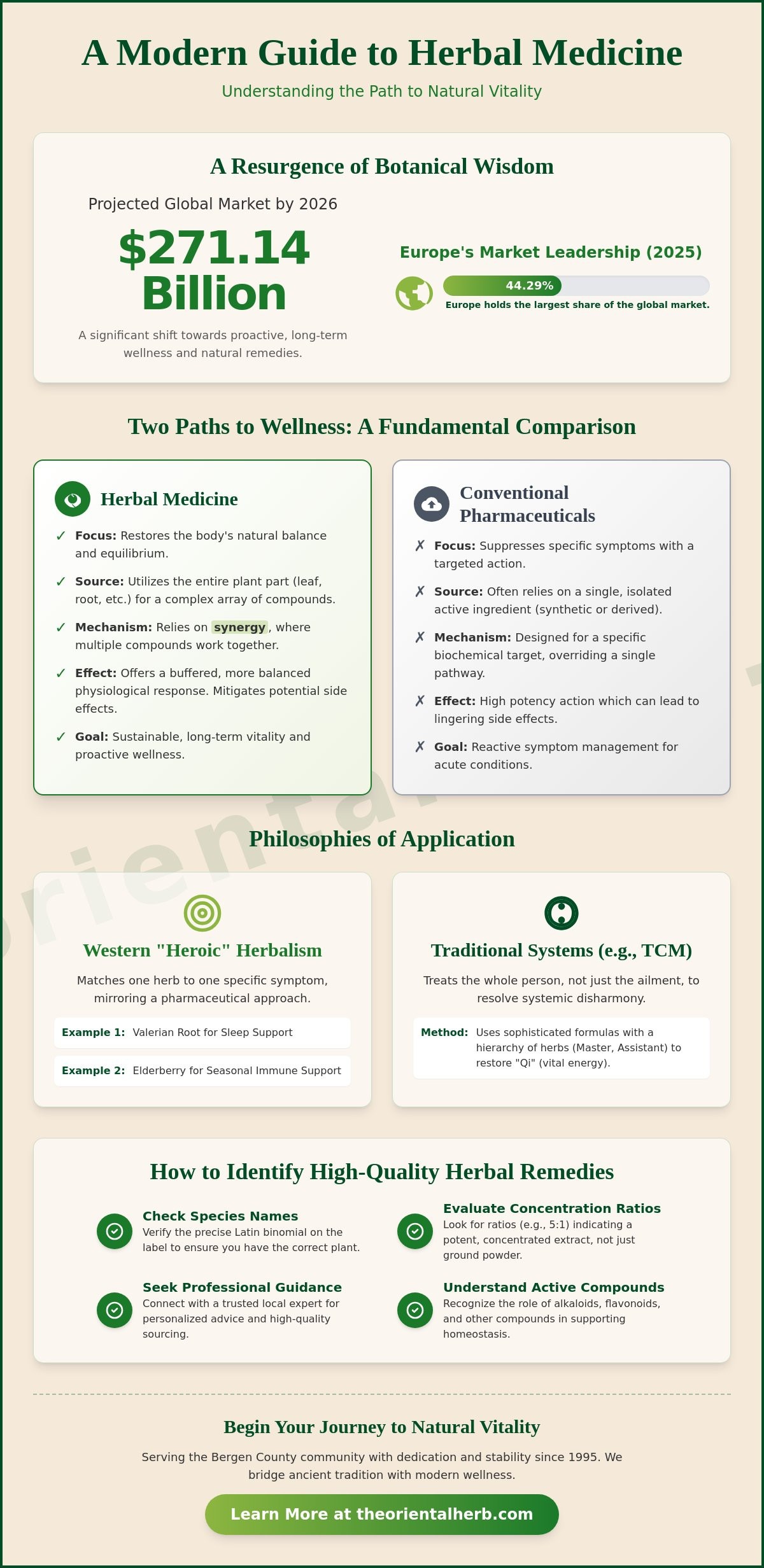
The year 2026 marks a pivotal era for botanical science. Modern technology now allows for the precise validation of ancient claims through advanced phytochemical analysis. Researchers can identify specific molecular pathways influenced by plant compounds with remarkable clarity. This shift signifies a transition from reactive symptom management toward proactive vitality support. Balance is the goal. Consumers are increasingly prioritizing long-term wellness, contributing to a global market projected to reach $271.14 billion this year. Europe currently remains the largest market for these remedies, holding a 44.29% share of the global market as of 2025. Phytotherapy serves as the essential bridge between traditional knowledge and modern clinical application. This renewed focus is supported by recent regulatory updates, such as the 2026 draft revision by the European Medicines Agency regarding the declaration of herbal substances.
Herbal Medicine vs. Conventional Pharmaceuticals
Understanding the fundamental difference between whole-plant extracts and isolated synthetic compounds is crucial for informed health decisions. Conventional pharmaceuticals often rely on a single isolated active ingredient designed for a specific biochemical target. In contrast, Herbal medicine utilizes the entire plant part, preserving a complex array of secondary metabolites. This approach relies on the concept of synergy, where multiple compounds work in concert to improve absorption and mitigate potential side effects. The presence of certain tannins in a leaf might buffer the intensity of an alkaloid. This creates a more balanced physiological response. This method respects the body’s innate complexity rather than attempting to override it with singular, high-potency chemicals. Plants offer complex solutions. By choosing plant-based solutions, individuals often find a more sustainable path toward restoring biological equilibrium and long-term vitality.
The Philosophy of Herbalism: Western Botanicals vs. Traditional Systems
Understanding the application of Herbal Medicine requires looking beyond the product label to the underlying philosophy of the practitioner. The Western “heroic” herbalism model often mirrors the conventional pharmaceutical approach by matching a specific herb to a specific symptom. For instance, a seeker might use valerian root solely for sleep or elderberry specifically for seasonal immune support. While this method is accessible, it differs fundamentally from traditional systems that prioritize constitutional health. These ancient frameworks treat the person rather than the ailment, focusing on the unique biological terrain of the individual to foster long-term natural vitality.
Traditional Chinese Medicine: A Systemic Approach
Traditional Chinese Medicine (TCM) operates on the foundational principle of restoring “Qi,” or vital energy, through the balance of opposing forces. It views the human body as an interconnected landscape where illness is a sign of systemic disharmony. Consequently, TCM rarely relies on single plants. Instead, it utilizes sophisticated formulas where herbs function in a strict hierarchy. A “Master” herb addresses the primary imbalance, while “Assistant” or “Messenger” herbs harmonize the formula and ensure the active compounds reach the intended organ systems. This strategy aims to resolve the root cause of an imbalance instead of merely masking outward signs. To ensure safety and efficacy, seekers should look for the Diplomate of Oriental Medicine credential, which signifies a practitioner has met rigorous national standards for clinical competency. For those in Bergen County, seeking a personalized assessment at The Oriental Natural Herbs can provide a stable bridge to these time-tested methods.
Western Herbalism and Modern Supplements
Modern Western herbalism has increasingly embraced “adaptogens” to address the complexities of 2026 lifestyle stressors. Ingredients such as ashwagandha and turmeric have reached record demand due to their documented ability to support the endocrine system and cognitive health. Traditional Western botanicals like Echinacea and Garlic remain staples for localized support of the immune and cardiovascular systems. In 2026, the powder form of these remedies represents the largest market segment, accounting for 47.2% of global usage. This popularity is driven by the ease of incorporating these plants into daily routines. While Western herbalism offers excellent tools for acute support, it is often more reactive than the systemic approach of Eastern traditions. Choosing the right path depends on whether you require a targeted intervention or a comprehensive strategy for restoring biological equilibrium. Both systems offer significant benefits when used with professional guidance and a commitment to quality.
How Herbal Medicine Supports the Body’s Natural Vitality
The biological efficacy of Herbal Medicine isn’t a matter of folklore; it’s a result of complex chemical interactions within the human body. Plants produce secondary metabolites to protect themselves from environmental stressors like UV radiation or pests. When we consume these plants, these same compounds interact with our endocrine and immune systems to restore homeostasis. Three primary groups of compounds drive these benefits. Alkaloids often provide potent, targeted effects on the nervous system. Flavonoids contribute to vascular health and provide significant antioxidant support. Terpenoids, frequently found in aromatic herbs, help modulate inflammatory responses. These interactions don’t override the body’s natural functions but rather provide the necessary precursors for the body to heal itself.
A common question among modern seekers is whether there’s sufficient evidence that these plants actually work. The answer lies in the growing body of clinical research. With the global herbal supplements market expected to reach $56.97 billion in 2026, scientific validation has become a priority for the industry. Researchers are now documenting how specific plant synergies outperform isolated synthetic compounds in long-term wellness outcomes. However, the form of the herb significantly influences its bioavailability, which is the rate and extent to which the body absorbs the active ingredients. Tinctures offer rapid absorption by bypassing certain digestive hurdles. In contrast, capsules and powders-which account for 47.2% of the global market-provide a steady release of nutrients but rely on robust gut function for optimal efficacy.
The Science of Phytochemistry
Plants develop secondary metabolites as a survival mechanism, creating a diverse pharmacy of therapeutic benefits for humans. The debate between standardized extracts and full-spectrum powders remains central to professional practice. Standardized extracts focus on a specific “marker” compound to ensure consistent potency. Full-spectrum powders maintain the natural ratio of the plant’s constituents, honoring the synergy that prevents side effects. Antioxidants in herbs neutralize oxidative stress on a cellular level by donating electrons to unstable free radicals, thereby preventing damage to DNA and proteins. This cellular protection is the foundation of preventive healthcare.
Nourishing the Systems: Beyond Symptom Relief
Achieving long-term health requires a move away from the “quick fix” mentality prevalent in modern society. While conventional medicine excels at acute intervention, herbal protocols focus on nourishing underlying systems over time. This approach builds immune resilience, stabilizes sleep cycles, and supports digestive health through gradual adjustment. We believe that individual health is the foundation of community vitality. By choosing purposeful, plant-based support, you’re not just masking a symptom; you’re participating in a mission-driven journey toward a more vibrant and balanced life.
Selecting High-Quality Herbal Remedies: A Guide for Local Seekers
The term “natural” is frequently used as a synonym for “safe,” yet this is a dangerous oversimplification in the field of wellness. Selecting high-quality herbal medicine requires a level of scrutiny that goes beyond attractive packaging or clever marketing. Professional sourcing is essential because plants are biological sponges. They can absorb heavy metals from the soil or be contaminated during improper drying processes. For residents in Teaneck and Fort Lee, the abundance of options can be overwhelming. Reading a label correctly is your first line of defense. You must look for the Latin binomial name of the species to ensure you’re receiving the correct plant. A concentration ratio, such as 5:1, indicates that five units of raw botanical were used to create one unit of extract, signifying a potent and effective product.
Buying from unvetted online marketplaces carries significant risks. These platforms often lack the practitioner oversight necessary to ensure that products meet the Current Good Manufacturing Practices (cGMPs) required by the FDA. In 2026, retail prices for many oriental herbal supplements are expected to rise by 18-22% due to supply chain shifts. This economic pressure may lead some vendors to cut corners on purity or substitute inferior species. Those who shop herbal remedies from a stable local resource in Bergen County ensure accountability and a traceable chain of custody for every remedy they consume. This local connection provides a level of transparency that anonymous digital storefronts simply cannot match.
Quality Control and Safety Standards
Safety in herbalism is not a passive state; it’s an active pursuit. High-quality remedies undergo rigorous heavy metal testing and purity certifications to ensure they’re free from lead, arsenic, and pesticides. Specific populations, including those who are pregnant, nursing, or taking prescription medications, must exercise extreme caution. A consultation with a Licensed Acupuncturist (L.Ac.) provides a critical layer of safety. These professionals are trained to identify potential herb-drug interactions that a standard retail clerk might overlook. They act as a knowledgeable filter, ensuring your protocol supports your goals without compromising your existing health plan.
Finding Your Herbal Mentor in Northern New Jersey
For those living in Ridgefield or Englewood, finding a stable and reliable resource is the key to long-term success. A dedicated herbal pharmacy offers more than just products; it provides a relationship based on trust and historical authority. Professional consultations allow for a deep dive into your constitutional health, moving beyond the “one-size-fits-all” approach found in big-box stores. Since 1995, our commitment to the Bergen County community has been rooted in the belief that individual health is a collective responsibility. You deserve a mentor who understands the bridge between ancient tradition and modern safety. To begin your journey toward restorative balance, we invite you to explore the offerings at The Oriental Natural Herbs.
The Oriental Natural Herbs: Bridging Tradition and Modern Wellness
The Oriental Natural Herbs serves as a stable pillar for those seeking biological balance in an increasingly complex wellness market. Since 1995, Michael Kim, L.Ac., has dedicated his career to the earnest practice of natural healing. His mission-driven approach ensures that every client receives professional-grade herbal medicine tailored to their specific health issues. We believe that true health isn’t found in a generic bottle; it’s cultivated through a deep understanding of the body’s unique requirements. This dedication to quality has allowed us to act as a bridge between ancient botanical wisdom and the rigorous safety standards of 2026. Our focus remains on providing stable, knowledgeable expertise that respects tradition while remaining practical for modern applications.
A Legacy of Community Health
Our history is deeply intertwined with the vitality of the Bergen County area. For over three decades, we’ve served residents in Cliffside Park, North Bergen, and the surrounding communities with a steady and purposeful focus on long-term well-being. We don’t view ourselves as simple retailers. Instead, we function as a wise and reliable mentor for individuals who feel overwhelmed by conflicting online health claims or the fear of low-quality products. This historical authority provides a reliable foundation for those making informed lifestyle decisions. Our longevity in the field is a testament to our commitment to community responsibility and the efficacy of the methods we describe. We’ve seen the global market shift, yet our core values of sincerity and quiet confidence in natural solutions have remained unchanged.
Your Next Steps Toward Natural Vitality
Integrating plant-based solutions into your daily routine should be a methodical and deliberate process. It’s best to start with professional guidance to ensure that your chosen path aligns with your current physiological state. A personalized assessment is the most effective way to manage specific health conditions. This process allows for the creation of customized formulas that address root causes rather than just surface symptoms. We provide the clarity needed to navigate the wide array of available herbal medicine options with confidence. You’re invited to experience the benefits of expert-guided herbal medicine at The Oriental Natural Herbs. By taking this step, you’re choosing a partner dedicated to your natural vitality and the collective health of our public. Your journey toward holistic wellness deserves the support of a trusted local resource with a proven legacy of care.
Embracing Your Path to Restorative Balance
Transitioning toward a holistic lifestyle involves a fundamental shift from symptom suppression toward systemic harmony. You’ve learned how herbal medicine serves as a bridge between ancient botanical wisdom and modern scientific validation. By prioritizing professional-grade sourcing and expert oversight, you can navigate your wellness journey with both safety and confidence. This methodical approach to health empowers you to achieve long-term vitality rather than seeking temporary relief. Since 1995, The Oriental Natural Herbs has acted as a stable resource for families across Bergen and Union Counties. Led by Michael Kim, a Licensed Acupuncturist and Diplomate of Oriental Medicine, our practice is deeply rooted in the sophisticated application of Traditional Chinese Medicine (TCM) formulas. We invite you to explore our curated selection of professional-grade herbal medicines to find the support that aligns with your specific needs. Your commitment to natural healing contributes to the collective health of our community. We’re honored to act as your mentor in this pursuit of a balanced and vibrant life.
Frequently Asked Questions
Is herbal medicine safe to take with my prescription medications?
Safety depends on the specific herb and medication, making professional consultation essential. Certain plants can alter how the body metabolizes pharmaceuticals. For example, some herbs might increase or decrease the blood concentration of heart medications or blood thinners. You should always provide a full list of your current prescriptions to a qualified practitioner. This ensures your protocol supports your goals without creating adverse interactions or reducing the efficacy of your standard treatments.
How long does it typically take to see results from herbal remedies?
The timeline for visible results varies based on the chronicity of the condition and your constitutional health. Acute issues might show improvement within hours or days. Chronic imbalances often require several weeks or months of consistent use to achieve a stable return to homeostasis. This methodical approach focuses on nourishing systems rather than providing a temporary “quick fix.” Patience is a fundamental component of achieving long-term natural vitality.
What is the difference between a dietary supplement and a medicinal herb?
The primary difference lies in the regulatory classification and the intended therapeutic application. In the United States, most plant-based products are regulated as dietary supplements under the FDA’s cGMP standards. A medicinal herb usually refers to a botanical used within a specific healing system, such as Traditional Chinese Medicine, to address physiological imbalances. While a supplement might be taken for general wellness, herbal medicine is typically applied with a specific therapeutic goal in mind.
Can I use herbal medicine to treat chronic health issues like acid reflux or hair loss?
Yes, botanical protocols are frequently utilized to address the root causes of long-term imbalances like digestive distress or thinning hair. Instead of merely masking a symptom, these remedies work to restore biological equilibrium. For example, specific herbs can help soothe the esophageal lining or support the endocrine system to manage hormonal factors related to hair health. Success depends on a personalized assessment that considers your unique biological terrain and lifestyle factors.
Do I need a prescription to buy herbs from a traditional Chinese medicine store?
You don’t need a medical prescription to purchase these products, as they’re generally classified as dietary supplements. However, many traditional Chinese medicine stores utilize a practitioner-only model for certain potent formulas. This ensures that you’re using the correct combination of master and assistant herbs for your specific needs. Seeking guidance from a Licensed Acupuncturist helps you avoid the pitfalls of self-diagnosis and ensures you receive a high-quality, professional-grade remedy.
How do I know if the herbal products I buy online are pure and effective?
Verifying purity requires checking for third-party testing and adherence to current Good Manufacturing Practices (cGMPs). Reliable products will clearly list the Latin binomial name and the concentration ratio on the label. You should avoid unvetted marketplaces that don’t provide certificates of analysis for heavy metals or pesticides. Choosing a stable local resource with a long-standing reputation in the community is often the most reliable way to ensure product integrity and professional accountability.
What qualifications should I look for in an herbal medicine practitioner?
You should prioritize practitioners who hold recognized credentials such as Licensed Acupuncturist (L.Ac.) or Diplomate of Oriental Medicine (Dipl. O.M.). These titles signify that the individual has completed rigorous graduate-level training and passed national board examinations. A qualified mentor acts as a bridge between ancient tradition and modern safety standards. Their expertise allows them to create sophisticated herbal medicine formulas that are both effective and appropriate for your individual health profile.
Is herbal medicine appropriate for children or the elderly?
Plant-based remedies can be highly effective for both children and the elderly when dosages are carefully adjusted for age and weight. Pediatric protocols often utilize milder herbs and liquid formats for ease of administration. For the elderly, practitioners must pay close attention to potential interactions with existing medications and the body’s changing metabolic rate. Professional oversight is vital for these sensitive populations to ensure the remedies support natural vitality without causing undue stress on the system.