
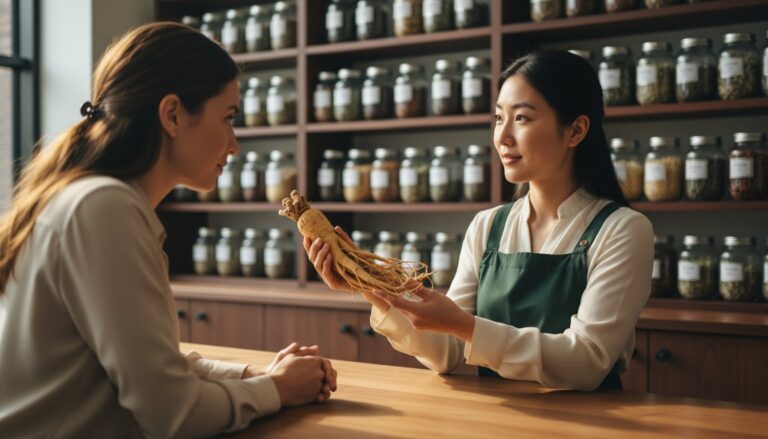
The most important ingredient in your herbal medicine isn’t actually in the bottle; it’s the professional expertise of the practitioner who recommended it. As the global herbal market is projected to reach $257.17 billion in 2026, many seekers who shop herbal remedies face a complex marketplace of mass-produced products and shifting regulations. It’s natural to feel concerned about whether a supplement contains the potency it claims or if it’s burdened with low-quality fillers. You deserve a wellness strategy rooted in historical wisdom and verified by modern safety standards.
We understand that finding reliable health support can feel like a daunting task when faced with endless digital storefronts and complex labels. This guide will teach you how to distinguish clinical-grade herbs from standard retail offerings and how to find a reliable source for your health goals. We will explore the latest 2026 FDA rulemaking, the impact of recent 35-45% import tariffs on Traditional Chinese Medicine, and how to establish a relationship with a knowledgeable mentor. This connection ensures you choose the correct formats and formulations to support your long-term vitality with confidence.
Key Takeaways
- Learn how to approach your health with a goal-oriented mindset by viewing medicinal herbalism as a structured system for wellness.
- Identify the essential markers of quality, such as purity and species identification, that go far beyond a simple organic label.
- Understand how different delivery formats, including tinctures and capsules, affect the way your body absorbs and utilizes medicinal compounds.
- Discover why it’s vital to shop herbal remedies through practitioner-led sources to ensure you receive professional-grade products rather than generic retail options.
- Gain insight into the benefits of local expertise and how a dedicated herbal mentor can provide personalized support for your unique health concerns.
How to Shop Herbal Remedies with Confidence in 2026
Effective health management is never an accident. It’s the result of a structured system where nature and science meet to support the body’s innate ability to heal. Herbal medicine serves as the foundation of this system, offering a sophisticated framework that has evolved over thousands of years. When you shop herbal remedies, you aren’t just purchasing a product; you’re engaging with a legacy of clinical observation and biological synergy. This process requires a shift from a casual retail mindset to a goal-oriented health strategy.
Casual wellness shopping often relies on trends or attractive packaging, but therapeutic intervention demands precision. You must define your objectives clearly before selecting a formula. Are you seeking temporary relief for a minor discomfort, or are you addressing a deep-seated imbalance within your internal systems? Traditional practices, particularly Oriental Medicine, teach us that every herb has a specific temperature, flavor, and direction. These qualities must align with your unique physical state to be effective. Without this methodical approach, even the most expensive supplements may fail to produce the desired results.
Identifying Your Specific Health Needs
Successful herbal support begins with understanding your constitutional health. This means looking past surface-level symptoms to find the root cause of an issue. A “one-size-fits-all” approach often fails because two people may experience the same symptom for entirely different reasons. For example, one person’s fatigue might stem from a lack of “Qi” or vital energy, while another’s is caused by poor sleep quality. To shop herbal remedies effectively, you must identify these nuances. A tailored approach ensures that the remedy supports your specific body type and lifestyle, leading to more sustainable wellness outcomes.
Culinary vs. Medicinal Grade: What You Need to Know
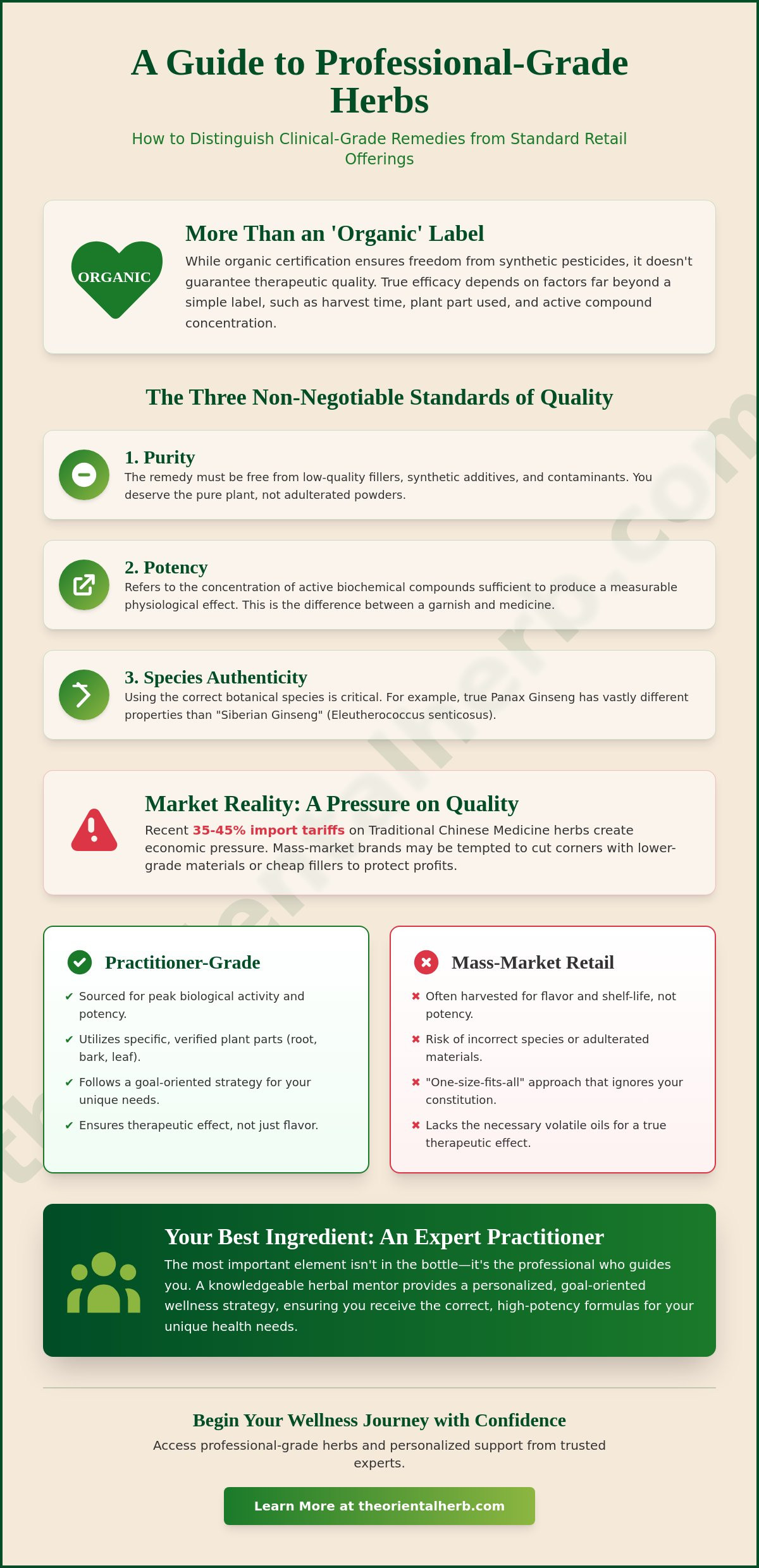
The herbs found in a grocery store aisle are fundamentally different from those used in a clinical setting. Culinary herbs are often harvested for flavor and shelf life rather than biological activity. In contrast, medicinal-grade herbs are collected at precise times when their active constituents are at their peak. They utilize specific plant parts, such as the root, bark, or leaf, where the healing properties are most concentrated. Grocery store options often lack the volatile oils and alkaloids necessary for a true therapeutic effect. Therapeutic potency refers to the concentration of active biochemical compounds within a plant material that is sufficient to produce a measurable physiological effect in the human body. Choosing professional-grade remedies ensures you receive this necessary potency in every dose.
Evaluating Quality: Beyond the Organic Label
Quality is the most critical variable when you shop herbal remedies, yet it remains the most misunderstood. Many seekers rely on the “organic” label as a final seal of approval. While organic certification ensures the absence of synthetic pesticides, it doesn’t guarantee that the plant was harvested at the right time or that it contains the correct medicinal compounds. For a remedy to be effective, it must meet three non-negotiable standards: purity, potency, and species authenticity. As of March 2025, an additional 20% tariff was added to Chinese herbs imported into the U.S., bringing the total tariff to 35-45%. This economic pressure often tempts mass-market manufacturers to use lower-grade materials or cheap fillers to maintain profit margins.
Species identification is a frequent point of confusion in the mass market. For instance, true Panax ginseng possesses different therapeutic properties than Eleutherococcus senticosus, which is often sold as Siberian Ginseng. Using the wrong species can lead to disappointing results or unexpected reactions. This is a primary reason why the safety of dietary supplements depends heavily on rigorous botanical verification. Adulterated herbs, which may be diluted with incorrect plant parts or synthetic additives, pose a significant risk to the unsuspecting consumer.
Sourcing and Ethical Harvesting Practices
The chemical profile of a plant is deeply influenced by its terroir. This term refers to the specific combination of soil, climate, and elevation where a botanical grows. In Oriental Medicine, certain herbs are traditionally sourced from specific regions to ensure they possess the necessary chemical complexity. Ethical harvesting, whether through sustainable cultivation or responsible wild-crafting, preserves these environments. This commitment ensures that rare botanicals remain available for future generations while maintaining the high standards required for medicinal use.
The Importance of Third-Party Laboratory Testing
Professional-grade providers rely on third-party laboratory testing to verify every batch. These tests screen for microbial contamination, heavy metals, and residual pesticides that organic labels might miss. A Certificate of Analysis (COA) serves as the gold standard, providing a transparent record of the herb’s purity and potency. A dedicated practitioner reviews these lab results to ensure that only the safest, most effective materials reach the patient. When you choose to shop herbal remedies from a practitioner-owned source, you benefit from this high level of clinical oversight.
Choosing the Right Format: Tinctures, Teas, or Capsules?
Selecting the appropriate delivery method is as vital as the herb itself. Bioavailability determines how much of the active constituent actually reaches your cells, and this efficiency varies significantly between formats. As you shop herbal remedies, you’ll encounter three primary delivery methods: bulk raw herbs, concentrated powders, and liquid extracts. Each format serves a distinct purpose within a clinical strategy. While a capsule offers unmatched convenience for a busy lifestyle, it must undergo a full digestive process before the body can utilize its contents. Liquid tinctures, however, begin absorption through the mucous membranes of the mouth, providing a more rapid response for acute needs.
The chemistry of the extraction process also dictates the remedy’s final profile. Water is an excellent solvent for minerals and polysaccharides, making traditional teas and decoctions ideal for nourishing the body’s systems. Alcohol, used in tinctures, is necessary to extract resins, alkaloids, and volatile oils that water cannot dissolve. Understanding how to choose and use herbals safely requires acknowledging these differences. A professional practitioner can guide you on whether your specific health goals require a water-based or alcohol-based preparation to ensure you receive the full spectrum of the plant’s benefits.
Traditional Chinese herbal medicine often utilizes complex formulations where multiple plants work in synergy. These formulas are rarely just a collection of individual herbs; they’re carefully balanced structures where some ingredients enhance the main herb’s effect while others mitigate potential side effects. This sophisticated blending is most effective when the format allows for precise ratio adjustments, a hallmark of professional-grade herbalism.
Bulk Herbs and Traditional Decoctions
Bulk herbs represent whole-plant medicine in its most traditional form. To prepare a decoction, you simmer roots, bark, or berries in water for an extended period to break down the tough cellular structures. This ritual of preparation creates a potent, fresh remedy that is often superior to pre-packaged supplements for chronic conditions. When you shop herbal remedies in bulk, you have the flexibility to adjust the strength of your tea based on your daily needs, fostering a deeper connection with your wellness journey.
For those interested in exploring specialized traditions like Jamaican herbalism, Rastaman Stew offers premium tea blends that honor these whole-plant preparation methods while ensuring high standards of quality.
Concentrated Extracts and Modern Supplements
Modern technology allows for the creation of concentrated extracts, often labeled with ratios such as 5:1 or 10:1. This means that five kilograms of raw herb were used to produce just one kilogram of the final powder, resulting in a highly potent product. When reviewing a supplement label, look for “standardized” percentages of active constituents. This indicates that the manufacturer has verified a specific amount of the herb’s most important compound is present in every dose. This level of precision is essential for achieving consistent therapeutic results in a modern health context.
Where to Shop: Local Expertise vs. Global Retailers
The rise of the global herbal market, expected to reach $257.17 billion in 2026, has created a paradox for consumers. While access to botanicals is greater than ever, the distance between the producer and the patient has grown. Global retailers often operate on a model of high volume and standardized inventory, which can lead to a lack of clinical nuance. In contrast, a practitioner-owned pharmacy functions as a dedicated health hub where every product is selected based on its therapeutic potential. When you shop herbal remedies through a retail giant, you’re often left to interpret complex labels without professional guidance. Choosing a local, practitioner-led source ensures that your wellness journey is supported by “filtered guidance,” where a professional has already vetted each remedy for purity and potency.
Safety remains a primary concern in the digital age. While the convenience of the internet is undeniable, it’s essential to ensure that your source is overseen by a licensed professional. Shopping online is a secure and effective way to manage your health, provided the storefront is an extension of a legitimate clinical practice. This model combines the ease of modern technology with the accountability of a traditional practitioner-patient relationship. If you are ready to prioritize quality, you can shop herbal remedies from a trusted professional who understands your unique health history.
The Benefits of a Practitioner-Owned Store
A Licensed Acupuncturist or a Diplomate of Oriental Medicine views a shelf of herbs differently than a retail buyer. Their selection process is rooted in clinical experience and a deep understanding of how different botanicals interact with the human body. This expertise is invaluable when addressing safety concerns or potential contraindications with existing medications. A professional doesn’t just sell a bottle; they help you integrate herbal medicine into a comprehensive, holistic lifestyle. This clinical oversight is especially important given the recent 35-45% tariff increases on imported herbs, as practitioners are better equipped to navigate supply chain shifts without compromising on the quality of the medicine they provide.
Supporting Local Health in Bergen County
For residents in Fairview, Ridgefield, and Teaneck, local expertise offers a distinct advantage. Community-based businesses like The Oriental Natural Herbs serve as vital resources for regional health. Local practitioners understand the specific stressors that affect residents in Bergen and Union counties, from seasonal climate shifts to the fast-paced lifestyle of the Northeast. This regional knowledge informs their herbal selections, allowing them to recommend formulas that are specifically suited to the environment you live in. Supporting these local health hubs strengthens community vitality and ensures that personalized, high-quality care remains accessible to all.
Why The Oriental Natural Herbs is the Trusted Choice
The journey to optimal health requires more than just a simple transaction; it requires a partnership with a seasoned expert. The Oriental Natural Herbs stands as a beacon of clinical excellence for those who seek to shop herbal remedies with absolute certainty. Founded in 1995, our organization has spent over three decades refining the bridge between ancient botanical wisdom and the contemporary health needs of our community. Unlike standard retail outlets, every remedy on our shelves is selected through the lens of clinical efficacy. We prioritize formulas that demonstrate the highest standards of purity and therapeutic potency; this ensures that our patrons receive the same professional-grade support that we utilize within our own practice every day.
Our mission is rooted in the belief that nature provides the tools for healing, but professional guidance provides the map. By maintaining a legacy of service for over 30 years, we have witnessed the transformative power of correctly applied herbal medicine. This longevity is a testament to our commitment to quality and our dedication to the collective health of our neighbors. When you choose to shop herbal remedies here, you are accessing a curated selection that has been vetted for safety, species authenticity, and biological activity. We take our responsibility to the public seriously, acting as a stable resource for those looking to make informed decisions about their lifestyle.
The Clinical Legacy of Michael Kim
The foundation of our trust lies in the extensive expertise of Michael Kim, a Licensed Acupuncturist and a Diplomate of Oriental Medicine. This specific credential signifies a master-level proficiency in both acupuncture and Chinese herbology, representing the highest level of national certification available in the field. With decades of experience treating complex health issues naturally, Michael Kim brings a level of discernment to the selection process that a typical retail buyer cannot match. We are committed to sourcing only the botanicals that meet these rigorous clinical standards. This means every product is vetted for its chemical profile and traditional authenticity, providing you with a reliable alternative to the often-unreliable mass market.
Your Personalized Path to Wellness
Establishing a relationship with a knowledgeable mentor is the most effective way to ensure your herbal strategy aligns with your long-term vitality goals. We move beyond the “quick-fix” mentality of modern retail by focusing on the underlying patterns of your health. Whether you’re addressing specific discomforts or seeking to maintain a state of balanced vitality, our team provides the professional oversight necessary to choose the correct formulations. Our presence in Cliffside Park allows us to serve as a vital resource for our neighbors in Bergen County, offering a level of personalized care that global retailers simply cannot replicate. To take the next step in your health journey, visit our shop in Cliffside Park or explore our remedies online to find the professional-grade support you deserve.
Empowering Your Wellness Journey Through Clinical Excellence
Choosing to prioritize your health requires a discerning eye for quality and a commitment to professional standards. As we’ve explored, the path to effective natural medicine extends beyond retail convenience; it demands an understanding of extraction methods, species authenticity, and the value of practitioner oversight. By moving past simple organic labels and focusing on clinical-grade purity testing, you ensure that your body receives the biological support it truly needs. These foundational principles protect you from the risks of low-potency products in an increasingly complex global market.
When you’re ready to shop herbal remedies, you deserve a partner who possesses both historical wisdom and modern credentials. Led by Michael Kim, a Licensed Acupuncturist and Diplomate of Oriental Medicine, The Oriental Natural Herbs has been serving Bergen County and the wider United States since 1995. Our commitment to clinical-grade sourcing provides the stability and reliability necessary for a successful health strategy. We invite you to Discover Practitioner-Grade Herbal Remedies at The Oriental Natural Herbs today. Your journey toward lasting vitality is a noble pursuit, and we’re honored to support your goals with sincerity and expertise.
Frequently Asked Questions
How do I know if an herbal remedy will interact with my current medications?
You can determine potential interactions by consulting a qualified healthcare practitioner who understands both botanical chemistry and pharmacology. Many herbs affect how the liver processes pharmaceuticals through specific metabolic pathways. A professional review of your current regimen ensures that your natural approach complements your existing treatments without compromising safety. It’s vital to disclose all supplements to your provider to maintain a balanced and secure health strategy.
What is the difference between an herbal supplement and a medicinal herb?
The primary difference lies in the clinical intent and the concentration of active constituents. Retail supplements are often designed for general wellness and may possess lower therapeutic potency. Medicinal herbs are selected for their specific capacity to address health imbalances, often requiring higher standards for sourcing and extraction. When you choose medicinal-grade products, you’re opting for a level of rigor typically reserved for clinical environments.
Can I shop for herbal remedies online safely without a prescription?
It is possible to shop herbal remedies online safely if you prioritize sources managed by licensed practitioners. While a prescription isn’t required for most botanicals, the absence of professional oversight increases the risk of choosing an inappropriate formula. Selecting a store that offers clinical-grade products ensures you receive authentic medicine. This approach combines the convenience of digital access with the accountability of a traditional practitioner-led pharmacy.
How long does it typically take to see results from herbal medicine?
The timeline for results varies based on whether you’re addressing an acute issue or a chronic condition. Minor discomforts may respond within hours or days of starting a remedy. Deep-seated systemic imbalances typically require several weeks of consistent use as the body gradually shifts back toward a state of natural equilibrium. Patience is essential, as herbal medicine works by supporting the body’s internal systems rather than simply masking symptoms.
What should I look for on an herbal product label to ensure quality?
You should look for the specific Latin binomial name of the plant and a clear statement of the active constituent percentages. High-quality labels also indicate the specific part of the plant used and provide information regarding third-party testing for purity. These details confirm that the product meets professional standards for potency. If a label lacks these specific markers, it’s often an indication of a lower-grade retail product.
Is it better to buy bulk herbs or pre-made capsules?
Bulk herbs are often superior for those who appreciate the ritual and high bioavailability of traditional decoctions. Pre-made capsules offer significant convenience for those with busy lifestyles who need a portable option. Your choice should depend on your specific health goals and your ability to maintain a consistent routine. Both formats can be effective when they’re sourced from a provider that prioritizes clinical-grade materials and proper extraction methods.
Why should I choose a practitioner-owned store like The Oriental Natural Herbs?
Choosing a practitioner-owned store provides you with the clinical oversight of Michael Kim, a Diplomate of Oriental Medicine. This ensures that every product has been vetted by an expert who understands the complexities of herbal synergy. You benefit from a legacy of service that prioritizes patient outcomes over retail volume. It’s the most reliable way to shop herbal remedies while ensuring the products align with your specific constitutional needs.
Are herbal remedies safe for children and the elderly?
Herbal remedies can be safe for children and the elderly when the dosage and formulation are adjusted for their specific sensitivities. These populations often require gentler herbs or lower concentrations to achieve the desired effect without overwhelming their systems. It’s essential to seek professional guidance to ensure that the chosen remedy is appropriate for their unique physiological needs. A practitioner can provide the necessary adjustments to ensure a safe experience.