
What if the key to lasting vitality isn’t found in suppressing a single symptom, but in restoring the intricate balance of your entire body? You might feel frustrated by conventional approaches that address health concerns in isolation, leaving you to manage recurring issues without a clear sense of resolution. It’s understandable to feel hesitant when faced with a sea of conflicting health advice and questions regarding the safety of natural products. As of 2025, chinese herbal medicine is practiced in 196 countries and regions; this widespread adoption reflects a significant global shift toward integrated, natural care.
This comprehensive guide explores the foundational principles of chinese herbal medicine to help you move beyond temporary fixes toward a state of holistic wellness. We’ll examine how these traditional formulas work synergistically to support your body’s natural resilience while addressing modern concerns about quality and regulation. By the end of this article, you’ll have a clear understanding of traditional philosophy and the practical knowledge needed to find a qualified expert who can guide your healing journey with confidence.
Key Takeaways
- Learn how the holistic principles of chinese herbal medicine focus on restoring your body’s internal balance rather than merely masking isolated symptoms.
- Understand the meticulous logic behind synergistic formulas, where combined botanical elements work together to maximize efficacy and promote safety.
- Gain confidence in selecting herbal products by learning the importance of purity, professional sourcing, and the role of clinical oversight.
- Identify how natural interventions can address various health concerns by supporting your body’s innate ability to maintain long-term vitality.
- Discover how to connect with a reliable local resource in Bergen County to ensure your wellness journey is rooted in both tradition and modern expertise.
The Foundation of Chinese Herbal Medicine: A Tradition of Holistic Restoration
Chinese herbal medicine is not a modern trend but a sophisticated system of healing with a history spanning over 2,500 years of documented clinical use. It stands as a primary pillar of Traditional Chinese Medicine (TCM). Unlike conventional approaches that often focus on immediate symptom suppression, the earnest mission of this practice is restoration. Practitioners look past the surface ailment to identify and treat the root cause of disharmony. This perspective views the human body as an interconnected ecosystem where every physiological function influences the whole. Understanding The Foundation of Chinese Herbal Medicine allows us to appreciate how ancient wisdom addresses contemporary health challenges through natural vitality.
The Principles of Qi, Yin, and Yang
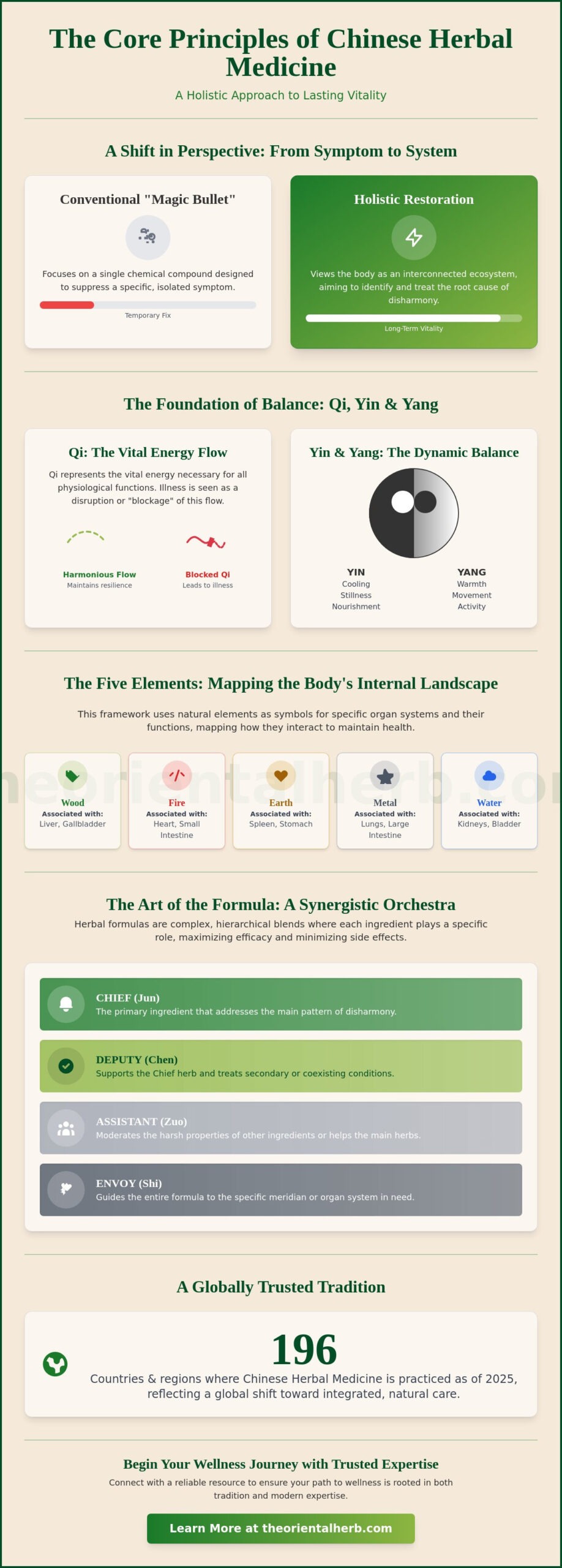
At the heart of this system lies the concept of Qi. Qi represents the vital energy flow necessary for all physiological functions, from digestion to cardiovascular health. When Qi flows freely, the body maintains its natural resilience. Conversely, illness is viewed as a disruption or “blockage” of this natural equilibrium. This balance is further defined by the relationship between Yin and Yang. These are opposing but complementary forces; Yin represents cooling, stillness, and nourishment, while Yang represents warmth, movement, and activity. Health isn’t a static state but a dynamic balance between these forces. When one dominates the other, the body’s ecosystem falters, leading to the health issues that chinese herbal medicine seeks to resolve.
The Five Elements Framework
Practitioners also utilize the Five Elements Framework to map the body’s internal landscape. This system uses Wood, Fire, Earth, Metal, and Water as symbols for specific organ systems and their corresponding functions. For example, Wood is often associated with the liver and gallbladder, while Metal relates to the lungs and large intestine. These elements don’t exist in isolation. Instead, they interact in a methodical way to maintain or restore health. By observing how these elements influence one another, a practitioner can identify specific patterns of disharmony. This systematic approach ensures that herbal interventions are tailored to the individual’s unique needs, fostering a return to harmony through the wise application of botanical formulas.
This holistic perspective ensures that no symptom is treated in a vacuum. If a patient experiences fatigue, a practitioner doesn’t simply offer a stimulant. They investigate whether the issue stems from a deficiency in Earth or an imbalance in Water. This dedication to root-cause analysis is what distinguishes the practice from modern pharmaceutical approaches. It’s a commitment to longevity and community vitality that has sustained the tradition for millennia. By focusing on the underlying patterns of the body, the practice offers a stable and reliable path toward long-term wellness.
The Art of the Formula: Why Synergistic Blends Matter
In the practice of chinese herbal medicine, we don’t view a single plant as a solitary cure. Instead, we embrace the philosophy that the whole is greater than the sum of its parts. Western medicine often seeks a “magic bullet”; this is a single chemical compound designed to suppress a specific symptom. In contrast, traditional practitioners operate like conductors of an orchestra. Each botanical element is carefully selected to play a specific role, contributing to a harmonious result that supports the body’s natural vitality. This method maximizes efficacy while significantly reducing the potential for side effects. To better understand how herbal medicine natural healing systems restore biological balance through plant synergy, it helps to examine the structured logic behind traditional formulations.
Individual Herbs vs. Complex Formulations
It’s rare to see a single herb like ginseng or ginger used in isolation within a professional clinical setting. Formulas are built using a sophisticated hierarchy. The “Chief” herb addresses the primary pattern of disharmony. “Deputy” herbs then support the Chief by enhancing its effects or addressing secondary symptoms. “Assistant” herbs work to moderate any harsh properties of the stronger ingredients, while “Envoy” herbs guide the entire formula to the specific meridian or organ system in need. This layered approach ensures that the treatment is both powerful and balanced. When considering Safety, Efficacy, and Science, this traditional hierarchy provides a structured framework that has been refined over centuries.
Customization for the Individual
No two individuals are exactly alike; therefore, their treatments shouldn’t be either. Two people may arrive with identical complaints of insomnia, yet one might receive a formula to cool “Heart Fire” while the other receives one to nourish “Spleen Blood.” This precision is achieved through a meticulous diagnostic process involving pulse reading, tongue observation, and a comprehensive health history. As your condition improves, your practitioner will evolve the formula to reflect your body’s changing needs. This level of personalization is a hallmark of the herbal medicine for health issues provided by dedicated experts who understand that true restoration is a moving target.
The weighing and selection of each herb require immense precision. A few grams more or less of a specific root can alter the entire energetic profile of a blend. This dedication to detail ensures that the resulting formula is a stable, effective resource for those seeking to make informed decisions about their lifestyle. By treating the individual rather than the ailment, we foster a deep sense of community responsibility and long-term health. It’s a purposeful way to restore balance and vitality through nature’s wisdom.
Safety, Efficacy, and Science: Navigating Modern Concerns
“Is chinese herbal medicine safe?” is the most frequent question we encounter from individuals seeking natural vitality. It’s a valid concern given the overwhelming amount of conflicting health advice found online. In the United States, these products are regulated as dietary supplements under the Dietary Supplement Health and Education Act of 1994 (DSHEA). While this means the FDA does not provide pre-market approval, it places the responsibility for safety and purity squarely on manufacturers and practitioners. Professional guidance remains the most critical factor in ensuring your path toward wellness is both secure and effective.
Quality Control and Sourcing Standards
The difference between “grocery store” supplements and practitioner-grade formulas often lies in the rigor of laboratory testing. Reputable providers prioritize purity by screening for heavy metals, pesticides, and microbial contaminants. They also verify potency to ensure each batch provides consistent therapeutic benefits. When you work with a professional, you gain access to herbs that have undergone stringent quality control measures. This methodical approach builds a sense of trust and reliability, making the information feel well-vetted and significant.
To identify high-quality herbal products, consider the following checklist:
- Verification of a Certificate of Analysis (COA) for each batch to ensure purity.
- Sourcing from suppliers that strictly adhere to Good Manufacturing Practices (GMP).
- Recommendations from a practitioner holding a Diplomate in Chinese Herbology from the NCCAOM.
- Avoidance of products with “proprietary blends” that do not list specific ingredient amounts.
Integration with Conventional Care
Achieving long-term health often requires a bridge between ancient wisdom and modern medicine. We encourage you to maintain open communication with your Western medical providers about any herbal supplements you use. This transparency allows for a coordinated approach to your care. A Licensed Acupuncturist (L.Ac.) is specifically trained to manage potential herb-drug interactions within the context of chinese herbal medicine, ensuring that your natural regimen complements rather than conflicts with existing treatments.
Many patients find that herbs offer a supportive role in managing chronic issues that conventional care might only address through symptom management. Understanding What Conditions Can Chinese Herbs Address? can help you frame these conversations with your medical team. By integrating these two worlds, you create a comprehensive wellness strategy that respects both historical authority and contemporary scientific standards. This collaborative model fosters a sense of community responsibility and empowers you to make informed decisions about your lifestyle. Before you shop herbal remedies in today’s complex marketplace, understanding how to distinguish clinical-grade products from mass-produced alternatives is essential to protecting both your health and your investment.
Practical Benefits: What Conditions Can Chinese Herbs Address?
The application of chinese herbal medicine extends far beyond the treatment of acute ailments. It serves as a proactive tool designed to foster long-term wellness by supporting the body’s innate ability to heal itself over time. When the body’s internal systems achieve a state of harmony, a person experiences what we describe as natural vitality. This state is characterized by consistent energy, mental clarity, and physical resilience. By addressing subtle imbalances before they manifest as severe conditions, herbal intervention acts as a cornerstone for preventive health and lasting well-being.
Support for Digestive and Respiratory Health
Digestive and respiratory functions often reflect the body’s immediate response to environmental stressors. In the traditional framework, issues like bloating or sluggish digestion are frequently categorized as “Dampness” or “Heat” within the digestive tract. Specific herbs such as Ginger are utilized to warm the system and transform stagnant fluids; this helps restore efficient nutrient absorption. To support respiratory resilience, practitioners often employ Astragalus to strengthen the “Wei Qi,” which is the body’s protective energy. This methodical strengthening of the immune system provides a natural defense against seasonal allergies and helps maintain respiratory health throughout the year.
Managing Stress, Sleep, and Modern Vitality
Modern life frequently imposes high-pressure demands that disrupt the body’s natural equilibrium. This often manifests as “Liver Qi Stagnation,” a pattern associated with persistent stress, irritability, and physical tension. Rather than relying on temporary sedation, the practice utilizes adaptogenic herbs to help the body maintain balance during these demanding periods. This approach focuses on restoring natural sleep cycles and emotional stability by smoothing the flow of vital energy. These formulas provide a stable foundation for modern vitality, allowing the body to recover from burnout without the grogginess often associated with conventional sleep aids.
Choosing to address these concerns through a traditional lens allows you to take an active role in your health journey. If you’re ready to explore how these botanical formulas can support your specific needs, you can find professional herbal medicine for health issues tailored to your unique constitution. This commitment to personalized care ensures that your path toward restoration is both purposeful and effective. By focusing on the root patterns of your health, you can move toward a more vibrant and balanced lifestyle.
Beginning Your Wellness Journey in Bergen County
Embarking on a path toward holistic restoration requires more than just information; it requires a reliable partner who understands the bridge between ancient wisdom and modern needs. The Oriental Natural Herbs serves as a stable, knowledgeable resource for the community, offering a sanctuary for those who seek to move beyond symptom management. For over 30 years, Michael Kim, L.Ac., has provided dedicated care to residents in the Cliffside Park and Fort Lee area. This legacy of service is rooted in a deep commitment to well-being and a quiet confidence in the efficacy of chinese herbal medicine. By visiting a local expert, you ensure that your health journey is guided by three decades of clinical experience and historical authority.
The Importance of Expert Guidance
While the internet offers a wealth of information, self-prescribing herbs based on online health advice can be ineffective or even risky. It’s easy to feel overwhelmed by conflicting claims or to choose a formula that doesn’t align with your specific constitution. Professional guidance is essential because it identifies your unique “pattern of disharmony” through a methodical diagnostic process. At The Oriental Natural Herbs, we provide a supportive environment where your health history is valued and your goals are prioritized. This personalized approach ensures that the practitioner-vetted solutions you receive are precisely what your body needs to restore its natural equilibrium. True healing isn’t a generic transaction; it’s a purposeful collaboration between a mentor and a seeker.
Accessing Quality Herbal Medicine Locally
Our dedication to community vitality extends across the broader Bergen County area, reaching individuals in Teaneck, Englewood, and Ridgefield. We believe that high-quality chinese herbal medicine should be accessible to those looking to make informed decisions about their lifestyle. This mission is driven by a sense of community responsibility and a desire to contribute positively to the collective health of the public. By focusing on practitioner-grade products and individualized care, we help you navigate your wellness journey with clarity and trust. You don’t have to manage your health concerns in isolation when a stable, knowledgeable resource is available right in your neighborhood.
Choosing to work with a local expert allows for a consistent and predictable flow of care. As your body responds to treatment and your needs evolve, your formulas can be adjusted to maintain your progress. This methodical progression is the hallmark of a dedicated provider focused on long-term vitality. We invite you to experience a health model that respects tradition while remaining practical for your contemporary life. Visit The Oriental Natural Herbs to discover your personalized path to wellness.
Embracing a Purposeful Path to Vitality
Restoring the body’s natural equilibrium requires a shift from addressing isolated symptoms to understanding the root patterns of your health. Through the synergistic power of chinese herbal medicine, you can access a sophisticated system of restoration that has been refined over millennia. This journey toward wellness is most effective when guided by professional expertise and a commitment to practitioner-grade purity. Since 1995, The Oriental Natural Herbs has served the Bergen County community by providing these traditional solutions with a focus on modern safety and efficacy.
Led by Michael Kim, a Licensed Acupuncturist and Diplomate of Oriental Medicine, our practice remains a stable resource for those seeking a more balanced lifestyle. By prioritizing methodical sourcing and individualized care, we empower you to take an active role in your long-term vitality. We invite you to explore our curated selection of high-quality herbal remedies and discover how nature’s wisdom can support your unique constitution. Your journey toward lasting health is a significant step, and we’re honored to support your pursuit of a more vibrant life.
Frequently Asked Questions
Is Chinese herbal medicine safe to take alongside my prescription medications?
Yes, chinese herbal medicine can be safely integrated into a health regimen that includes prescription medications, provided a licensed professional manages the process. It’s essential to disclose all current medications to your practitioner to avoid potential interactions. This transparency allows for a coordinated approach where herbs and pharmaceuticals work together to support your long-term health and community vitality.
How long does it typically take to see results from herbal formulas?
The timeline for experiencing results depends on whether the condition is acute or chronic. Acute issues, such as a sudden cold or digestive upset, may show signs of improvement within 24 to 48 hours. Chronic conditions that have developed over years often require a more methodical approach; these typically show significant shifts after three to four weeks of consistent use as the body’s internal balance is restored.
Are Chinese herbs regulated by the FDA in the United States?
In the United States, Chinese herbs are regulated by the FDA as dietary supplements under the Dietary Supplement Health and Education Act of 1994. This regulatory framework means that while the FDA does not provide pre-market approval, it maintains authority over product safety and labeling accuracy. Manufacturers are responsible for ensuring their products are safe and unadulterated before they reach the public market.
What is the difference between taking herbal teas, powders, and pills?
The primary difference between these delivery methods lies in their concentration and the speed of absorption. Traditional teas, or decoctions, are the most potent and customizable but require significant preparation time. Powders and granules offer a balance of high potency and modern convenience. Pills and tablets are generally used for long-term maintenance because they are easy to transport and have a milder effect on the system.
Can Chinese herbal medicine help with chronic pain management?
Herbal formulas are frequently used to manage chronic pain by addressing the systemic imbalances that contribute to inflammation and discomfort. Rather than simply masking the sensation of pain, the herbs work to improve the flow of vital energy and blood to the affected area. This purposeful restoration of movement helps the body resolve the underlying cause of the pain, leading to more sustainable relief and improved physical resilience.
How do I find a qualified and licensed herbalist in the Bergen County area?
Finding a qualified practitioner in Bergen County involves verifying their credentials through the National Certification Commission for Acupuncture and Oriental Medicine. You should seek a professional who is a Diplomate in Chinese Herbology and a Licensed Acupuncturist. In areas like Cliffside Park and Fort Lee, look for established experts with a long-standing legacy of service to ensure you receive stable and knowledgeable chinese herbal medicine care.
Do I need a consultation before purchasing herbal remedies?
A professional consultation is necessary before purchasing herbal remedies to ensure the formula aligns with your unique constitution and specific health needs. Because traditional medicine treats the individual rather than just the symptom, a practitioner must first identify your “pattern of disharmony.” This diagnostic process prevents the use of inappropriate herbs and ensures that your path toward natural vitality is both safe and effective. For those who plan to shop herbal remedies online or in retail settings, understanding the critical role of professional oversight is especially important in navigating today’s complex herbal marketplace.
Are there any side effects I should be aware of when starting herbs?
Side effects are uncommon when herbs are prescribed by a licensed professional, though some individuals may experience mild digestive adjustments as the body adapts. These temporary changes are usually a sign that the formula is beginning to shift the body’s internal environment. If you experience any persistent discomfort, your practitioner can easily adjust the dosage or ingredients to ensure the formula remains balanced and supportive of your well-being.