
What if the most effective way to achieve a resilient, glowing complexion isn’t found in a synthetic cream, but within the delicate balance of your internal physiology? Many individuals feel frustrated by persistent irritation from harsh chemicals and remain confused about the difference between topical applications and internal remedies. You likely recognize that your skin’s appearance is a direct reflection of your overall well-being, yet finding clear guidance on the safe use of herbs for skin health can feel overwhelming in a crowded market.
We’re here to bridge the gap between ancient botanical wisdom and modern clinical standards. You’ll discover how a dual-pathway approach can transform your complexion by addressing health from the inside out. This guide explains the specific benefits of key herbs, provides essential safety insights following the 2026 implementation of the Modernization of Cosmetics Regulation Act, and simplifies your path to natural vitality. We’ll move from foundational herbal principles to practical, daily applications, ensuring you have the knowledge to build a skincare routine that’s both sustainable and scientifically sound.
Key Takeaways
- Understand why true radiance begins with internal physiological balance rather than just surface-level treatments.
- Learn how Traditional Chinese Medicine identifies “internal heat” as a primary cause of common skin irritations.
- Discover the specific roles that various herbs for skin health play in supporting collagen production and maintaining deep cellular hydration.
- Gain clarity on the “inside-out” philosophy to help you choose between immediate topical relief and sustainable internal herbal support.
- See how professional consultation allows for the creation of customized herbal formulas tailored to your individual complexion needs.
The Fundamentals of Using Herbs for Skin Health
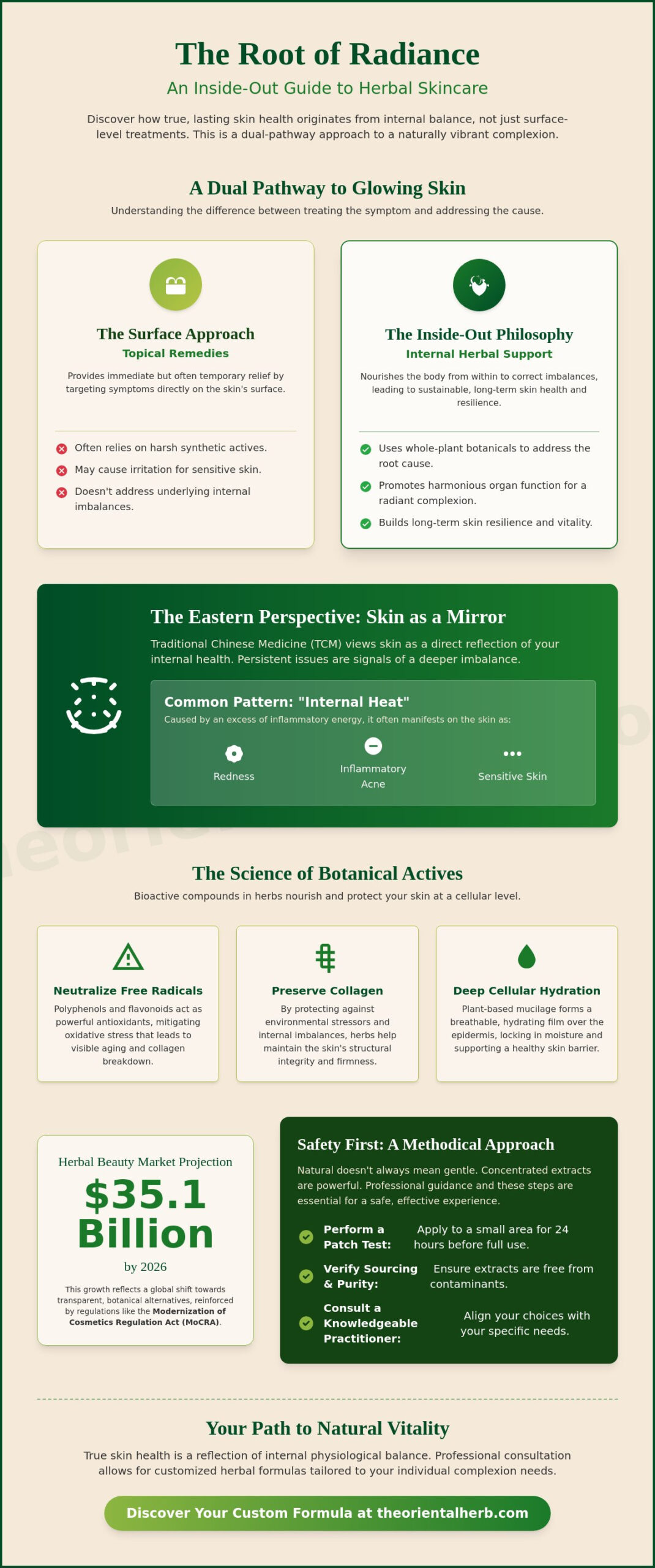
By 2026, the global herbal beauty market is projected to reach approximately $35.1 billion. This growth reflects a profound shift in consumer priorities as individuals move away from harsh synthetic actives in favor of transparent, botanical alternatives. The full implementation of the Modernization of Cosmetics Regulation Act (MoCRA) has further solidified this trend by requiring stricter safety substantiation and transparent labeling. Consequently, the use of herbs for skin health has become a primary strategy for those seeking to support the skin barrier through the concept of “Skin Nutrition.” This approach utilizes bioactive plant metabolites to nourish the skin at a cellular level, providing a level of care that synthetic ingredients often struggle to match.
The efficacy of these botanical treatments lies in their multifaceted nature. While a synthetic product might target a single symptom, a whole-plant extract provides a complex array of antioxidant, antimicrobial, and anti-inflammatory benefits simultaneously. This synergy helps the skin maintain its natural resilience against environmental stressors and internal imbalances. Because Herbal medicine addresses the body as an integrated system, the results of these treatments often prove more sustainable and harmonious with the skin’s natural ecosystem.
The Biological Mechanism of Botanical Actives
At the microscopic level, polyphenols and flavonoids act as the primary defenders of the dermis. These compounds neutralize free radicals, which are unstable molecules that contribute to collagen breakdown and visible aging. By mitigating oxidative stress, herbs help preserve the skin’s structural integrity. Similarly, plant-based mucilage plays a vital role by forming a breathable, hydrating film over the epidermis to prevent moisture loss. Phytoconstituents are the medicinal engine of the plant. These complex molecules are responsible for the therapeutic actions that define effective botanical skincare and support long-term vitality.
Why Natural Doesn’t Always Mean Gentle
It’s a common mistake to assume that natural ingredients are inherently mild. The potency of herbal extracts depends heavily on their concentration and purity. High-quality whole-plant medicine contains a wide spectrum of compounds that typically offer a more balanced profile than isolated synthetic mimics; however, these concentrated extracts can be quite powerful. For this reason, professional guidance is essential to determine the correct application for your specific needs. We recommend following these safety steps to ensure a positive experience:
- Perform a patch test on a small area of skin for 24 hours before full application.
- Verify the sourcing and purity of the extract to avoid contaminants or heavy metals.
- Consult with a knowledgeable practitioner to ensure the herb aligns with your specific skin type and internal health.
By approaching these remedies with a methodical and informed mindset, you can enjoy the profound benefits of nature without compromising your safety. This deliberate progression from understanding biology to practical application ensures that your journey toward radiance is both effective and secure. True skin health is a reflection of internal physiological balance, and choosing the right herbal support is the first step in that transformation.
The Eastern Perspective: Skin as a Mirror of Internal Balance
Traditional Chinese Medicine (TCM) views the skin not as an isolated barrier, but as a dynamic map reflecting the body’s internal landscape. While contemporary skincare often focuses on surface-level symptoms, the Eastern perspective suggests that a radiant complexion is the byproduct of harmonious organ function and balanced vital energy. This holistic philosophy posits that persistent dermatological issues are rarely just “skin deep.” Instead, they serve as signals that the internal environment requires attention. By utilizing specific herbs for skin health, practitioners aim to restore this equilibrium, allowing the body’s natural vitality to manifest outwardly.
One of the most common diagnostic patterns in TCM is “Internal Heat,” which frequently manifests as redness, inflammatory acne, or sensitive, burning sensations. This condition arises when the body’s cooling mechanisms are insufficient or when lifestyle factors create an excess of inflammatory energy. Scientific literature, including reviews on Herbal Treatment for Dermatologic Disorders, increasingly examines how botanical compounds can modulate these internal inflammatory pathways. Conversely, a dull or hyperpigmented complexion is often linked to “Blood Stasis.” This concept describes a lack of efficient circulation where nutrients fail to reach the skin and metabolic byproducts remain trapped, leading to a loss of natural luminosity.
Balancing the Body to Clear the Skin
The primary goal of herbal medicine is to target the root cause of an ailment rather than merely suppressing its symptoms. In this framework, the health of the Lungs and Liver is paramount. The Lungs are said to govern the skin and pores, regulating moisture and protection, while the Liver ensures the smooth flow of “Qi,” or vital energy. When Qi flows without obstruction, microcirculation improves, and the skin receives the oxygenation it needs to remain resilient. If you find yourself struggling with chronic issues, it may be beneficial to consult with a specialist to identify which internal systems require regulation.
Holistic Synergies for Mind and Skin
Modern science confirms the TCM belief that emotional well-being and physical appearance are inextricably linked. Stress-induced cortisol can trigger significant inflammatory flare-ups, exacerbating conditions like eczema or psoriasis. By incorporating herbs for anxiety into a wellness routine, individuals can stabilize their nervous system and lower systemic inflammation. This internal calm eventually reflects on the surface as “Shen” radiance, a term used to describe a complexion that glows with the light of a peaceful spirit. Achieving this state requires a methodical approach to herbs for skin health, ensuring that both the mind and body are supported in their journey toward vitality.
Internal vs. Topical: A Dual Pathway to Radiance
Achieving a truly vibrant complexion requires more than just surface-level care. While many skincare routines rely heavily on topical applications to address immediate concerns, a dual-pathway approach offers a more comprehensive solution. This method combines the localized relief of topicals with the systemic, long-term benefits of internal herbs for skin health. By treating the skin as both a protective barrier and a reflection of internal physiology, you can create a synergistic effect that provides 360-degree protection against environmental and biological stressors.
The “Inside-Out” philosophy suggests that the nutrients you ingest dictate your skin’s underlying resilience. If the internal environment is congested or lacking in vital nutrients, even the most advanced creams will struggle to produce lasting results. Accordingly, integrating herbal teas and tinctures into your daily ritual addresses the biological root of the issue. This strategy ensures that while the internal systems are being purified, the outer layers are shielded and nourished. This perspective is supported by a scientific review of herbs for skin care, which highlights how different delivery methods target specific dermatological pathways.
Internal Herbal Support: Teas and Tinctures
Internal remedies focus on purifying the blood and tonifying the organs. Detoxifying herbs like Burdock Root and Dandelion are frequently utilized to help the body process metabolic byproducts that might otherwise manifest as skin congestion. To achieve a healthy glow, practitioners often recommend “Blood Tonics” such as Goji Berries and Jujube, which support nutrient delivery to the dermis. Consistency is essential here. Because the skin’s natural turnover process is gradual, internal changes typically take four to six weeks to manifest visibly on the surface.
Topical Application: Salves, Oils, and Compresses
Topical remedies provide the immediate intervention necessary for barrier repair and symptom management. They work by delivering bioactive compounds directly to the site of irritation. We recommend the following applications for specific needs:
- Calendula and Chamomile: These are excellent for immediate soothing of a compromised skin barrier and reducing visible redness.
- Pearl Powder: This traditional ingredient is prized for its ability to support topical brightening and even out skin tone.
- Oil-Based Infusions: These are often superior to water-based lotions for lipid-barrier repair because they mimic the skin’s natural sebum, locking in moisture more effectively.
By understanding which concerns respond best to each pathway, you can simplify your routine. Inflammatory conditions often require internal regulation, while dryness or environmental damage may benefit more from direct topical nourishment. This methodical combination ensures your skin remains resilient, clear, and balanced throughout every season.
Top Herbs for Skin Health and Their Specific Uses
While understanding the dual-pathway approach is vital, selecting the right botanical agents requires a more granular look at individual plant properties. Several herbs for skin health have stood the test of centuries, proving their efficacy through both traditional practice and modern observation. Ginseng, for example, remains a premier choice for anti-aging; it supports the skin’s natural collagen production to maintain elasticity and firmness. Aloe Vera is similarly indispensable, offering deep hydration and healing that extends far beyond simple burn relief. For those managing chronic redness, Turmeric (Jiang Huang) serves as a potent tool to regulate inflammatory responses within the dermis.
Green Tea (Lu Cha) has gained significant attention in 2026 for its ability to shield the skin from microscopic environmental pollutants. Its high concentration of catechins neutralizes oxidative stress before it can damage the skin barrier. Licorice Root (Gan Cao) provides a natural alternative for those seeking to brighten their complexion or even out skin tone. It works by gently inhibiting the enzymes responsible for hyperpigmentation, offering a safer path to radiance than many synthetic lighteners. To find the right combination for your unique constitution, you can explore our professional herbal medicine services.
Herbs for Acne and Oily Skin
In the Eastern tradition, breakouts are often viewed as a manifestation of “Toxic Heat.” Honeysuckle (Jin Yin Hua) is frequently employed to clear this heat, providing a cooling effect that reduces the severity of acne. Neem complements this action with its robust antimicrobial properties, making it an excellent choice for blemish control. Additionally, adaptogenic herbs help balance sebum production by regulating the body’s stress response. This systemic regulation ensures that oily skin is managed at its source rather than just on the surface. Understanding how chinese herbal formulas combine these individual botanicals into precise, synergistic blends can help you appreciate why a multi-herb approach often outperforms single-ingredient remedies for complex skin concerns.
Herbs for Dry and Sensitive Skin
For complexions that feel fragile or depleted, Oat Straw and Marshmallow Root provide immediate epidermal soothing. These plants contain high levels of mucilage, which creates a protective layer to lock in moisture and prevent trans-epidermal water loss. Astragalus (Huang Qi) is particularly valued for its ability to strengthen the “Wei Qi,” or the skin’s protective barrier. This reinforcement helps the skin resist external irritants and retain its natural suppleness. Interestingly, many of these herbs for skin health also support scalp vitality; you can learn more about this connection in our guide on herbal remedies for hair health.
Expert Guidance at The Oriental Natural Herbs
While the theoretical knowledge of botanical medicine is empowering, the practical application of these remedies requires a high level of expertise to ensure both safety and efficacy. Seeking a professional consultation with a Licensed Acupuncturist is a critical step for anyone looking to integrate herbs for skin health into their lifestyle. At The Oriental Natural Herbs, Michael Kim, L.Ac., provides this necessary bridge between ancient wisdom and modern clinical needs. By evaluating the unique physiological state of each individual, he ensures that the chosen herbal medicine addresses specific imbalances rather than merely following a generic protocol. This purposeful approach ensures that your transition toward natural wellness is both structured and sustainable.
The decision to move toward herbal solutions often stems from a desire for long-term health rather than a quick fix. Because every individual’s internal landscape is different, a professional can identify whether your skin concerns arise from “internal heat,” “blood stasis,” or a deficiency in vital energy. This level of personalized care is what distinguishes practitioner-led wellness from the trial-and-error often associated with commercial beauty products. By aligning your treatment with your body’s specific requirements, you can achieve results that are both visible and lasting.
Customized Herbal Formulations vs. Over-the-Counter
Generic, over-the-counter products often fail because they ignore the complex internal patterns that dictate skin appearance. A “one size fits all” approach is fundamentally at odds with the principles of holistic health. During a professional assessment, Michael Kim utilizes traditional diagnostic methods, such as tongue and pulse reading, to identify the root cause of dermatological concerns. These techniques reveal the state of your internal organs and the quality of your circulation, providing a level of insight that surface-level exams cannot match. This methodical process allows for the creation of customized chinese herbal formulas that provide precise support. This precision also safeguards against potential herb-drug interactions, ensuring that your path to vitality is secure. We prioritize the use of high-purity, practitioner-grade oriental herbal supplements to maintain the highest standards of care for our seekers.
Your Local Resource for Natural Wellness
Our practice is deeply rooted in the Cliffside Park community, acting as a stable and knowledgeable resource for residents across Bergen County. We take our responsibility to the public health seriously, offering a sanctuary for those who feel overwhelmed by the confusion of synthetic skincare. Whether you’re located in Fort Lee, Teaneck, Englewood, or Ridgefield, local accessibility ensures that you can receive consistent, face-to-face guidance. Starting your journey toward clearer skin begins with a professional assessment that honors your body’s specific history and current needs. We’ve dedicated ourselves to the health of our neighbors at our Anderson Ave location for years; this longevity reflects our commitment to community vitality and the enduring power of traditional herbs for skin health. You don’t have to guess which remedies are right for you when a reliable mentor is available to guide your progress.
Embracing a Holistic Future for Your Skin
True radiance isn’t a surface-level achievement; it’s the result of a deliberate commitment to internal harmony. By understanding the connection between organ function and the dermis, you’ve taken the first step toward a more resilient complexion. You now recognize that using herbs for skin health involves more than just selecting a product. It requires a methodical strategy that combines internal purification with targeted topical nourishment to achieve sustainable results.
Transitioning to this holistic model is most effective under the guidance of a seasoned expert. Michael Kim, L.Ac., has served as a Licensed Acupuncturist and Diplomate of Oriental Medicine since 1995. He provides customized diagnostic assessments for Bergen County residents, utilizing practitioner-grade herbal sourcing to ensure the highest quality. We invite you to consult with Michael Kim, L.Ac. to find your personalized herbal skin protocol. By choosing a path rooted in tradition and verified by modern clinical standards, you’re investing in the long-term vitality of your skin. Your journey toward lasting natural beauty is within reach.
Frequently Asked Questions
How long does it take for herbs to show results on my skin?
It generally takes four to six weeks to observe visible changes in your complexion. This timeframe aligns with the natural cellular turnover cycle of the epidermis. Because herbal medicine addresses the internal root causes of imbalances, the body requires this duration to process metabolic shifts and reflect them on the surface. Consistency in your daily routine is the most critical factor for achieving sustainable radiance.
Can I use herbal skin remedies alongside my dermatologist-prescribed creams?
You can often integrate herbal remedies with conventional treatments, but professional supervision is essential to ensure safety. Some botanical compounds may interact with the active ingredients in prescription topicals or oral medications. A consultation with a Licensed Acupuncturist allows for a thorough review of your current regimen. This ensures that your use of herbs for skin health complements rather than complicates your dermatological care.
Are there specific herbs I should avoid if I have sensitive skin?
Individuals with sensitive skin should exercise caution with highly warming or stimulating herbs like cinnamon or certain concentrated citrus extracts. These can sometimes exacerbate redness or lead to localized irritation if used without a balancing agent. It’s always prudent to perform a patch test on a small area of skin before full application. Working with a practitioner helps you identify cooling, soothing alternatives that protect your delicate skin barrier.
What is the best way to consume herbs for skin health—tea or capsules?
The ideal delivery method depends on your specific health goals and lifestyle preferences. Teas, or decoctions, offer the advantage of high bioavailability and provide additional hydration, which is vital for a clear complexion. Capsules or extracted tablets provide a convenient, standardized dose for those with busy schedules. Both methods are effective as long as the herbs are of practitioner-grade quality and sourced from reputable providers.
Is Chinese herbal medicine effective for chronic conditions like eczema or psoriasis?
Traditional Chinese Medicine has a long history of addressing chronic inflammatory conditions like eczema and psoriasis by regulating the body’s internal environment. These issues are often viewed as manifestations of Damp-Heat or Blood Dryness within the systemic landscape. By utilizing specific herbs for skin health, practitioners aim to calm the immune response and restore the skin’s natural moisture-retention capabilities. This approach focuses on long-term stability.
Can I find quality herbs for skin health in the Cliffside Park or Fort Lee area?
Residents of Cliffside Park, Fort Lee, and the surrounding Bergen County area have direct access to high-quality herbal medicine at our Anderson Ave location. We provide personalized consultations to ensure you receive formulas tailored to your unique constitution. Local seekers benefit from the stability of a practice rooted in the community since 1995. This proximity allows for consistent follow-up care as your skin health evolves and improves over time.
How do I know if a skin issue is caused by “internal heat” according to TCM?
Internal heat often manifests as skin that is red, hot to the touch, or prone to painful, inflammatory breakouts. You might also experience secondary symptoms such as a dry mouth, frequent thirst, or a rapid pulse. In Traditional Chinese Medicine, a practitioner confirms this diagnosis by examining the tongue for a red body or a yellow coating. Identifying these patterns is the first step in selecting the correct cooling herbs to restore physiological balance.