
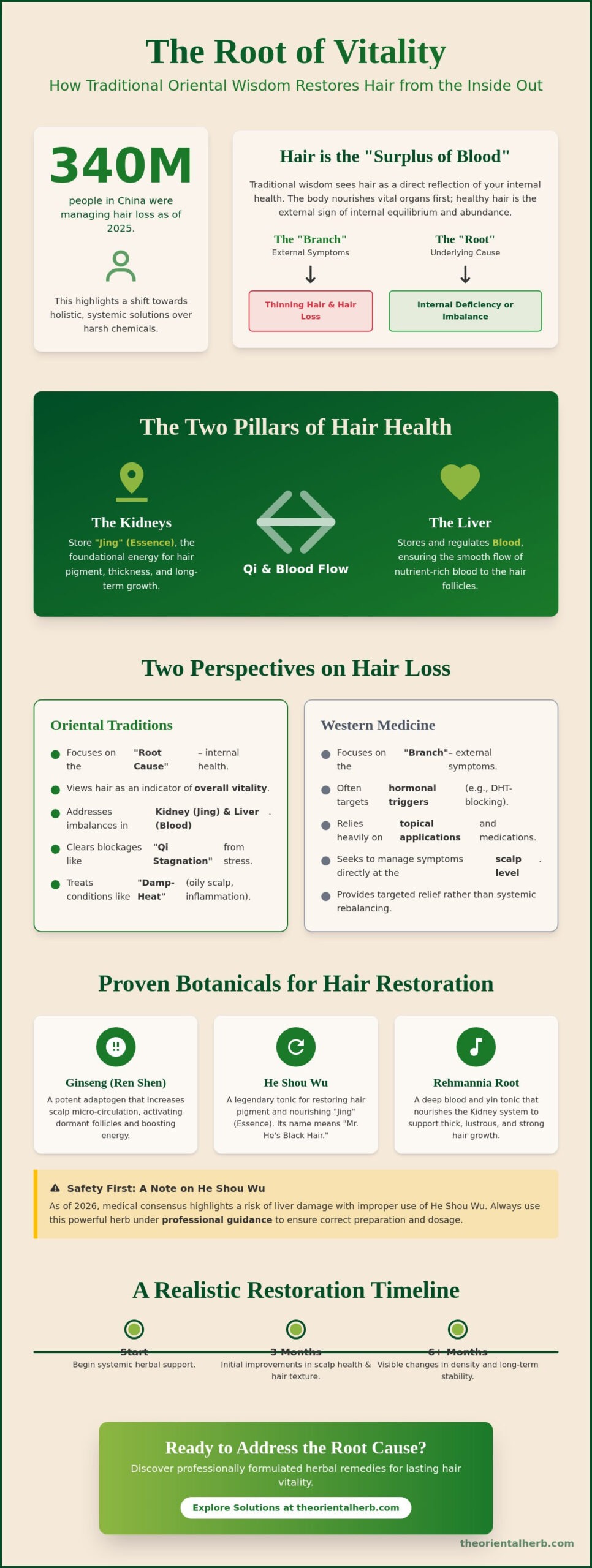
Did you know that 340 million people in China were managing hair loss as of 2025? This staggering figure explains why so many individuals are turning away from harsh chemicals and toward more holistic, systemic solutions. You’ve probably felt the deep frustration of scanning generic supplement labels, wondering if you’re actually helping your scalp or just wasting your time. It’s a common fear that the wrong treatment might inadvertently cause more harm than good.
We believe that true hair vitality is the external surplus of your internal equilibrium. This article will show you how chinese herbal medicine for hair loss utilizes traditional Oriental wisdom and modern herbal science to restore density and scalp health from the inside out. We’ll examine ten proven remedies that align with the latest 2026 safety standards; this provides you with an expert-vetted routine to achieve visible thickness and lasting internal balance.
Key Takeaways
- Understand the traditional Oriental perspective that views hair as a reflection of internal vitality, specifically linked to the health of your Blood and Jing.
- Discover how specific botanicals used in chinese herbal medicine for hair loss, such as Ginseng and He Shou Wu, work to improve scalp circulation and restore pigment.
- Learn to distinguish between the immediate relief provided by topical applications and the sustainable, long-term density improvements achieved through systemic herbal support.
- Establish a realistic three-to-six-month timeline for your restoration journey while prioritizing safety through professional guidance and high-quality herbal sourcing.
Beyond the Surface: How Herbal Traditions View Hair Vitality
Traditional wisdom suggests that the state of your hair is a direct reflection of your internal health. Within the framework of Chinese herbology, hair is described as the “surplus of Blood.” This concept implies that the body prioritizes its vital organs first. Once those essential systems are nourished, any remaining nutrient-rich blood is directed toward the hair follicles. Consequently, if your system is depleted, the hair is often the first area to show signs of distress.
The Kidney and Liver systems play a central role in this biological hierarchy. The Kidneys store “Jing,” or Essence, which acts as the foundational energy for hair pigment and long-term growth. When your Essence is robust, hair remains thick and retains its natural color. The Liver is responsible for storing blood and ensuring the smooth flow of energy throughout the body. If these systems are out of balance, the follicles cannot receive the nourishment they require to thrive.
Modern lifestyles often introduce “Qi Stagnation” into this delicate equation. Stress and tension cause the body’s vital energy to become restricted. This blockage prevents the “surplus” of blood from reaching the scalp, effectively starving the hair even if your diet is technically adequate. When exploring chinese herbal medicine for hair loss, it’s vital to address these internal energetic blocks rather than focusing solely on the scalp’s surface. Those who also struggle with chronic stress may find it helpful to learn about herbs for anxiety that restore systemic balance, as managing emotional tension is often a critical component of any holistic hair restoration plan.
The Internal Connection: Why Hair Health Starts Within
Practitioners distinguish between the “Root” and the “Branch” of a health issue. The thinning hair you see in the mirror is the Branch, or the external symptom. The Root is the underlying internal deficiency or imbalance causing the problem. Nutrient-rich blood serves as the primary fuel for the hair growth cycle, but it requires a catalyst to reach its destination. Qi is the vital force that moves nutrients to the scalp. Without sufficient Qi, even the most expensive supplements cannot reach the follicle to do their work.
TCM vs. Western Perspectives on Alopecia
Western medicine frequently focuses on hormonal triggers, such as DHT-blocking theories, to explain thinning. In contrast, Oriental traditions often look for “Damp-Heat,” a state of internal inflammation and metabolic sluggishness that can lead to an oily, irritated scalp and hair fall. A holistic approach addresses the whole person rather than just the scalp. Michael Kim, L.Ac., Dipl. O.M., has spent decades balancing these two medical worlds. He emphasizes that restoring hair density requires a strategy that harmonizes the body’s internal environment while supporting the physical structures of the follicle. This dual focus ensures that chinese herbal medicine for hair loss provides a sustainable path toward recovery.
A Roundup of the Most Effective Chinese Herbs for Hair Loss
Identifying the specific botanicals that facilitate restoration is the logical next step after understanding the internal landscape of your body. While many options exist, the most effective Traditional Chinese Medicine formulas rely on a synergistic blend of herbs rather than isolated ingredients. This methodical approach ensures that each plant supports the other, maximizing efficacy while minimizing potential side effects. Selecting the right chinese herbal medicine for hair loss requires a focus on both systemic nourishment and localized stimulation.
He Shou Wu (Polygonum multiflorum) remains a cornerstone of this tradition due to its reputation for restoring pigment and Essence. Its name literally translates to “Mr. He’s Black Hair,” referring to a legend of a man who regained his youth and hair color through its use. However, modern safety is paramount. As of 2026, medical consensus highlights a significant risk of liver damage associated with He Shou Wu. It’s essential to use this herb only under professional oversight to ensure it’s prepared and dosed correctly.
Other vital herbs include:
- Ginseng (Ren Shen): A potent stimulator that increases scalp micro-circulation and activates dormant follicles.
- Rehmannia Root (Shu Di Huang): A deep tonic that nourishes the Kidney system to support thick, lustrous growth.
- Ginkgo Biloba: This herb enhances oxygen delivery to the tiny micro-vessels surrounding the hair bulb.
- Saw Palmetto: A natural alternative frequently used to manage hair thinning related to hormonal shifts.
Top Oriental Herbs for Pigment and Strength
Angelica Sinensis, commonly known as Dong Quai, is often called the “Empress of Herbs.” It invigorates the blood specifically to ensure nutrients reach the hair health cycle. Rehmannia Root serves a complementary role by cooling scalp inflammation, which prevents the internal “Heat” that can lead to premature shedding. If you’re looking for guidance on choosing the right formulas, you can explore our range of authentic herbal medicine for health issues to find a solution tailored to your needs.
Invigorating Herbs for Follicle Stimulation
Topical stimulants like Ginger root provide a warming sensation that opens the pores and prepares the scalp for better absorption. Peppermint and Rosemary essential oils further support this by maintaining a healthy, flake-free environment. It’s vital to use professional-grade extracts rather than generic powders. High-quality chinese herbal medicine for hair loss relies on precise extraction methods to ensure the active compounds are present in therapeutic concentrations. This level of quality is what distinguishes a professional routine from a generic supplement approach.
Internal Remedies vs. Topical Treatments: A Comparative Framework
Choosing between internal nourishment and topical application is a pivotal decision in any restoration plan. While many individuals reflexively reach for medicated shampoos, these surface-level interventions often fail to address the systemic causes that make chinese herbal medicine for hair loss so effective. True restoration requires a strategy that acknowledges the difference between immediate relief and long-term health.
Topical solutions provide immediate relief for scalp itch, dandruff, and surface-level follicle stimulation. They act as a localized wake-up call for the skin, clearing away debris and improving the environment where hair grows. However, internal supplements are essential for building the long-term foundation for hair density and strength. Without addressing internal deficiencies, topical results are often fleeting. Combining both methods is the clinical gold standard because it treats the “Root” and the “Branch” simultaneously. Your specific hair type dictates the balance; for instance, those with oily scalps may need more topical rinses to clear Heat, while individuals with dry, brittle hair usually require deeper internal blood tonics.
When to Choose Herbal Teas and Concentrates
Systemic absorption is particularly beneficial for those experiencing chronic thinning or hair loss triggered by prolonged stress. Internal herbs allow the body to correct the underlying imbalances in the Kidney and Liver systems that we identified earlier. When selecting chinese herbal medicine for hair loss, high-potency herbal granules often provide superior results compared to standard capsules. Granules are concentrated extracts that the body can assimilate more efficiently, ensuring that the active compounds reach the bloodstream and, eventually, the hair bulb. A recent scientific review of Polygonum multiflorum published in February 2026 highlights how these internal mechanisms work to protect follicles from within by modulating growth factors.
The Role of Scalp Tonics and Herbal Rinses
Herbal decoctions serve as a natural alternative to chemical conditioners, offering a way to strengthen the hair shaft without synthetic buildup. Traditional rinses using fermented Rice Water or Goji Berry extracts are prized for their ability to improve shaft elasticity and shine. These topical applications deliver antioxidants directly to the site of growth. Maintaining a proper scalp pH balance is critical for ensuring these herbal ingredients can penetrate the skin barrier effectively. If the scalp environment is too alkaline, the beneficial alkaloids in your herbal rinse cannot do their work. By integrating these rinses into your routine, you create a protective shield that supports the internal work being done by your herbal concentrates.
Safe Integration: Navigating Your Herbal Hair Care Routine
Adopting a holistic approach to hair restoration requires a shift in perspective, moving away from the expectation of overnight results. Because the hair growth cycle is a slow biological process, establishing a three-to-six-month timeline is essential for realistic expectations. Unlike synthetic topical treatments that may offer temporary swelling of the hair shaft, chinese herbal medicine for hair loss works by correcting deep-seated internal imbalances. This process takes time as your body replenishes its “Jing” and Blood reserves. During the first 90 days, healthy regrowth often manifests first as a significant reduction in daily shedding and an improvement in the overall texture of the scalp environment.
Safety remains our highest priority during this integration phase. While botanical remedies are natural, they are also potent pharmacological agents that can interact with conventional medications. It is vital to seek professional oversight, particularly if you are managing conditions like high blood pressure or diabetes. A qualified practitioner ensures that your herbal routine does not conflict with your existing health plan. This professional guidance is especially important when using concentrated extracts, as it allows for precise dosage adjustments based on your body’s specific response to the treatment. If stress is a contributing factor to your hair loss, exploring natural herbs for anxiety that support the nervous system alongside your hair restoration protocol may provide a more comprehensive path to internal balance.
A Step-by-Step Weekly Herbal Schedule
Consistency is the foundation of success in Oriental medicine. For optimal results, we recommend a structured weekly rhythm:
- Daily: Take your internal herbal support as directed to consistently nourish your Blood and Qi from within.
- Bi-weekly: Perform a gentle scalp massage using invigorated herbal oils to stimulate micro-circulation and encourage follicle activation.
- Monthly: Apply a deep-cleansing herbal rinse to remove environmental pollutants and product buildup that can clog pores.
Bergen County Hair Care: Local Tips for Local Residents
Residents of North Jersey face unique environmental stressors that can impact the efficacy of their herbal routine. The hard water prevalent in many Bergen County homes contains minerals that can create a barrier on the hair shaft, potentially blocking the absorption of topical herbal tonics. Additionally, the harsh winters in towns like Ridgefield and Teaneck can lead to extreme scalp dryness, while the summer humidity in Cliffside Park and Fort Lee may trigger the “Damp-Heat” imbalances discussed earlier. To ensure your routine is effective regardless of the NJ climate, it’s helpful to consult with local experts who understand these regional challenges. You can explore our professional herbal medicine for health issues to find formulas designed to withstand these environmental pressures while supporting your long-term vitality.
The Oriental Natural Herbs Difference: Professional Expertise
The journey toward restored hair density is rarely a path one should walk alone. Michael Kim, L.Ac., Dipl. O.M., has been serving the community since 1995, providing a bridge between ancient botanical wisdom and the practical needs of modern life. This legacy of nearly three decades ensures that every recommendation is grounded in historical authority and a deep understanding of human physiology. When you choose a professional approach, you’re moving beyond the trial-and-error of generic supplements and toward a strategy that prioritizes your long-term well-being. It’s this commitment to sincerity and education that defines our role as a dedicated provider in the health and wellness industry.
Sourcing remains the most critical factor in the efficacy of chinese herbal medicine for hair loss. The market is currently saturated with anonymous online retailers that often prioritize profit over purity. We maintain a rigorous commitment to sourcing high-quality, authentic Oriental herbs that meet strict safety standards. This professional oversight is essential because generic remedies frequently lack the necessary potency or may contain unlisted fillers. By choosing a trusted local resource in Bergen County, you ensure that the botanicals you consume are both safe and effective for your specific constitution. Transitioning from generic remedies to a professional herbal strategy allows you to address the “Root” of your health issues with confidence.
A Mentor-Led Approach to Natural Healing
A consultation with a Licensed Acupuncturist provides a level of precision that a retail shelf cannot match. We carefully curate our selection for safety, purity, and potency, ensuring that each formula aligns with the latest 2026 regulatory guidelines. We’re proud to serve our neighbors in Englewood, Fairview, and North Bergen, offering a supportive environment for those looking to make informed lifestyle decisions. This mentor-led approach ensures that your use of chinese herbal medicine for hair loss is part of a balanced, holistic plan. We act as a stable resource, helping you navigate the complexities of herbal medicine with clarity and reverence for the tradition.
Your Path to Restored Vitality
Restoring your hair is a holistic journey that begins with scalp health and ends with total internal balance. We’ve explored how the “surplus of Blood” and the strength of your “Jing” determine the longevity of your follicles. By integrating systemic nourishment with targeted topical care, you create the optimal environment for growth. We invite you to explore our curated herbal medicine retail offerings to find the support your body needs. Taking the next step toward health shouldn’t be confusing or overwhelming. You can Consult with Michael Kim at The Oriental Natural Herbs to begin your personalized path toward lasting vitality and confidence.
Embracing a Holistic Path to Lasting Hair Vitality
Achieving sustainable hair density is a journey that requires patience and a commitment to internal balance. You’ve learned that your hair health is a direct reflection of your body’s “surplus” energy and that true restoration involves more than just surface-level treatments. By prioritizing high-quality botanicals and a structured routine, you can address the root causes of thinning rather than just the symptoms. Choosing a professional strategy for chinese herbal medicine for hair loss ensures that your path is both safe and effective.
At The Oriental Natural Herbs, we’ve been serving the Bergen and Union County communities since 1995. Our practice is led by Michael Kim, a Licensed Acupuncturist with over 30 years of experience in the field. We provide authentic, professional-grade Traditional Chinese Medicine that bridges the gap between historical wisdom and your modern well-being. We invite you to explore our professional-grade herbal remedies for hair and health to find the support you deserve. Your path to restored vitality is within reach, and we’re here to guide you with sincerity and expertise.
Frequently Asked Questions
Are Chinese herbal remedies for hair loss safe to use with other medications?
Professional consultation is vital because botanical compounds are pharmacologically active and can interact with prescription drugs. For example, herbs that invigorate blood might conflict with conventional anticoagulants or blood pressure medications. You should always disclose your full medical history to a practitioner before starting any chinese herbal medicine for hair loss to ensure a safe and harmonious treatment plan.
How long does it take for He Shou Wu to show results for hair growth?
Visible changes from He Shou Wu typically require a consistent three-to-six-month period to align with the natural hair growth cycle. However, as of early 2026, there’s a strong medical consensus that this herb carries a significant risk of liver damage. It’s critical to use only professionally prepared versions under strict medical supervision to monitor for potential hepatotoxicity while pursuing hair restoration.
Can herbal medicine help with male pattern baldness (AGA)?
Herbal strategies address male pattern baldness by focusing on the internal “Damp-Heat” and Kidney deficiencies that often accompany hormonal shifts. While Western medicine focuses on blocking DHT, Oriental traditions look to balance the body’s systemic environment to support follicle longevity. This holistic approach helps maintain existing density and improves the health of the scalp tissue to prevent premature shedding.
What is the best herb for thickening thinning hair in women?
Angelica Sinensis, also known as Dong Quai, is frequently considered the premier herb for women’s hair health due to its ability to nourish the Blood. Since Oriental medicine views hair as the surplus of Blood, this herb ensures that vital nutrients reach the scalp. Rehmannia Root is often paired with it to provide deep nourishment to the Kidney system, which supports the structural strength of each strand.
Do I need a professional consultation to use these herbs?
Seeking a professional consultation is highly recommended to ensure both safety and efficacy in your routine. As of 2026, stricter government regulations in China and the EU highlight the need for science-based standards in herbal products. A Licensed Acupuncturist can provide a tailored strategy that accounts for your unique constitution and helps you avoid the risks of contaminated or adulterated retail supplements.
How does stress-related hair loss differ in Traditional Chinese Medicine?
Traditional Chinese Medicine identifies stress-related loss as a result of “Qi Stagnation” rather than just a spike in cortisol. When emotional tension blocks the flow of vital energy, it prevents the blood from reaching the follicles at the top of the head. Treatment focuses on smoothing the flow of Qi and Liver energy to restore the delivery of nutrients to the scalp environment.
Can I use herbal hair oils on a sensitive or oily scalp?
You can use herbal oils on sensitive or oily scalps, provided you select cooling botanicals like Peppermint or Goji Berry. It’s important to avoid heavy, occlusive oils that might trap “Dampness” and exacerbate inflammation or dandruff. Using a bi-weekly application followed by a thorough herbal rinse helps maintain a balanced pH and keeps the pores clear for optimal growth.
What should I look for on a label to ensure herbal purity and quality?
You should prioritize products that demonstrate compliance with Current Good Manufacturing Practice (CGMP) and the Modernization of Cosmetics Regulation Act (MoCRA). In early 2026, the FDA announced several recalls of supplements found to contain unlisted prescription drugs. Choosing chinese herbal medicine for hair loss from a reputable provider ensures that the extracts are unadulterated and have undergone rigorous testing for potency and safety.