

With over 40 million adults in the United States currently managing anxiety disorders, the search for a sustainable path to peace has never been more urgent. You likely feel the weight of daily stress and perhaps worry about the potential for pharmaceutical dependency or the confusion caused by conflicting online advice. It’s understandable to seek a solution that honors your body’s natural rhythms. Many individuals are now looking toward herbs for anxiety as a way to restore systemic balance rather than simply sedating their symptoms.
This article provides a professional look at the truth behind herbal remedies, helping you find clarity in a crowded marketplace. We’ll show you how to integrate these traditional tools into a modern wellness routine with confidence and safety. By examining historical wisdom alongside current 2026 regulatory insights, we’ll outline which specific botanicals offer genuine relief and how you can achieve a state of lasting mental tranquility. You’ll gain a clear understanding of effective remedies and the structured steps necessary to reduce daily symptoms and reclaim your vitality.
Key Takeaways
- Understand how bioactive compounds in medicinal plants modulate the nervous system and regulate the HPA axis to manage cortisol production naturally.
- Discover why the “one-size-fits-all” approach to wellness is a myth and how Traditional Chinese Medicine addresses the unique needs of the “Shen” or Spirit.
- Identify critical safety protocols for integrating herbs for anxiety into your routine, including the necessity of managing potential herb-drug interactions with professional guidance.
- Learn the specific benefits of premier botanicals like Ashwagandha and Reishi Mushroom to determine which remedy aligns with your physiological state.
- Recognize the importance of sourcing high-quality herbal medicine from established, knowledgeable providers with a long-standing legacy of community care.
What Are Herbs for Anxiety and How Do They Truly Work?
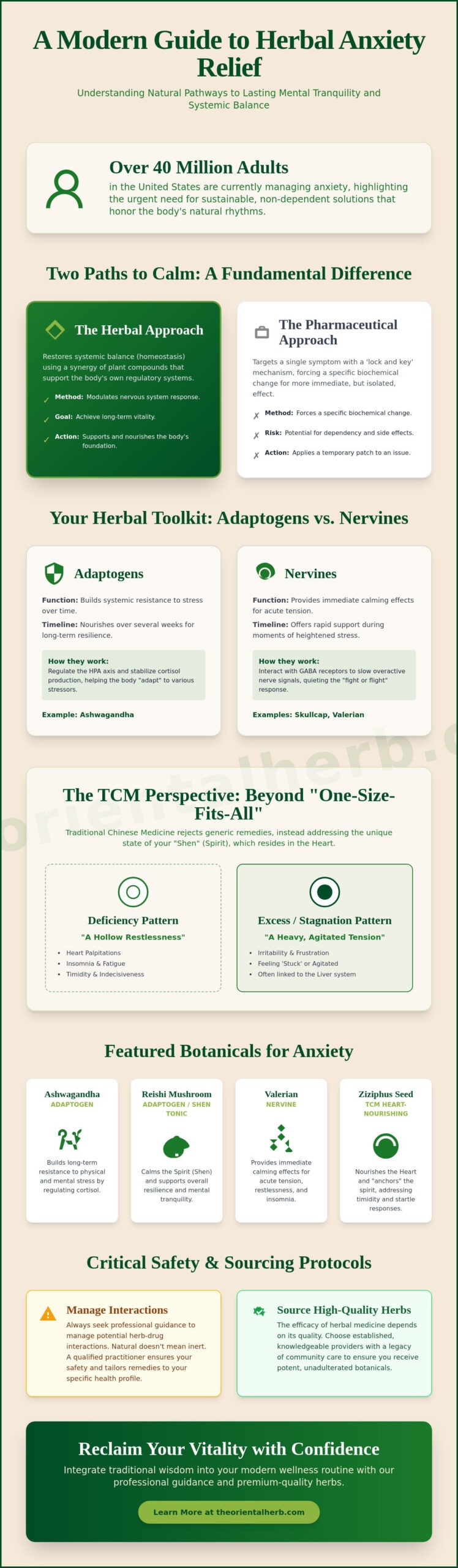
Herbs for anxiety are best understood as medicinal plants containing complex bioactive compounds that modulate the human nervous system response. Unlike synthetic options that often target a single symptom with a heavy hand, these botanicals work through a sophisticated synergy of phytochemicals. This natural complexity allows the body to move toward a state of homeostasis, or internal balance, rather than simply suppressing a specific feeling. By interacting with our physiology, these plants help regulate the biological markers of stress, such as elevated cortisol levels.
The common comparison between herbal medicine and pharmaceutical drugs is fundamentally flawed because their methods of action differ significantly. A drug typically acts as a lock and key, forcing a specific biochemical change. In contrast, herbal remedies provide a spectrum of compounds that support the body’s own regulatory systems. This distinction is vital for those seeking long-term vitality without the risk of dependency. It’s about restoring a foundation of health rather than applying a temporary patch to a deeper issue.
Adaptogens vs. Nervines: Knowing the Difference
Understanding the two primary categories of herbal support is essential for creating a structured path to tranquility. Adaptogens, such as Ashwagandha, are designed to build systemic resistance to stress over time by regulating the HPA axis and stabilizing cortisol production. These are often referred to as tonics because they nourish the body’s core energy and help it adapt to various stressors. On the other hand, nervines like Skullcap or Valerian provide more immediate calming effects for acute tension and restlessness. While adaptogens nourish the foundation of the nervous system over several weeks, nervines provide the necessary immediate support during moments of heightened tension.
The Biological Mechanism of Calming Herbs
The efficacy of these plants is rooted in clear biological processes. Many herbal compounds interact with GABA receptors in the brain, which are responsible for slowing down overactive nerve signals and promoting relaxation without causing heavy sedation. This interaction helps quiet the sympathetic nervous system, commonly known as the “fight or flight” response, which is often stuck in an “on” position for those with chronic stress. By naturally supporting neurotransmitter balance, these herbs help the body transition into the parasympathetic state, where healing and rest occur. This methodical approach ensures that the relief felt is a result of improved systemic function rather than a chemical override.
The TCM Perspective: Myths About ‘One-Size-Fits-All’ Remedies
A common misconception in modern wellness is that any plant labeled as “calming” will provide relief for every individual. Traditional Chinese Medicine (TCM) rejects this “one-size-fits-all” approach, focusing instead on the concept of “Shen,” or the Spirit. In this tradition, the Shen resides in the Heart. When the Heart is unsettled, anxiety manifests. However, the reason for this unrest varies between people. Choosing herbs for anxiety requires a nuanced understanding of these internal landscapes and constitutional patterns.
Practitioners categorize anxiety into two primary patterns: deficiency and excess. Deficiency-based anxiety often feels like a hollow restlessness, sometimes accompanied by heart palpitations, insomnia, or fatigue. Conversely, excess-based anxiety, or stagnation, presents as a heavy, agitated tension often linked to the Liver system. Treating a deficiency pattern with herbs designed for excess can lead to further imbalance. This is why professional assessment is superior to purchasing single-ingredient bottles online without a diagnostic context. It ensures the remedy addresses the specific nature of your discomfort.
Understanding the Heart-Gallbladder Relationship
TCM identifies a specific link between the Heart and the Gallbladder regarding emotional stability. A deficiency in Gallbladder Qi often manifests as chronic indecisiveness, timidity, and an easily triggered startle response. To address this, specific herbs like Ziziphus, also known as Jujube seed, are used to nourish the Heart and calm the mind. These botanicals serve to “anchor” the spirit during periods of high stress. This provides a sense of groundedness that single-herb supplements often lack, as they fail to address the relationship between these vital organ systems.
Custom Formulations vs. Generic Supplements
While many people seek herbal treatment for anxiety through mass-produced supplements, historical wisdom favors complex formulas. A combination of herbs is more balanced because individual ingredients work together to mitigate side effects and enhance overall efficacy. This method addresses the root cause of the imbalance rather than just masking the anxious feeling with a sedative effect. At The Oriental Natural Herbs, Michael Kim utilizes these specific diagnostic patterns to create tailored protocols for local clients, ensuring the herbal medicine aligns with their unique constitution and provides a sustainable path to tranquility.
Busting Safety Myths: Are Herbs for Anxiety Dangerous?
The assumption that “natural” is synonymous with “harmless” is a significant misunderstanding that can lead to improper use of herbal medicine. While herbs for anxiety offer a profound path to tranquility, they’re potent biological tools that require respect and informed application. It’s a common myth that the herbal industry is entirely unregulated; however, reputable providers adhere to strict standards to ensure consumer safety. Understanding the distinction between retail-grade supplements and practitioner-grade herbal medicine is the first step toward a safe wellness journey.
When you’re considering herbal support, transparency with your healthcare provider is essential. Certain botanicals can interact with prescription medications, particularly those targeting blood pressure or the central nervous system. For example, while Chamomile is widely recognized for its gentle profile and general safety, other plants like Kava or Valerian require more specific dosing protocols. Kava, in particular, has historically faced scrutiny regarding liver health, yet modern research indicates that many risks are mitigated through traditional water-based extraction and the use of specific plant parts. Professional guidance ensures you’re using the correct species and preparation for your unique needs.
The Truth About Regulation and Purity
Quality control is the foundation of any effective herbal protocol. Reliable manufacturers follow Current Good Manufacturing Practice (cGMP) standards, which mandate rigorous testing for botanical identity and purity. Practitioner-led dispensaries go a step further, ensuring that every batch is free from heavy metals, pesticides, and contaminants that can sometimes plague mass-produced retail products. This focus on botanical identity ensures you aren’t just getting a plant, but the specific species and concentration required to achieve the desired therapeutic effect. Sourcing matters as much as the herb itself.
Managing Expectations: Potency and Timing
It’s vital to understand that herbal medicine doesn’t function like a fast-acting benzodiazepine. Many people mistakenly expect instant sedation, but the true power of herbs for anxiety lies in their cumulative effect. These plants work by gradually nourishing the nervous system and retraining the body’s stress response over several weeks. Consistency is paramount for success. If your symptoms are severe or if you find yourself in a state of acute crisis, it’s important to seek professional help rather than attempting to self-treat. Herbal medicine is most effective when used as a structured, long-term support system for systemic health.
Actionable Guide: Top Herbs for Anxiety in 2026
Transitioning from theory to practice requires a discerning eye for quality and specific application. While previous sections established how these plants interact with the HPA axis, selecting the right herbs for anxiety involves matching the botanical’s energetic profile to your unique symptoms. Ashwagandha remains a premier choice in 2026 for those in a “tired but wired” state, providing the necessary support for individuals experiencing profound burnout. Similarly, Reishi Mushroom, traditionally honored as the “Mushroom of Immortality,” serves as a powerful tool for grounding an unsettled spirit and fostering long-term resilience.
For those needing to maintain mental clarity during the workday, L-Theanine and Lemon Balm offer gentle yet effective support for focus-related tension. In the context of Oriental medicine, Suan Zao Ren (Sour Date Seed) stands as a foundational staple for addressing anxiety that interferes with restful sleep. These selections represent a structured approach to mental tranquility, moving beyond the generic supplements found in retail aisles. While many options exist, these specific herbs for anxiety are most effective when integrated into a broader wellness strategy. The same holistic principles that guide anxiety relief also underpin approaches like chinese herbal medicine for hair loss, demonstrating how internal balance supports multiple dimensions of health simultaneously. Indeed, this inside-out philosophy extends even further, as the same botanical wisdom that calms the nervous system can also be applied through herbs for skin health, where internal physiological balance directly shapes the clarity and resilience of your complexion.
Choosing the Right Herb for Your Symptoms
Identifying your primary physical or mental manifestation of stress is crucial for success. If you experience physical tension or a racing heart, Passionflower and Magnesium-rich herbs provide targeted relaxation for the muscular and cardiovascular systems. Mental rumination and persistent worry are often better addressed with Holy Basil (Tulsi) and Schisandra, which help stabilize the mind’s focus. When anxiety manifests as digestive upset, the soothing properties of Peppermint and Chamomile can restore comfort to the enteric nervous system.
Practical Integration: Tea, Tincture, or Capsule?
The delivery method of your herbal medicine significantly impacts its bioavailability and effectiveness. Tinctures offer rapid absorption, while capsules provide a convenient and standardized dose for busy lifestyles. However, the ritual of preparing herbal tea acts as a secondary calming mechanism, engaging the senses and forcing a moment of stillness in a chaotic day. It’s vital to remember that in professional herbalism, a higher dosage doesn’t equate to better results; consistency and proper formulation are the true drivers of success. To begin your journey toward a balanced lifestyle, you can explore professional-grade herbal medicine for health issues tailored to your specific needs.
Professional Herbal Care in Bergen and Union County
For residents in Fort Lee and Teaneck, the path to mental tranquility is often obscured by the fast-paced nature of Northern New Jersey life. While the previous sections detailed the biological and traditional mechanisms of herbs for anxiety, the successful application of these remedies depends heavily on professional guidance. The Oriental Natural Herbs has maintained a dedicated legacy of quality since 1995, serving as a stable resource for those seeking to move beyond generic supplements. Michael Kim, L.Ac., serves as a knowledgeable mentor, bridging the gap between ancient botanical wisdom and the practical needs of modern individuals.
A professional consultation ensures that your journey toward wellness is grounded in safety and precision. Rather than guessing which bottle might work, you receive a protocol designed for your specific constitutional pattern. This methodical approach builds trust and reliability, helping you achieve a state of balance that supports your long-term health goals. It’s about more than just temporary relief; it’s about a commitment to community vitality and individual well-being.
A Community Resource for Holistic Health
Our practice provides Bergen County with access to professional-grade herbal medicines that are carefully vetted for purity and potency. A local practitioner understands the specific environmental and lifestyle stressors that contribute to systemic imbalance in our community. The business’s location in Cliffside Park serves as a central hub for wellness, offering a supportive environment where individuals can explore natural vitality. This proximity allows for a more personalized level of care that online retailers simply cannot replicate.
Empowering Your Wellness Journey
Transitioning from self-diagnosis to professional health management is a vital step in achieving lasting results. While it’s tempting to experiment with various supplements based on internet trends, this often leads to a cycle of frustration and incomplete relief. The Oriental Natural Herbs focuses on providing safe, structured solutions that address the root cause of your anxiety patterns. By choosing a vetted protocol, you ensure that your approach to health is both methodical and effective. We invite you to consult with Michael Kim for a personalized anxiety herbal plan to begin your journey toward a more balanced and purposeful life.
Reclaiming Your Mental Vitality Through Traditional Wisdom
Achieving a state of tranquility in 2026 requires moving beyond the surface of stress management toward a deeper restoration of systemic balance. We’ve explored how medicinal plants modulate the nervous system and why the Traditional Chinese Medicine perspective is vital for identifying your unique constitutional pattern. By understanding the distinction between generic supplements and practitioner-grade formulations, you can safely integrate herbs for anxiety into a structured wellness routine. It’s a journey that honors your body’s natural rhythms while utilizing the precision of modern safety standards.
The Oriental Natural Herbs has served the community since 1995, providing a bridge between ancient practices and contemporary health needs. Led by Michael Kim, a Licensed Acupuncturist and Diplomate of Oriental Medicine, our practice offers the expertise necessary to navigate herbal medicine with confidence. Choosing professional care ensures that your protocol is both safe and effective, allowing you to focus on your long-term vitality. We invite you to explore our professional herbal remedies for anxiety and take the first step toward a more grounded and peaceful life. Your commitment to natural health is a powerful investment in your future well-being.
Frequently Asked Questions
Is it safe to take herbs for anxiety while on prescription medication?
Safety depends entirely on the specific combination of the herb and the prescription drug you’re currently taking. Some botanicals can alter the metabolism of medications in the liver or create additive effects that may be harmful. It’s essential to consult with both your prescribing physician and a licensed herbalist to identify potential interactions, particularly with blood thinners, antidepressants, or sedative medications.
How long does it take for anxiety herbs to start working?
The timeline for relief varies significantly depending on whether you’re using a nervine for acute support or an adaptogen for systemic balance. Nervines like Skullcap may provide a noticeable calming effect within 30 to 60 minutes of consumption. In contrast, adaptogenic herbs for anxiety typically require two to four weeks of consistent use to effectively modulate the HPA axis and stabilize cortisol levels.
Can herbs for anxiety cause side effects like drowsiness?
Certain herbs can indeed cause drowsiness, especially those with strong sedative properties like Valerian or Hops. While these are beneficial for nighttime restlessness, they may lead to daytime lethargy if the dosage isn’t properly adjusted for your constitution. Understanding the energetic profile of each plant helps ensure that your protocol provides tranquility without compromising your mental clarity during the workday.
What is the best herb for acute panic attacks?
Strong nervines such as Motherwort or Passionflower are frequently utilized for their ability to provide rapid support during moments of acute tension. These plants work quickly to quiet the sympathetic nervous system and reduce the physical sensations of a racing heart or shallow breathing. However, these remedies are most effective when used as part of a broader, professionally managed plan rather than as a standalone emergency measure.
Are Chinese herbs more effective than Western herbs for anxiety?
Neither system is inherently superior; instead, they offer different methodologies for restoring internal harmony. Western herbalism often emphasizes the use of single plants for specific symptomatic relief. Chinese herbal medicine focuses on complex formulas that address the root cause of an imbalance based on your unique diagnostic pattern. This structured approach often provides more sustainable results for chronic or complex emotional challenges.
What happens if I take too much of a calming herbal supplement?
Taking excessive amounts of herbal medicine can lead to adverse reactions such as digestive upset, dizziness, or profound lethargy. Because these plants contain bioactive compounds, exceeding the recommended professional dosage doesn’t increase their efficacy and may place unnecessary strain on your metabolic processes. Consistency and precision in dosing are far more important for achieving a balanced state than the quantity consumed.
Can children or the elderly safely use herbs for anxiety?
Both children and the elderly can benefit from herbal support, but their dosages and plant selections must be carefully modified for their sensitive systems. Gentle options like Chamomile are often appropriate, yet more potent herbs for anxiety require strict professional oversight to avoid adverse reactions. A licensed practitioner will ensure that the protocol is age-appropriate and doesn’t interfere with any pre-existing health conditions or medications.
Is Ashwagandha better than CBD for long-term stress management?
Ashwagandha and CBD are both effective tools, but they function through different biological pathways. Ashwagandha is a traditional adaptogen that directly nourishes the adrenal system to build long-term resilience against stress. CBD interacts with the endocannabinoid system to modulate mood and pain responses. The choice between them depends on whether your primary goal is to rebuild a depleted system or to manage immediate sensory overstimulation.