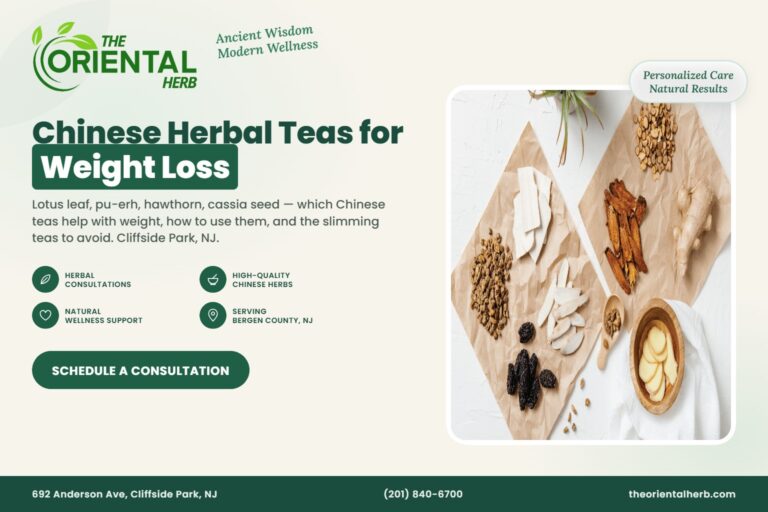
“Slimming tea” is one of the most abused phrases in the herb world, so let us be clear from the start: no tea melts fat, and any product that promises it is either exaggerating or hiding a laxative. What Chinese herbal tea for weight loss can do is real but modest – support digestion, reduce bloating and fluid retention, blunt a sugar craving, and help the body process fatty food. Used daily alongside the food changes in our herbal remedies for weight loss guide, that adds up.
Teas That Help
He Ye (Lotus Leaf) Tea
The traditional Chinese slimming tea. Light and slightly bitter, lotus leaf drains dampness and is used for the heavy, bloated, water-retaining type of weight. Steep 3–5 g in hot water for 10 minutes.
Pu-erh Tea
A fermented dark tea from Yunnan, drunk after rich meals across China. It aids fat digestion and is gentle on the stomach; it does contain caffeine.
Oolong Tea
Partially fermented; several studies suggest a small effect on fat metabolism. A good daily base tea.
Shan Zha (Hawthorn Berry) Tea
Sour and digestive, hawthorn breaks down greasy food and is used for both weight and cholesterol. See our Chinese herbs for cholesterol page.
Jue Ming Zi (Cassia Seed) Tea
Roasted cassia seed gently moistens the bowel and clears heat – useful for the constipated, overheated type. Not for people with loose stools.
Chen Pi (Tangerine Peel) and Ginger Tea
Warms and moves the digestion; the right choice for the cold, bloated, slow type who gains weight on cold food.
Barley (Da Mai) and Job’s Tears Tea
Mild, food-grade, damp-draining; a good caffeine-free evening option.
Teas and Products to Avoid
- Any “detox” or “slimming” tea containing senna or other strong laxatives – weight lost is water, and daily use damages the gut.
- Products with no ingredient list, or that list “proprietary blend.”
- Anything claiming pounds lost per week.
How to Use Weight-Loss Teas Well
- Drink warm, after meals rather than on an empty stomach.
- Match the tea to your type: lotus leaf for damp and heavy, tangerine-ginger for cold and bloated, cassia for hot and constipated.
- Replace sugary drinks with tea – this alone is often the biggest change.
- Give it eight weeks with the food rules before judging.
Safety
Caffeinated teas (pu-erh, oolong) can disturb sleep and raise blood pressure in sensitive people. Cassia seed and lotus leaf are not used in pregnancy. If you take diuretics or blood-pressure medication, mention tea habits to your doctor. See also Chinese herbs for belly fat.
Frequently Asked Questions
Which Chinese tea is best for weight loss?
For most people, lotus leaf for dampness during the day and pu-erh or oolong as the daily base tea. A practitioner can blend one for your pattern.
How much should I drink?
Two to three cups a day. More is not better.
Can I buy these in New Jersey?
All are available at our Chinese herb store in Cliffside Park.
Talk to a Chinese herbal practitioner in Cliffside Park, NJ. The Oriental Herb has served Bergen County since 1995 with personalized herbal consultations and high-quality Chinese herbs. Book a consultation, call (201) 840-6700, or visit our Chinese herb store at 692 Anderson Ave.
This article is for educational purposes only and is not medical advice. Chinese herbs are not a replacement for diagnosis or treatment from your physician. Always tell your doctor and your herbalist about every medication and supplement you take.