
Did you know the global herbal medicine market is projected to reach $257.17 billion by the end of 2026? Despite this rapid expansion, many people still find themselves lost when searching for effective herbal remedies for inflammation that provide more than just a fleeting sense of relief. You’ve likely experienced the frustration of persistent joint stiffness or the concerning side effects that often accompany long-term pharmaceutical use. It’s difficult to build a reliable wellness routine when supplement quality feels inconsistent and dosage instructions remain vague.
We believe that true healing requires a bridge between ancient practices and modern precision. This article promises to provide a structured approach to using traditional herbal wisdom to soothe inflammation and restore your natural equilibrium. We’ll guide you through a professional-grade checklist that considers the latest 2026 regulatory shifts, such as the FDA’s finalized guidance on new dietary ingredients. By the end of this guide, you’ll have a clear, evidence-based path toward improved mobility and a more purposeful daily routine.
Key Takeaways
- Gain a deeper understanding of how Oriental concepts such as stagnant “Qi” and “Blood” contribute to physical discomfort and systemic pain.
- Follow a structured checklist to select high-potency herbal remedies for inflammation, ensuring you prioritize ingredients like curcumin paired with piperine for maximum effectiveness.
- Learn why standardized extracts are essential for achieving reliable results and how to distinguish between various herbal forms for superior quality.
- Implement a “low and slow” protocol to safely introduce traditional wisdom into your daily life while maintaining a focus on digestive tolerance and long-term health.
- Discover how professional guidance can help you transition from confusion over supplement quality to a dependable, expert-led wellness routine.
Understanding Inflammation Through the Lens of Oriental Wisdom
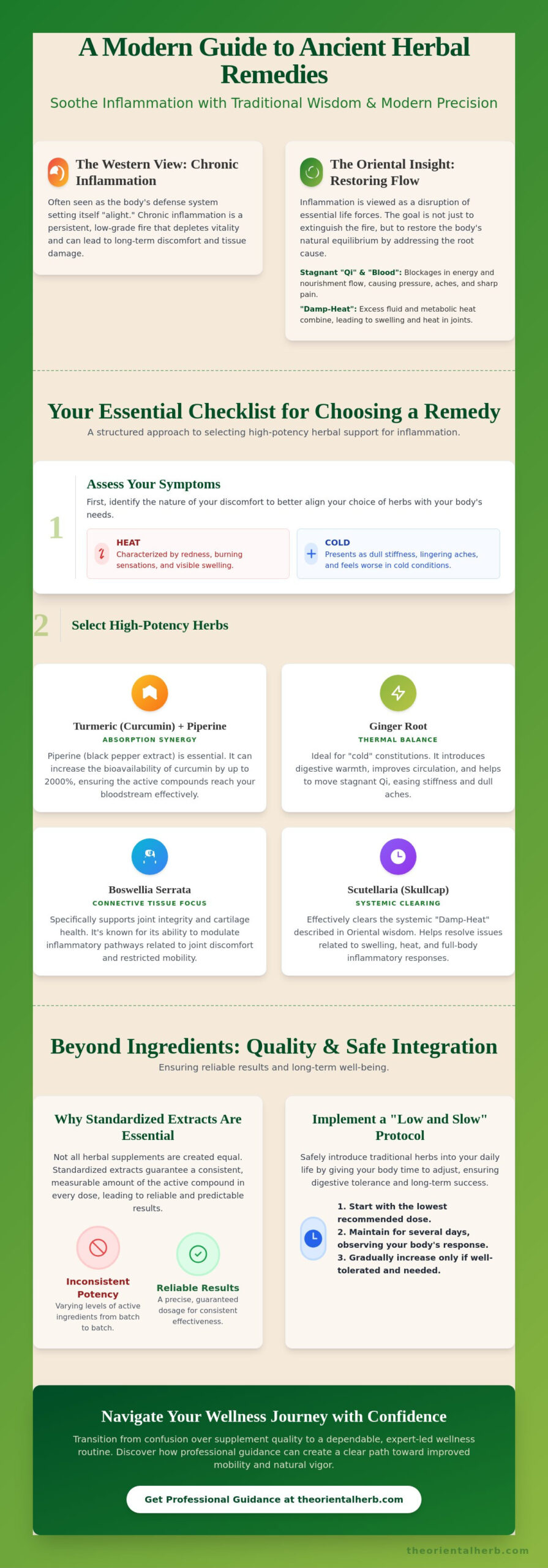
Inflammation is frequently characterized as the body’s internal defense system setting itself “alight” to guard against perceived threats. While acute responses are necessary for survival, chronic inflammation acts as a persistent, low-grade fire that gradually depletes our vitality. Oriental medicine interprets this phenomenon through a distinct lens. It doesn’t view the condition solely as an immune reaction. Instead, it identifies a fundamental disruption in the flow of essential life forces. When exploring herbal remedies for inflammation, our goal isn’t merely to extinguish a flame. We seek to restore the fluid movement of the body’s internal pathways.
Stagnant “Qi” and “Blood” represent the primary causes of inflammatory discomfort in this traditional framework. Qi acts as the energetic catalyst for all biological functions. Blood serves as the physical foundation for nourishment. When these elements fail to circulate freely, internal pressure increases. This lack of movement creates the sharp, localized sensations or the heavy, lingering aches that define many people’s daily lives.
Numerous contemporary inflammatory issues, including arthritis, fall under the category of “Damp-Heat.” This term describes a state where excess fluid accumulation meets metabolic heat. The clinical result is often visible swelling, heat in the joints, and restricted range of motion. By June 2026, consumer preferences have moved toward systemic cooling. There’s a growing realization that masking symptoms is insufficient. Modern seekers now prioritize strategies that resolve these deep-seated environmental imbalances within the body.
The Biological Mechanism of Herbal Healing
Traditional botanical medicine employs intricate plant compounds to influence the mechanism of inflammation at its cellular foundation. Formulas don’t just rely on a single active agent. They provide a sophisticated synergy of antioxidants and anti-inflammatory phytonutrients. These components work in harmony to promote the active resolution of the inflammatory response. This transition from suppression to resolution is essential. It allows damaged tissues to return to a state of natural equilibrium rather than remaining in a state of suspended irritation.
Why a Holistic Approach Outperforms Single-Ingredient Solutions
Standard pharmaceutical “blockers” target specific enzymes to provide rapid relief. While helpful in emergencies, they often ignore the broader constitutional balance. Herbal “modulators” offer a more nuanced alternative. They support the body’s ability to self-regulate without causing secondary imbalances. By addressing the root cause, such as systemic stagnation or digestive heat, herbal remedies for inflammation provide a more sustainable path to wellness. This method ensures that the reduction of pain also coincides with an overall improvement in physical mobility and natural vigor.
The Essential Checklist: Herbal Remedies for Inflammation
Selecting the appropriate botanical support requires more than identifying a popular ingredient. It demands a methodical evaluation of your specific physical state. To move beyond generic solutions, you should first identify the primary nature of your discomfort. Does the area feel stiff and cold, or is it characterized by redness and heat? Perhaps you experience sharp, localized pain that suggests significant stagnation. By categorizing your symptoms, you can better align your choice of herbal remedies for inflammation with your body’s actual needs.
A reliable checklist for effective inflammation management should include the following criteria:
- Symptom Assessment: Distinguish between dull stiffness (often requiring warmth) and burning heat (requiring cooling agents).
- Absorption Synergy: Verify that Turmeric or Curcumin supplements include piperine. This black pepper extract is essential for ensuring the active compounds reach your bloodstream.
- Thermal Balance: Incorporate Ginger Root if you need to support circulation and introduce digestive warmth to a “cold” constitution.
- Connective Tissue Focus: Look for Boswellia Serrata to provide specific support for joint integrity and cartilage health.
- Systemic Clearing: Utilize Scutellaria, also known as Skullcap, to clear the systemic heat and “dampness” mentioned in our previous discussion of Oriental wisdom.
If you find the variety of options overwhelming, seeking expertly formulated herbal medicine can help streamline your wellness routine and ensure you’re using professional-grade ingredients.
Primary Anti-Inflammatory Herbs and Their Roles
Turmeric remains a cornerstone of natural care due to its ability to regulate inflammatory cytokines. According to the Mayo Clinic on turmeric, this root can be a valuable addition to a health-conscious diet when used correctly. Ginger acts as a vital catalyst, reducing muscle soreness by improving the flow of blood to damaged tissues. Additionally, Green Tea (EGCG) provides potent antioxidant protection. It guards cells against the oxidative stress that often triggers chronic inflammatory cycles.
Advanced Oriental Herbs for Systemic Relief
For more targeted needs, advanced botanicals offer specialized benefits. White Willow Bark contains salicin, which serves as a natural precursor to modern pain relievers and helps manage daily discomfort without harsh synthetic additives. Devil’s Claw is particularly effective for those experiencing lower back and hip issues. Finally, Reishi Mushroom works as an adaptogen. It balances the immune system to prevent the over-active inflammatory responses that lead to long-term fatigue and joint wear.
Evaluating Quality: How to Choose the Right Herbal Supplements
Identifying effective herbal remedies for inflammation requires a discerning eye for quality standards that go beyond simple packaging claims. The hierarchy of herbal preparation determines how effectively your body can utilize the active compounds. Raw herbs offer a traditional experience; however, they often lack the concentrated power needed to address chronic conditions. Concentrated extracts, frequently labeled with ratios such as 5:1 or 10:1, provide a more manageable and potent dose by condensing the plant’s therapeutic properties. Tinctures offer rapid absorption through the mucous membranes, yet they may not be suitable for individuals avoiding alcohol based solvents.
For consistent results, standardized extracts represent the professional benchmark. These preparations ensure that every capsule contains a verified percentage of the plant’s most therapeutic markers, such as curcuminoids in turmeric or ginsenosides in ginseng. With the FDA’s January 2026 final guidance on new dietary ingredients, consumers now have clearer access to safety and identity information. Despite these regulations, the burden of choosing professional-grade sourcing remains with the individual. You should remain vigilant against red flags in herbal retail, specifically synthetic additives and low-bioavailability formulations. Fillers like maltodextrin or magnesium stearate often indicate a lower-tier manufacturing process that prioritizes shelf stability over biological efficacy.
Potency and Bioavailability Standards
Professional herbalists prioritize how a compound interacts with your metabolism. Curcumin, for instance, is notoriously difficult for the body to absorb on its own. It requires the presence of piperine from black pepper or healthy fats to bypass rapid liver metabolism. While isolated compounds are popular, full-spectrum extracts are often superior because they maintain the natural synergy of the plant. Reading a supplement label like a professional means looking for the specific part of the plant used and ensuring the extraction method matches the intended health outcome.
Oriental Herbs vs. Western Supplements
The primary benefit of Oriental medicine lies in multi-herb formulas, often referred to as Kampos or traditional prescriptions. These combinations are designed to address the “thermal” match of your body, ensuring a cooling herb isn’t given to someone with a cold constitution. A Comprehensive Review of Anti-Inflammatory Herbs published by the National Institutes of Health highlights how specific botanical combinations can modulate multiple pathways simultaneously. Furthermore, traditional processing techniques known as Pao Zhi, such as honey-frying or vinegar-soaking, are used to enhance safety and direct the herb’s energy to specific organs. This level of sophistication ensures a more balanced approach than using isolated Western supplements in high doses.
A Step-by-Step Guide to Integrating Herbs Safely
Integrating botanical support into your lifestyle requires a methodical and cautious approach. While we’ve previously discussed how to identify high-quality extracts, the practical application of these plants determines your long-term success. We recommend consulting with a Licensed Acupuncturist to establish a baseline protocol tailored to your unique constitution. This professional guidance ensures that your choice of herbal remedies for inflammation aligns with your specific thermal needs and energetic balance. A mentor-led approach prevents the common mistake of self-prescribing based on generic trends.
Adopting a “low and slow” strategy allows your body to adjust to new botanical compounds without overwhelming your digestive system. You should start with the minimum recommended dose and gradually increase it over several weeks. This introductory period is vital for monitoring your digestive tolerance and ensuring no adverse reactions occur. If you experience any discomfort, you can easily adjust the dosage before it becomes a persistent issue.
Coordination with your primary physician is equally essential, particularly if you’re managing chronic conditions with prescription medications. Certain botanicals, such as high-dose ginger or white willow bark, possess natural blood-thinning properties. Clear communication between all your healthcare providers prevents unwanted interactions and ensures a cohesive path to wellness. Tracking your progress through a 30-day inflammation journal provides concrete evidence of efficacy. By recording daily pain levels and mobility improvements, you create a reliable data set for your future consultations. To begin your journey with expert support, you can browse our professional herbal medicine offerings.
Timing and Dosage for Maximum Efficacy
Consistency serves as the foundation of herbal healing. Unlike synthetic painkillers that provide immediate but temporary relief, botanical compounds work through cumulative action. Most anti-inflammatory herbs are best taken with food to enhance absorption and protect the stomach lining. Learning how to safely integrate natural medicine into your existing routine ensures that these powerful plants work in harmony with your body’s natural rhythms. Taking your supplements at the same time each day helps maintain steady levels of active phytonutrients in your system.
Contraindications and Special Cautions
Certain life stages and medical events require heightened awareness and specific adjustments. Women experiencing perimenopause often find that shifting hormonal levels influence their inflammatory response, which may necessitate a more nuanced herbal strategy. Additionally, it’s standard practice to pause herbal use at least 14 days prior to any scheduled surgical procedures. You must always check for potential interactions with anticoagulants or blood pressure medications to maintain total safety throughout your wellness journey.
Professional Guidance at The Oriental Natural Herbs
The primary challenge many individuals face is the lack of professional oversight when selecting botanical products. Generic retail environments often prioritize volume over individual health outcomes, leaving seekers to guess which formulations might work for their specific needs. At The Oriental Natural Herbs, Michael Kim, L.Ac., provides a bridge between historical authority and a modern commitment to well-being. His legacy is rooted in the belief that effective healing requires more than a standard product; it requires a deep understanding of the patient’s constitution. Consequently, our curated selection of herbal medicine is designed to outperform mass-produced supplements through rigorous standards of purity and potency.
Residents of Cliffside Park and Bergen County benefit from a dedicated provider focused on long-term health rather than temporary symptom masking. While big-box stores offer generic spices, we provide professional-grade herbal remedies for inflammation that are vetted for biological efficacy. This commitment to quality ensures that the methods described throughout this checklist are applied with the highest level of care. We believe that sincerity and a quiet confidence in our methods help build the trust necessary for a successful wellness journey.
Local Expertise in Fort Lee and Teaneck Areas
Our service extends to the vibrant communities of Fort Lee and Teaneck, where we offer dedicated consultations to help individuals find balance. We take great care in how we source our oriental herbal supplements, ensuring they meet the strict requirements for therapeutic use in 2026. By choosing a provider with direct access to a Diplomate of Oriental Medicine, you receive tailored advice that considers your unique thermal profile and health history. This expert-led approach eliminates the confusion often associated with supplement quality and dosage, providing a steady path toward physical comfort.
Your Next Steps Toward Natural Vitality
Transitioning from temporary relief to a state of natural vitality is a journey that requires steady, purposeful action. We invite you to move beyond the frustration of persistent stiffness and toward a reliable, natural wellness routine guided by an expert. You can begin this process by exploring our comprehensive guide to natural healing to deepen your understanding of traditional protocols. Whether you choose to visit our retail location or contact us for professional guidance, we remain dedicated to supporting your long-term health goals. Embracing herbal remedies for inflammation within a structured, practitioner-led framework is the final step in restoring your natural equilibrium.
Empowering Your Path to Natural Equilibrium
Restoring your physical comfort requires a transition from temporary symptom suppression to a methodical focus on constitutional balance. By identifying the specific nature of your discomfort and selecting standardized extracts, you ensure that your wellness routine is both safe and effective. We’ve explored how ancient Oriental wisdom provides a sophisticated framework for resolving stagnation and clearing systemic heat. These time-tested methods offer a sustainable alternative to the side effects often associated with pharmaceutical options. Your vitality is worth the effort.
Since 1995, The Oriental Natural Herbs has served the Bergen County community under the guidance of Michael Kim, a Licensed Acupuncturist. We remain dedicated to providing high-quality traditional formulas that meet the rigorous purity standards of 2026. Choosing professional-grade herbal remedies for inflammation is the most reliable way to reclaim your mobility and long-term health. We invite you to Browse Our Professional Herbal Medicine Collection and take the next step toward a more vibrant, balanced life. Your journey toward lasting wellness is a purposeful endeavor, and we’re honored to support your progress.
Frequently Asked Questions
What is the strongest natural inflammation reducer available today?
High-potency curcumin extracts paired with piperine and Boswellia serrata are widely regarded as the most effective botanical options for systemic relief. These substances target specific pathways such as NF-kB to help regulate the body’s immune response. Using a standardized extract ensures that you’re receiving a concentrated dose of active phytonutrients. This professional approach provides a reliable alternative to generic spices that may lack therapeutic strength.
How long does it take for herbal remedies for inflammation to start working?
Most individuals notice significant improvements after two to four weeks of consistent use. Unlike synthetic painkillers that offer immediate but temporary relief, herbal remedies for inflammation work through cumulative action to resolve underlying stagnation. This timeframe allows the botanical compounds to build up in your system and restore natural equilibrium. Results often vary depending on the severity of your condition and your individual metabolic rate.
Can I take turmeric and ginger together for better results?
Yes, combining turmeric and ginger creates a powerful synergy that addresses both systemic heat and circulatory flow. While turmeric focuses on regulating inflammatory cytokines, ginger acts as a warming catalyst to improve the movement of blood to affected tissues. This combination is especially helpful for those experiencing joint stiffness alongside digestive sluggishness. Using these plants together helps balance the body’s internal temperature while promoting tissue resolution.
Are there specific herbs for inflammation caused by menopause or perimenopause?
Black Cohosh and Pueraria are frequently utilized to manage the systemic “heat” and inflammatory shifts associated with hormonal transitions. These botanicals help stabilize the internal environment and reduce the physical discomfort that often accompanies perimenopause. Since hormonal changes can trigger localized swelling and joint pain, choosing cooling herbs helps restore a sense of balance. A professional consultation ensures that these formulas are tailored to your specific hormonal profile.
What active compounds in traditional Chinese medicine help reduce inflammation?
Traditional Chinese medicine relies on sophisticated compounds like baicalin from Skullcap and ginsenosides from Ginseng to modulate the inflammatory response. These phytonutrients work at a cellular level to reduce oxidative stress and encourage the resolution of damaged tissues. Every herb in a professional formula is selected for its specific ability to restore the flow of life forces. This targeted approach ensures that the root cause of the discomfort is addressed directly.
Is it safe to use herbal remedies and anti-inflammatory medications at the same time?
You should always consult with your primary physician before combining botanical products with prescription anti-inflammatories or anticoagulants. Certain plants, such as White Willow Bark, contain natural salicin which may amplify the effects of blood-thinning medications. Coordinating your care between all health providers ensures your routine remains safe and effective. This transparent approach prevents unwanted interactions while allowing you to benefit from both traditional wisdom and modern medicine.
What is the best drink to help flush inflammation out of the body?
Green tea is an excellent choice because it’s rich in EGCG, a potent antioxidant that helps clear systemic heat and protect cells. Additionally, warm water infused with fresh ginger and lemon supports the body’s natural detoxification pathways. These beverages encourage the movement of fluids and help resolve the “dampness” that often contributes to chronic swelling. Maintaining proper hydration is a foundational step in restoring your body’s natural vitality and flow.
Do I need a prescription to buy professional-grade Oriental herbs?
No, a medical prescription isn’t necessary to purchase professional-grade herbal remedies for inflammation, though expert guidance is highly recommended. While these products are available for retail, a consultation with a Licensed Acupuncturist ensures the formula is appropriate for your unique constitution. This professional oversight helps you avoid the confusion of mass-market supplements and ensures you’re receiving high-quality, traditional formulas designed for long-term health and community vitality.