
Key Takeaways
- Digestive health is influenced by nutrition, stress, sleep, lifestyle, and overall wellness.
- Traditional Chinese Medicine (TCM) approaches digestive health through individualized care rather than focusing only on symptoms.
- Chinese Herbal Medicine is prescribed according to each person’s unique health assessment.
- Conventional medicine and Traditional Chinese Medicine have different strengths and may complement one another when coordinated appropriately.
- Healthy lifestyle habits remain an important part of supporting long-term digestive wellness.
Table of Contents
- Why Digestive Health Matters
- Modern Challenges Affecting Digestive Wellness
- How Traditional Chinese Medicine Understands Digestion
- Chinese Herbal Medicine vs Conventional Digestive Care
- 7 Reasons People Explore Natural Remedies for Digestive Issues
- What Happens During a Traditional Chinese Medicine Consultation?
- Frequently Asked Questions
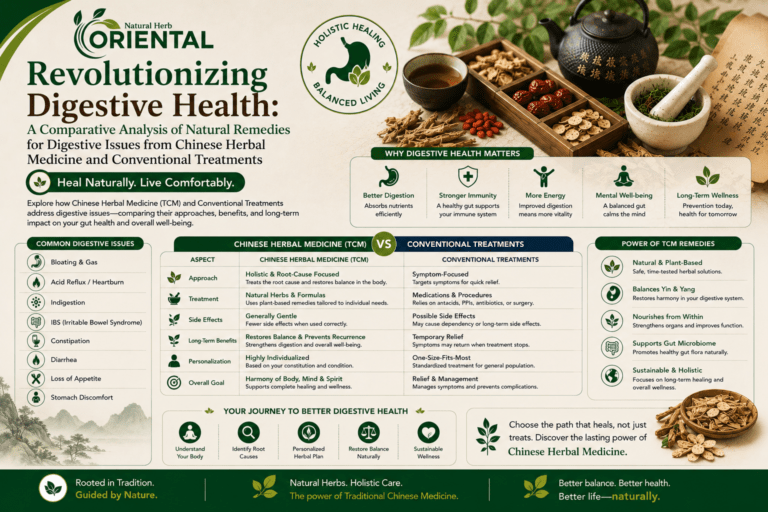
Revolutionizing Digestive Health: A Comparative Analysis of Natural Remedies for Digestive Issues from Chinese Herbal Medicine and Conventional Treatments
Digestive health is one of the foundations of overall wellbeing. A healthy digestive system supports nutrient absorption, energy production, immune function, and everyday comfort. When digestion becomes disrupted, it can influence many aspects of daily life, including energy levels, sleep quality, concentration, and overall quality of life.
Many people initially seek treatment to relieve digestive symptoms, but an increasing number are also looking for healthcare approaches that consider their overall health rather than focusing only on isolated symptoms. This growing interest has led many individuals to explore Traditional Chinese Medicine (TCM) alongside conventional medical care.
Traditional Chinese Medicine has been practiced for centuries and takes a personalized approach to digestive wellness. Rather than recommending the same treatment for everyone, practitioners evaluate each person’s health history, nutrition, lifestyle, emotional wellbeing, sleep quality, and daily habits before creating an individualized treatment plan.
One of the core components of this approach is Chinese Herbal Medicine. Herbal formulas are carefully selected according to the individual’s overall health assessment rather than based solely on a digestive diagnosis.
In this comprehensive guide, we’ll compare natural remedies used in Traditional Chinese Medicine with conventional digestive care, explore the strengths of each approach, explain how personalized Chinese Herbal Medicine works, and discuss how both systems may contribute to long-term digestive wellness.
Why Digestive Health Matters
The digestive system does much more than process food. It helps your body absorb essential nutrients, eliminate waste, support immune function, and maintain overall health. Because digestion is closely connected to many other body systems, digestive wellbeing often reflects broader aspects of physical and emotional health.
Healthy digestion contributes to:
- Efficient nutrient absorption.
- Healthy energy levels.
- Comfort after meals.
- Regular digestive function.
- Overall wellbeing.
- Healthy daily routines.
When digestive health becomes disrupted, many individuals begin looking for approaches that address not only immediate symptoms but also lifestyle factors that may contribute to long-term digestive wellness.
Modern Challenges Affecting Digestive Wellness
Modern lifestyles often create challenges for maintaining healthy digestion. Busy schedules, irregular eating habits, stress, poor sleep, processed foods, and limited physical activity may all influence digestive wellbeing.
Some of the most common lifestyle factors that may affect digestion include:
- Irregular meal schedules.
- Highly processed diets.
- Daily stress.
- Inadequate hydration.
- Poor sleep habits.
- Sedentary lifestyles.
- Excess caffeine or alcohol consumption.
- Certain medications.
Because these factors often occur together, improving digestive health frequently requires a comprehensive approach rather than relying on a single intervention alone.
How Traditional Chinese Medicine Understands Digestive Health
Traditional Chinese Medicine approaches digestion from a whole-person perspective. Instead of concentrating only on digestive symptoms, practitioners evaluate how nutrition, lifestyle, emotional wellbeing, sleep quality, stress, and overall health interact with one another.
A comprehensive consultation may include discussions about:
- Your digestive concerns.
- Medical history.
- Eating habits.
- Sleep quality.
- Stress levels.
- Physical activity.
- Current medications.
- Personal wellness goals.
Following this assessment, practitioners develop individualized treatment recommendations that reflect your unique health profile rather than applying the same approach to every patient.
Depending on your individual needs, recommendations may include personalized Chinese Herbal Medicine, nutrition guidance, lifestyle modifications, acupuncture where appropriate, and ongoing follow-up consultations.
Chinese Herbal Medicine and Conventional Digestive Care: Different Approaches with Different Strengths
Traditional Chinese Medicine and conventional medicine approach digestive health from different perspectives. Rather than viewing them as competing systems, many healthcare professionals recognize that each has its own role in supporting patient care.
Conventional Medicine
Conventional healthcare relies on evidence-based diagnosis through medical history, laboratory testing, imaging, and clinical evaluation. Treatment may include dietary advice, prescription medications, procedures, specialist referrals, and ongoing monitoring depending on the diagnosis.
For many digestive diseases, conventional medicine plays an essential role in diagnosis, emergency care, and long-term medical management.
Traditional Chinese Medicine
Traditional Chinese Medicine emphasizes individualized care through comprehensive consultations. Rather than focusing solely on a diagnosis, practitioners consider the person’s overall health, nutrition, lifestyle, emotional wellbeing, and wellness goals before recommending personalized therapies.
Chinese Herbal Medicine is one component of this individualized approach and is prescribed according to each patient’s complete health assessment.
7 Reasons People Explore Natural Remedies for Digestive Issues
1. Personalized Care
Traditional Chinese Medicine develops individualized treatment plans based on each person’s unique health assessment rather than following a standard protocol for everyone.
2. Whole-Person Assessment
Practitioners evaluate digestion alongside lifestyle, nutrition, stress, sleep, physical activity, and emotional wellbeing to better understand the factors influencing overall health.
3. Personalized Chinese Herbal Medicine
Chinese Herbal Medicine is prescribed after a comprehensive consultation, ensuring herbal formulas are selected according to the individual’s health profile rather than simply matching symptoms.
4. Lifestyle and Nutrition Guidance
Alongside herbal medicine, practitioners often recommend healthy eating habits, balanced daily routines, and practical lifestyle adjustments that support long-term digestive wellness.
5. Ongoing Professional Support
Traditional Chinese Medicine recognizes that your health changes over time. Factors such as stress, dietary habits, work schedules, medications, and lifestyle can all influence digestive wellness. Regular follow-up appointments allow practitioners to monitor your progress and adjust your personalized treatment plan whenever appropriate.
6. Healthy Lifestyle Education
Chinese Herbal Medicine is often accompanied by practical recommendations that support healthy digestion. Practitioners may discuss balanced nutrition, meal timing, hydration, stress management, sleep habits, and physical activity as part of a comprehensive digestive wellness plan.
7. A Long-Term Wellness Philosophy
Rather than concentrating only on short-term symptom relief, Traditional Chinese Medicine encourages healthy habits that support long-term digestive health. Patients are encouraged to become active participants in maintaining their overall wellbeing through consistent lifestyle choices and ongoing professional guidance.
Comparing Traditional Chinese Medicine and Conventional Digestive Care
Although Traditional Chinese Medicine and conventional healthcare use different approaches, both share the goal of improving patient health. Understanding how each system works allows individuals to make informed decisions in consultation with qualified healthcare professionals.
| Traditional Chinese Medicine | Conventional Medicine |
|---|---|
| Individualized whole-person consultation. | Medical diagnosis using clinical evaluation and testing. |
| May include Chinese Herbal Medicine, nutrition guidance, lifestyle recommendations, and acupuncture. | May include medications, dietary advice, diagnostic procedures, or specialist referrals. |
| Treatment plans are personalized according to the individual’s health assessment. | Treatment is guided by diagnosis and evidence-based clinical guidelines. |
| Emphasizes lifestyle, nutrition, and overall wellness. | Emphasizes diagnosis, disease management, and medical intervention. |
| Regular follow-up allows treatment plans to evolve over time. | Follow-up depends on diagnosis, treatment response, and medical necessity. |
Can Traditional Chinese Medicine and Conventional Medicine Work Together?
Many individuals choose to incorporate Traditional Chinese Medicine into their overall healthcare plan while continuing to receive conventional medical care. Since these approaches often serve different purposes, they may complement one another when coordinated appropriately by qualified healthcare professionals.
Conventional medicine provides essential diagnostic testing, evidence-based treatment, and management of acute or chronic digestive conditions. Traditional Chinese Medicine offers individualized consultations, personalized Chinese Herbal Medicine, lifestyle guidance, nutrition recommendations, and ongoing wellness support.
If you are considering Chinese Herbal Medicine, always inform both your physician and your Traditional Chinese Medicine practitioner about:
- Prescription medications.
- Over-the-counter medicines.
- Dietary supplements.
- Existing medical conditions.
- Pregnancy or breastfeeding.
- Upcoming medical procedures.
Open communication helps ensure your treatment plan remains coordinated, safe, and appropriate for your individual healthcare needs.
What Happens During a Traditional Chinese Medicine Consultation?
If you’re exploring natural remedies for digestive issues, your first Traditional Chinese Medicine consultation is designed to provide a comprehensive understanding of your overall health before any recommendations are made.
Step 1: Comprehensive Health Review
Your practitioner will discuss your digestive concerns together with your complete health history, nutrition, medications, sleep quality, stress levels, physical activity, lifestyle habits, and long-term wellness goals.
Rather than focusing only on digestive symptoms, the consultation aims to understand the broader factors influencing your overall wellbeing.
Step 2: Traditional Chinese Medicine Assessment
In addition to reviewing your health history, practitioners may perform Traditional Chinese Medicine assessment methods such as observing your tongue and checking your pulse.
These observations are considered alongside your consultation to create an individualized understanding of your health before treatment recommendations are made.
Step 3: Personalized Recommendations
Following your assessment, your practitioner will develop a treatment plan tailored specifically to your individual health profile.
Depending on your needs, recommendations may include:
- Personalized Chinese Herbal Medicine.
- Nutrition guidance.
- Lifestyle modifications.
- Acupuncture where appropriate.
- Stress-management recommendations.
- Scheduled follow-up appointments.
Every treatment plan is individualized and may be adjusted over time as your health changes.
Healthy Habits That Support Digestive Wellness
Healthy lifestyle choices are an important part of maintaining digestive wellbeing regardless of the treatment approach you choose. Many healthcare professionals recommend combining appropriate medical care with sustainable daily habits.
- Eat balanced meals at regular times.
- Stay physically active.
- Drink adequate water throughout the day.
- Manage daily stress through healthy coping strategies.
- Prioritize consistent, restorative sleep.
- Limit foods that consistently trigger digestive discomfort.
- Eat slowly and mindfully.
- Follow professional dietary advice when appropriate.
These habits may complement your personalized treatment plan and contribute to long-term digestive wellness.
Choosing the Right Approach for Your Digestive Health
Every person’s digestive health journey is unique. Factors such as age, medical history, lifestyle, dietary habits, medications, and overall health all influence which treatment approach may be most appropriate. Rather than searching for a single solution, many people benefit from working with qualified healthcare professionals who can develop a care plan tailored to their individual needs.
Conventional medicine remains essential for diagnosing digestive diseases, managing acute symptoms, and providing evidence-based medical treatments. Traditional Chinese Medicine offers a complementary perspective by emphasizing individualized consultations, personalized Chinese Herbal Medicine, nutrition guidance, and healthy lifestyle practices.
Understanding the strengths of both systems allows patients to make informed healthcare decisions while receiving coordinated care from qualified professionals.
Why Personalized Chinese Herbal Medicine Matters
One of the core principles of Traditional Chinese Medicine is that no two patients receive identical treatment plans. Even when individuals experience similar digestive symptoms, differences in lifestyle, nutrition, medical history, sleep, emotional wellbeing, and daily routines mean their healthcare needs may not be the same.
For this reason, Chinese Herbal Medicine is prescribed only after a detailed consultation and individualized health assessment. Rather than relying on standardized herbal products, practitioners carefully select herbal formulas that reflect each person’s overall health profile.
Your consultation may include discussions about:
- Your digestive symptoms and overall medical history.
- Eating habits and nutrition.
- Sleep quality and daily energy levels.
- Stress levels and emotional wellbeing.
- Current medications and supplements.
- Physical activity and lifestyle.
- Personal wellness goals.
- Changes in your health since previous visits.
This personalized approach allows treatment recommendations to evolve over time, ensuring your care remains aligned with your changing health needs and wellness objectives.
Why Patients Choose The Oriental Herb
At The Oriental Herb, we believe effective healthcare begins with understanding the individual rather than focusing solely on symptoms. Every patient receives a comprehensive consultation designed to evaluate their overall health, lifestyle, nutrition, emotional wellbeing, and long-term wellness goals before treatment recommendations are made.
Our experienced Traditional Chinese Medicine practitioners provide personalized care that may include individualized Chinese Herbal Medicine, dietary guidance, healthy lifestyle recommendations, wellness education, and ongoing follow-up appointments.
Whether you are seeking support for digestive wellness or looking for a more holistic approach to your overall health, our goal is to provide compassionate, patient-centered care that empowers you to make informed healthcare decisions.
Take the Next Step Toward Better Digestive Wellness
If you’re exploring natural remedies for digestive issues, a personalized consultation can help you better understand your health and determine which treatment options may be appropriate for your individual needs.
At The Oriental Herb, our experienced practitioners develop individualized Traditional Chinese Medicine treatment plans that may include Chinese Herbal Medicine, nutrition guidance, lifestyle recommendations, and ongoing wellness support.
Our commitment is to provide personalized, evidence-informed care that supports your long-term digestive health and overall wellbeing.
Frequently Asked Questions
What are natural remedies for digestive issues?
Natural approaches to digestive wellness may include healthy dietary habits, lifestyle modifications, stress management techniques, and personalized Traditional Chinese Medicine therapies such as Chinese Herbal Medicine. Recommendations should always be individualized and guided by qualified healthcare professionals.
How does Chinese Herbal Medicine differ from over-the-counter digestive products?
Chinese Herbal Medicine is prescribed after a comprehensive consultation and is tailored to each individual’s health assessment. Over-the-counter products are generally selected based on symptoms or product indications rather than a personalized evaluation.
Can Traditional Chinese Medicine be used alongside conventional digestive care?
Many individuals incorporate Traditional Chinese Medicine into their broader healthcare plan. Always inform both your physician and your Traditional Chinese Medicine practitioner about all medications, supplements, and treatments to help ensure safe and coordinated care.
Will everyone receive the same herbal formula?
No. Traditional Chinese Medicine emphasizes individualized care. Herbal formulas are selected according to each person’s health history, lifestyle, digestive concerns, and overall wellness goals.
How often are follow-up appointments recommended?
The frequency of follow-up appointments depends on your individual treatment plan and health goals. Your practitioner will recommend a schedule that allows your progress to be reviewed and your treatment plan adjusted when appropriate.
When should I seek immediate medical attention for digestive symptoms?
Seek prompt medical care if you experience severe abdominal pain, gastrointestinal bleeding, persistent vomiting, unexplained weight loss, difficulty swallowing, or any rapidly worsening digestive symptoms. These require evaluation by a qualified medical professional.