
Key Takeaways
- Digestive health is influenced by nutrition, lifestyle, stress, sleep, and overall wellbeing—not just the digestive tract itself.
- Traditional Chinese Medicine (TCM) takes a personalized, whole-person approach to digestive wellness.
- Chinese Herbal Medicine is one of several therapies that may be incorporated into an individualized digestive health plan.
- Conventional medicine and Traditional Chinese Medicine have different philosophies but may complement one another when guided by qualified healthcare professionals.
- Choosing the right treatment approach depends on your individual health needs, diagnosis, and recommendations from qualified practitioners.
Table of Contents
- Understanding Digestive Health Beyond Symptoms
- Why Digestive Issues Are Becoming More Common
- How Traditional Chinese Medicine Views Digestive Health
- Chinese Herbal Medicine vs Conventional Treatments
- 7 Reasons People Explore Chinese Herbal Medicine for Digestive Wellness
- Can Traditional Chinese Medicine and Conventional Care Work Together?
- Frequently Asked Questions
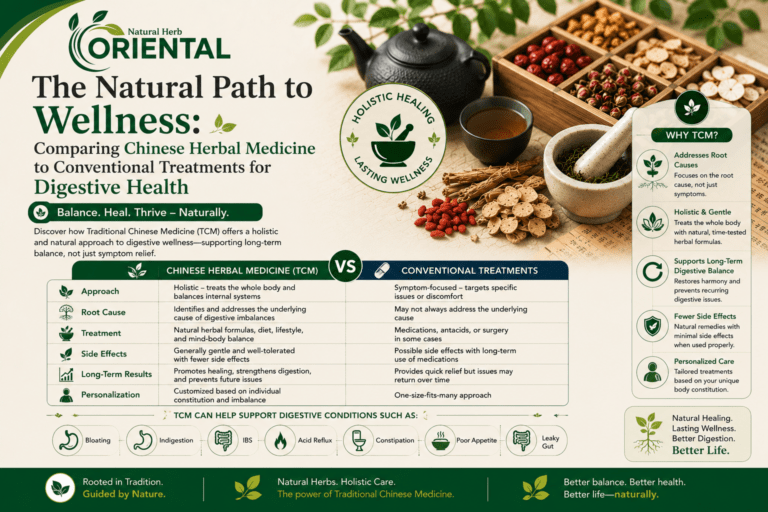
The Natural Path to Wellness: Comparing Chinese Herbal Medicine to Conventional Treatments for Digestive Health
Digestive health affects far more than simply how we process food. A healthy digestive system supports nutrient absorption, energy production, immune function, and overall wellbeing. When digestive concerns become persistent, they can influence everyday comfort, productivity, sleep quality, and quality of life.
Many people experiencing digestive discomfort begin by searching for quick symptom relief. While conventional medicine often provides effective diagnostic tools and treatments for many digestive conditions, an increasing number of individuals are also exploring complementary approaches that focus on overall wellness and personalized care.
One such approach is Traditional Chinese Medicine (TCM), which has been practiced for thousands of years. Rather than concentrating solely on digestive symptoms, TCM seeks to understand how different aspects of a person’s health—including lifestyle, nutrition, stress, and overall balance—may contribute to digestive wellbeing.
At the heart of this system is Chinese Herbal Medicine, an individualized therapy that is prescribed according to each person’s unique health assessment rather than following a standard formula for everyone.
In this comprehensive guide, we’ll compare Chinese Herbal Medicine with conventional digestive health treatments, explore how each approach works, discuss their respective roles in patient care, and explain why many people choose an integrated approach to supporting long-term digestive wellness.
Understanding Digestive Health Beyond Symptoms
Digestive health involves much more than occasional stomach discomfort. Your digestive system is responsible for breaking down food, absorbing nutrients, eliminating waste, and supporting many essential functions throughout the body.
Digestive wellbeing may also be influenced by multiple lifestyle factors, including:
- Daily eating habits.
- Sleep quality.
- Hydration.
- Physical activity.
- Stress management.
- Work-life balance.
- Existing medical conditions.
- Overall nutrition.
Because these factors interact with one another, digestive health is rarely influenced by a single cause alone. This is one reason why many healthcare providers encourage patients to consider lifestyle improvements alongside appropriate medical care.
Why Digestive Concerns Are Becoming More Common
Modern lifestyles have changed significantly over the past several decades. Busy schedules, processed foods, irregular meal patterns, limited physical activity, and ongoing stress can all affect digestive wellbeing.
Although digestive concerns vary greatly from person to person, many individuals seek healthcare because they want not only symptom management but also guidance on improving their long-term digestive health through sustainable lifestyle habits.
This growing interest has contributed to increased awareness of holistic healthcare systems such as Traditional Chinese Medicine, where digestive health is viewed as one part of a person’s overall wellbeing.
How Traditional Chinese Medicine Views Digestive Health
Traditional Chinese Medicine approaches digestive wellness differently from conventional healthcare. Rather than focusing exclusively on a diagnosis or isolated symptoms, practitioners perform a comprehensive assessment to better understand the individual’s overall health.
A consultation may include discussions about your health history, eating habits, lifestyle, sleep patterns, emotional wellbeing, medications, physical activity, and other factors that may influence your digestive health.
Based on this evaluation, practitioners develop an individualized treatment strategy that may include:
- Personalized Chinese Herbal Medicine.
- Dietary recommendations.
- Lifestyle guidance.
- Stress management strategies.
- Acupuncture, where appropriate.
- Regular follow-up appointments to review progress.
Because every patient is different, treatment recommendations are highly individualized. Two people experiencing similar digestive symptoms may receive different recommendations based on their overall health assessment.
Chinese Herbal Medicine vs Conventional Treatments: Understanding the Difference
Chinese Herbal Medicine and conventional medicine are based on different healthcare philosophies. Rather than viewing them as competing systems, many healthcare professionals encourage patients to understand the strengths and intended purpose of each approach.
Conventional Medicine
Conventional healthcare relies on scientific diagnosis, laboratory testing, medical imaging, and evidence-based treatments to diagnose and manage digestive conditions. Depending on the diagnosis, care may include lifestyle advice, prescription medications, procedures, or referral to specialists.
For many digestive disorders, conventional medicine plays an essential role in diagnosis, emergency care, and ongoing medical management.
Traditional Chinese Medicine
Traditional Chinese Medicine focuses on individualized care that considers the person’s overall health, daily habits, nutrition, emotional wellbeing, and lifestyle. Recommendations are developed following a comprehensive consultation rather than being based solely on a diagnosis.
Chinese Herbal Medicine is one component of this personalized approach and is prescribed according to each individual’s assessment by a qualified practitioner.
7 Reasons People Explore Chinese Herbal Medicine for Digestive Wellness
1. Individualized Care
Chinese Herbal Medicine is not based on a universal formula. Every herbal recommendation is developed according to the individual’s health assessment, lifestyle, and wellness goals.
2. A Whole-Person Perspective
Traditional Chinese Medicine considers digestive health alongside nutrition, stress, sleep, physical activity, and overall wellbeing, creating a more comprehensive understanding of each patient’s health.
3. Long-Term Wellness Support
Many patients appreciate the emphasis on healthy lifestyle habits, nutrition, and ongoing follow-up care that accompanies personalized Traditional Chinese Medicine treatment plans.
4. Personalized Chinese Herbal Medicine
One of the defining features of Traditional Chinese Medicine is that herbal formulas are customized for each individual. Rather than recommending the same herbal combination for everyone with similar digestive concerns, practitioners consider your overall health assessment, lifestyle, dietary habits, and wellness goals before preparing personalized recommendations.
5. Ongoing Professional Support
Traditional Chinese Medicine is designed to evolve alongside your health. During follow-up appointments, practitioners review your progress, answer questions, and adjust your treatment plan whenever appropriate. This individualized approach allows recommendations to reflect changes in your health over time.
6. Lifestyle and Nutrition Guidance
Chinese Herbal Medicine is rarely used in isolation. Practitioners often provide practical recommendations related to healthy eating habits, meal timing, hydration, stress management, and daily routines that may help support overall digestive wellness.
These lifestyle recommendations are tailored to each person’s circumstances and are intended to complement—not replace—appropriate medical care.
7. A Preventive Wellness Philosophy
Traditional Chinese Medicine places considerable emphasis on maintaining health before problems become more significant. Through personalized consultations, healthy lifestyle education, and ongoing follow-up care, practitioners aim to help patients make informed decisions that support long-term wellbeing.
Chinese Herbal Medicine vs Conventional Digestive Care: A Balanced Comparison
Although both approaches aim to improve patient health, they differ in philosophy, assessment methods, and treatment strategies. Understanding these differences can help you make informed decisions together with your healthcare providers.
| Traditional Chinese Medicine | Conventional Medicine |
|---|---|
| Focuses on individualized, whole-person assessment. | Focuses on medical diagnosis using established clinical methods. |
| May include personalized Chinese Herbal Medicine, acupuncture, lifestyle and dietary guidance. | May include diagnostic testing, medications, procedures, and specialist care. |
| Treatment plans are highly individualized. | Treatment plans are based on clinical diagnosis and evidence-based guidelines. |
| Emphasizes lifestyle, nutrition, and long-term wellness. | Emphasizes diagnosis, disease management, and appropriate medical intervention. |
| Regular follow-up allows treatment plans to evolve over time. | Follow-up depends on diagnosis, treatment response, and medical necessity. |
Benefits and Considerations of Each Approach
There is no universal solution for digestive health. The most appropriate approach depends on your diagnosis, symptoms, medical history, and individual healthcare needs. Understanding the strengths of both systems can help you work collaboratively with qualified healthcare professionals.
Potential Strengths of Conventional Medicine
- Advanced diagnostic testing and imaging.
- Evidence-based medical treatments.
- Essential care for acute and emergency digestive conditions.
- Access to specialist gastroenterology services.
- Medical monitoring for chronic digestive diseases.
Potential Strengths of Traditional Chinese Medicine
- Comprehensive whole-person consultations.
- Highly personalized treatment recommendations.
- Individualized Chinese Herbal Medicine.
- Lifestyle and nutrition guidance.
- Ongoing practitioner support and follow-up.
Rather than asking which approach is “better,” many patients benefit from understanding how each system serves a different purpose within their overall healthcare journey.
Can Chinese Herbal Medicine and Conventional Medicine Be Used Together?
In many situations, patients choose to incorporate Traditional Chinese Medicine into their broader healthcare plan while continuing to receive conventional medical care. This integrated approach allows patients to benefit from individualized wellness support while maintaining appropriate medical diagnosis and treatment when needed.
However, Chinese Herbal Medicine should never be started without discussing it with qualified healthcare professionals. Some herbal products may interact with prescription medications or may not be appropriate for certain medical conditions.
For this reason, it is important to inform both your physician and your Traditional Chinese Medicine practitioner about:
- Prescription medications.
- Over-the-counter medicines.
- Dietary supplements.
- Existing medical conditions.
- Pregnancy or breastfeeding.
- Upcoming surgeries or medical procedures.
Open communication between healthcare providers helps ensure your treatment plan is coordinated safely and appropriately.
Who May Consider Consulting a Traditional Chinese Medicine Practitioner?
People explore Traditional Chinese Medicine for many different reasons. Some are looking for a more personalized healthcare experience, while others want guidance on lifestyle habits that support digestive wellbeing alongside conventional care.
A consultation with a qualified practitioner may be appropriate for individuals who wish to better understand how factors such as nutrition, daily routines, stress management, and personalized Chinese Herbal Medicine fit into a comprehensive wellness plan.
During your consultation, the practitioner will review your overall health history and determine whether Traditional Chinese Medicine is appropriate for your individual circumstances before making any recommendations.
Choosing the Right Approach for Your Digestive Health
Every person’s digestive health journey is unique. What works well for one individual may not be the most appropriate solution for another. Factors such as your medical history, diagnosis, lifestyle, current medications, and personal wellness goals should all be considered when developing a treatment plan.
Rather than viewing Chinese Herbal Medicine and conventional medicine as opposing approaches, many patients choose to work with qualified healthcare professionals who help them integrate different aspects of care safely and appropriately.
If you experience persistent digestive symptoms, unexplained weight loss, severe abdominal pain, gastrointestinal bleeding, difficulty swallowing, prolonged vomiting, or any other concerning symptoms, you should seek prompt medical evaluation from a qualified healthcare provider.
Once serious medical conditions have been properly evaluated, some individuals choose to consult a Traditional Chinese Medicine practitioner to explore whether personalized Chinese Herbal Medicine, nutrition guidance, and lifestyle recommendations may complement their overall healthcare plan.
Why Personalized Care Matters in Traditional Chinese Medicine
One of the greatest strengths of Traditional Chinese Medicine is its commitment to individualized care. Rather than selecting treatments solely based on a diagnosis or a list of symptoms, practitioners take time to understand the broader picture of your health.
During a consultation, your practitioner may discuss:
- Your overall medical history.
- Current digestive concerns.
- Daily eating habits.
- Sleep quality.
- Stress levels and emotional wellbeing.
- Physical activity.
- Current medications and supplements.
- Personal health goals.
This comprehensive evaluation helps create a treatment plan tailored specifically to your individual circumstances rather than relying on generalized recommendations.
Why Patients Choose The Oriental Herb
At The Oriental Herb, we believe digestive wellness begins with understanding the individual—not simply the symptoms. Every consultation is designed to provide a comprehensive picture of your health so that recommendations can be personalized according to your unique needs.
Our experienced Traditional Chinese Medicine practitioners provide patient-centered care that may include individualized Chinese Herbal Medicine, nutrition guidance, lifestyle recommendations, wellness education, and ongoing follow-up appointments.
Whether you are exploring Traditional Chinese Medicine for the first time or looking for a practitioner who emphasizes personalized care, our goal is to help you make informed decisions that support your long-term digestive health and overall wellbeing.
Take the Next Step Toward Better Digestive Wellness
If you’re interested in learning how Chinese Herbal Medicine may fit into your overall digestive wellness plan, our experienced practitioners are here to help.
At The Oriental Herb, every consultation begins with a comprehensive health assessment so we can better understand your individual needs and develop a personalized Traditional Chinese Medicine treatment plan.
Whether your goal is improving digestive wellbeing, supporting overall wellness, or learning more about holistic healthcare options, our team is committed to providing compassionate, evidence-informed, patient-centered care.
Frequently Asked Questions
What is Chinese Herbal Medicine?
Chinese Herbal Medicine is one component of Traditional Chinese Medicine that uses individualized herbal formulas prepared by qualified practitioners following a comprehensive health assessment.
Is Chinese Herbal Medicine the same for every digestive condition?
No. Traditional Chinese Medicine emphasizes personalized care. Herbal recommendations are based on each individual’s overall health assessment, lifestyle, and wellness goals rather than being prescribed solely according to symptoms.
Can Chinese Herbal Medicine replace conventional digestive treatments?
Chinese Herbal Medicine should not be considered a replacement for appropriate medical diagnosis or treatment. It may be used as part of a broader healthcare plan under the guidance of qualified healthcare professionals when appropriate.
Can I use Chinese Herbal Medicine while taking prescription medication?
Some herbal products may interact with prescription medications. Always inform both your physician and your Traditional Chinese Medicine practitioner about all medications, supplements, and medical conditions before beginning herbal treatment.
What happens during a Traditional Chinese Medicine consultation?
Your practitioner will review your health history, digestive concerns, lifestyle, nutrition, medications, sleep, and wellness goals before developing an individualized treatment plan that may include Chinese Herbal Medicine, dietary guidance, lifestyle recommendations, or other Traditional Chinese Medicine therapies.
How do I know if Traditional Chinese Medicine is right for me?
The best way to determine whether Traditional Chinese Medicine may be appropriate is to schedule a consultation with a qualified practitioner who can evaluate your individual health needs and discuss suitable treatment options.