
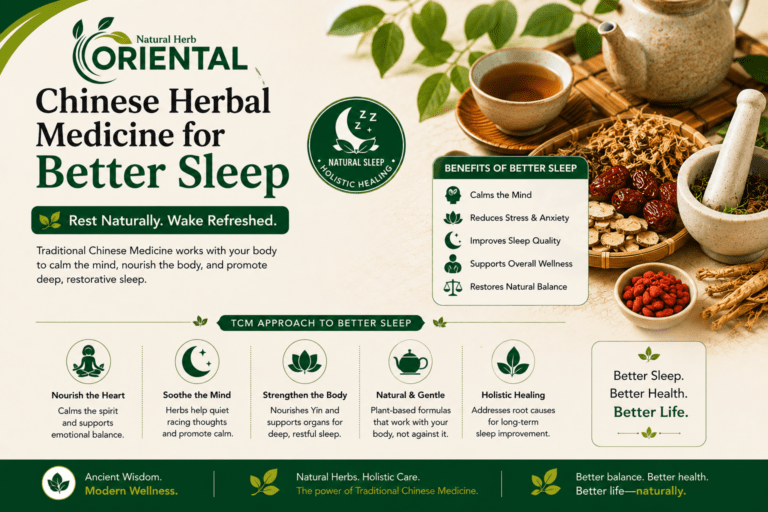
Key Takeaways
- Traditional Chinese Medicine views sleep as a reflection of your overall health rather than an isolated symptom.
- Chinese herbal medicine focuses on identifying the underlying imbalance contributing to poor sleep.
- Every herbal formula is personalized according to your symptoms, lifestyle, and health history.
- Sleep concerns may be influenced by stress, digestion, emotional wellbeing, hormones, or daily habits.
- Working with a qualified Traditional Chinese Medicine practitioner helps ensure safe and individualized care.
Table of Contents
Chinese Herbal Medicine for Better Sleep: A Traditional Chinese Medicine Approach
A restful night’s sleep is essential for maintaining physical health, emotional wellbeing, mental clarity, and overall quality of life. Yet millions of people struggle with difficulty falling asleep, waking frequently during the night, or feeling tired despite spending enough hours in bed.
While many people immediately search for a quick solution, Traditional Chinese Medicine (TCM) takes a different approach. Rather than viewing poor sleep as a problem on its own, TCM seeks to understand the underlying patterns that may be contributing to disrupted sleep.
Chinese Herbal Medicine has been used for centuries as part of Traditional Chinese Medicine to support overall wellness through individualized herbal formulas. Instead of recommending the same herbs to everyone experiencing sleep concerns, practitioners develop personalized treatment plans based on each person’s complete health picture.
If you’ve been exploring natural approaches to improving sleep, understanding how Traditional Chinese Medicine evaluates sleep health can help you make informed decisions about your wellness journey.
Why Quality Sleep Matters
Sleep plays an essential role in supporting nearly every function of the body. During sleep, the body performs important restorative processes that contribute to physical recovery, cognitive function, emotional balance, and overall wellbeing.
Consistently poor sleep may affect many aspects of daily life, including:
- Energy levels throughout the day.
- Concentration and memory.
- Mood and emotional resilience.
- Productivity at work.
- Physical recovery after exercise.
- Overall quality of life.
Occasional sleepless nights happen to everyone. However, ongoing sleep difficulties deserve professional attention to identify any underlying causes and determine the most appropriate treatment approach.
How Traditional Chinese Medicine Understands Sleep
Traditional Chinese Medicine views sleep differently than many modern approaches. Instead of focusing solely on the inability to sleep, practitioners evaluate how the entire body is functioning as an interconnected system.
According to Traditional Chinese Medicine theory, sleep quality reflects the balance between different functional systems within the body. When these systems become imbalanced, sleep may become lighter, interrupted, or difficult to achieve.
Because every individual experiences different symptoms, two people with similar sleep concerns may receive completely different herbal formulas after a comprehensive Traditional Chinese Medicine assessment.
This personalized philosophy is one of the defining features of Chinese Herbal Medicine.
Common Reasons People Experience Poor Sleep
Many different factors may contribute to disrupted sleep. Understanding these influences helps practitioners create individualized treatment plans rather than relying on a one-size-fits-all solution.
Common lifestyle and health factors associated with poor sleep include:
- Daily stress and emotional pressure.
- Irregular work schedules.
- Late-night screen exposure.
- Excess caffeine consumption.
- Poor sleep habits.
- Digestive discomfort.
- Hormonal changes.
- Chronic pain or physical discomfort.
- Busy lifestyles with limited time for relaxation.
Traditional Chinese Medicine practitioners consider these factors alongside your complete medical history, lifestyle, digestion, emotional wellbeing, and overall health before recommending an individualized herbal formula.
Why Personalized Assessment Matters
One of the biggest differences between Traditional Chinese Medicine and self-prescribed herbal supplements is the emphasis on personalized assessment.
Rather than choosing herbs based only on the words “better sleep,” your practitioner performs a detailed consultation to understand why your sleep may be affected.
During your consultation, you may be asked about your sleep routine, stress levels, appetite, digestion, energy, medications, work schedule, exercise habits, emotional wellbeing, and overall health. These details help identify the Traditional Chinese Medicine pattern that guides your personalized herbal formula.
This individualized approach ensures your treatment plan reflects your unique health needs rather than simply addressing one symptom in isolation.
How Chinese Herbal Medicine Supports Better Sleep
One of the defining principles of Traditional Chinese Medicine is that every person is unique. Rather than recommending the same herbal formula for everyone experiencing sleep difficulties, practitioners first identify the underlying pattern that may be contributing to disrupted sleep.
During your consultation, your practitioner gathers detailed information about your health before creating a personalized herbal prescription. This individualized approach allows treatment to be tailored to your specific symptoms, lifestyle, and overall wellbeing.
Instead of focusing only on helping you fall asleep, Traditional Chinese Medicine aims to understand the broader picture of your health and develop a treatment plan that supports overall balance.
A Personalized Treatment Plan
Your practitioner may evaluate several aspects of your health before recommending an herbal formula, including:
- Your sleep schedule and bedtime routine.
- How long it takes you to fall asleep.
- Whether you wake during the night.
- Your energy levels throughout the day.
- Digestive health.
- Stress levels and emotional wellbeing.
- Current medications and supplements.
- Overall medical history.
This comprehensive assessment helps ensure that every herbal recommendation reflects your unique needs rather than relying on a general sleep product.
Healthy Habits That May Support Better Sleep
Chinese Herbal Medicine is often combined with healthy lifestyle practices. Small daily habits can play an important role in supporting healthy sleep and improving your overall wellbeing.
Your practitioner may recommend practical lifestyle adjustments alongside your personalized herbal formula.
- Maintaining a consistent bedtime and wake-up schedule.
- Limiting screen time before bed.
- Creating a comfortable sleeping environment.
- Reducing caffeine later in the day.
- Eating balanced meals at regular times.
- Practicing relaxation techniques before bedtime.
- Engaging in regular physical activity appropriate for your health.
- Managing daily stress through healthy coping strategies.
These lifestyle recommendations are intended to complement your individualized treatment plan and promote healthier sleep habits over time.
The Importance of Consistency
One of the most important aspects of any wellness plan is consistency. Herbal medicine works best when taken exactly as recommended by your practitioner and combined with regular follow-up appointments.
Because your health may change over time, your practitioner may adjust your herbal formula during future visits based on your progress and any changes in your symptoms.
This ongoing evaluation allows your treatment plan to evolve alongside your health rather than remaining the same indefinitely.
Common Misconceptions About Herbal Medicine for Sleep
Myth 1: Everyone Should Take the Same Sleep Herbs
Traditional Chinese Medicine does not recommend identical herbal formulas for everyone experiencing poor sleep. Two individuals with similar sleep concerns may receive completely different prescriptions because their underlying health patterns differ.
Myth 2: Natural Products Are Always Safe for Everyone
Although Chinese herbs have been used for centuries, they are not appropriate for every individual. Herbal products may interact with prescription medications or may not be suitable for certain health conditions. Always discuss your current medications and medical history with both your healthcare provider and your Traditional Chinese Medicine practitioner.
Myth 3: Better Sleep Depends Only on Herbal Medicine
Herbal medicine is only one part of a comprehensive wellness approach. Healthy sleep habits, stress management, nutrition, physical activity, and overall lifestyle all contribute to quality sleep and long-term wellbeing.
When Should You Seek Professional Advice?
Occasional difficulty sleeping is common, but persistent sleep problems should not be ignored. If poor sleep continues for an extended period, significantly affects your daily life, or occurs alongside other concerning symptoms, it’s important to seek evaluation from a qualified healthcare professional.
A Traditional Chinese Medicine practitioner can work alongside your healthcare team to better understand your symptoms and determine whether Chinese Herbal Medicine may be an appropriate complementary option as part of your overall wellness plan.
Safety Considerations Before Using Chinese Herbal Medicine
Chinese Herbal Medicine has been practiced for thousands of years and continues to be an important part of Traditional Chinese Medicine. However, like any healthcare approach, herbal medicine should always be used responsibly under the guidance of a qualified practitioner.
Herbal formulas contain naturally occurring active ingredients that may not be suitable for everyone. Certain herbs may interact with prescription medications, dietary supplements, or existing medical conditions. This is why a professional consultation is an essential first step before beginning treatment.
During your consultation, be sure to tell your practitioner about all prescription medications, over-the-counter medicines, vitamins, supplements, allergies, pregnancy or breastfeeding status, and any diagnosed medical conditions. Sharing complete information helps your practitioner recommend the safest and most appropriate treatment plan.
Why Personalized Care Makes a Difference
At The Oriental Herb, no two treatment plans are exactly alike. Every patient receives an individualized assessment that considers their symptoms, medical history, daily routine, emotional wellbeing, digestion, lifestyle, and overall health before an herbal formula is recommended.
This personalized approach reflects one of the core principles of Traditional Chinese Medicine. Rather than treating poor sleep as a single condition, practitioners aim to understand the factors contributing to your sleep difficulties and develop a plan tailored specifically to you.
As your health changes over time, your practitioner may adjust your herbal prescription during follow-up appointments to ensure your treatment continues to meet your individual needs.
Improve Your Sleep with Personalized Traditional Chinese Medicine
If poor sleep is affecting your energy, focus, or overall wellbeing, The Oriental Herb is here to help. Our experienced Traditional Chinese Medicine practitioners provide comprehensive consultations and personalized herbal treatment plans designed around your individual health needs.
Whether you’re experiencing occasional restless nights or ongoing sleep concerns, we’ll work with you to develop a treatment approach that complements your overall healthcare and supports long-term wellness.
Frequently Asked Questions
Can Chinese Herbal Medicine help improve sleep?
Traditional Chinese Medicine uses individualized herbal formulas based on each person’s health assessment. A qualified practitioner determines whether Chinese Herbal Medicine may be an appropriate complementary approach for your specific needs.
Will everyone receive the same herbal formula?
No. Every herbal prescription is personalized according to your symptoms, lifestyle, overall health, and Traditional Chinese Medicine assessment. Two people with similar sleep concerns may receive different herbal formulas.
How long does a consultation usually take?
Your first consultation is generally more comprehensive than follow-up visits. It includes a detailed discussion about your sleep, medical history, lifestyle, digestion, stress levels, medications, and overall health.
Can I take Chinese herbs alongside prescription medications?
Some herbal formulas may interact with medications. Always tell both your physician and your Traditional Chinese Medicine practitioner about every medication and supplement you are currently taking before starting herbal treatment.
Do I need follow-up appointments?
Yes. Follow-up appointments allow your practitioner to review your progress, answer questions, and adjust your herbal formula if your health or symptoms change over time.
Is Chinese Herbal Medicine a replacement for medical treatment?
No. Chinese Herbal Medicine is intended to complement appropriate medical care, not replace it. Always seek professional medical evaluation for persistent sleep problems, serious symptoms, or medical emergencies.