
📋 Key Takeaways
- Traditional Chinese Medicine views emotional wellbeing, digestion, sleep and energy as closely connected.
- Chinese herbal remedies are generally prescribed as personalized formulas rather than one-size-fits-all products.
- TCM and conventional medicine use different diagnostic and treatment approaches, but they can sometimes complement one another.
- Chinese herbs may cause side effects or interact with prescription medication, so professional guidance is essential.
- The most suitable treatment depends on the individual, the severity of symptoms and the underlying medical condition.
📑 Table of Contents
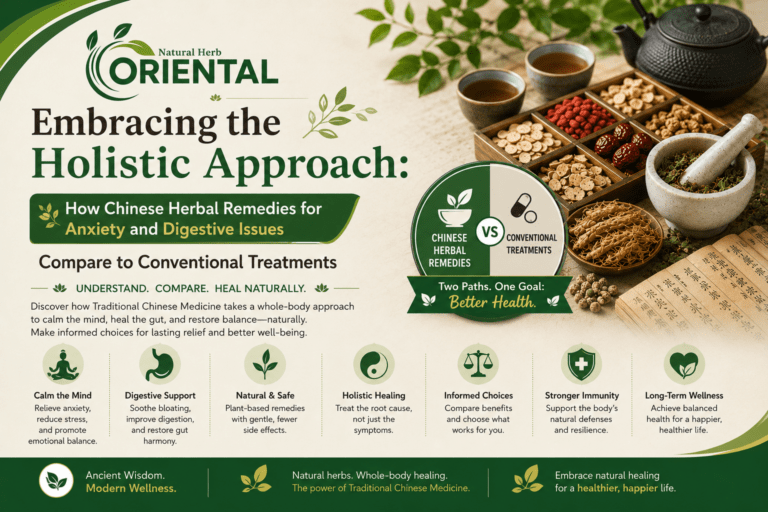
Embracing the Holistic Approach: How Chinese Herbal Remedies for Anxiety and Digestive Issues Compare to Conventional Treatments
Introduction to the Holistic Approach
Anxiety and digestive discomfort frequently occur together. Emotional stress may contribute to nausea, bloating, indigestion, abdominal tension, diarrhoea or constipation. Persistent digestive symptoms can also disturb sleep, reduce energy and increase feelings of worry.
Conventional medicine and Traditional Chinese Medicine, commonly known as TCM, approach these concerns differently. Conventional care typically focuses on diagnosing a specific condition and selecting evidence-based treatment for that diagnosis. TCM evaluates the relationship between physical symptoms, emotional health, digestion, sleep, energy and lifestyle.
Rather than choosing one herb for one symptom, a qualified TCM practitioner may combine several ingredients into a personalized herbal formula. The goal is to address the individual’s overall pattern instead of recommending the same treatment to everyone.
Understanding Anxiety and Digestive Issues from a TCM Perspective
Traditional Chinese Medicine explains health through concepts such as Qi, Blood, Yin, Yang and the functional relationships between different organ systems. These concepts form a traditional diagnostic framework and should not be interpreted as identical to modern anatomical organs or biomedical diagnoses.
From a TCM perspective, emotional stress may disrupt the smooth movement of Qi. Digestive weakness may contribute to fatigue, poor appetite, loose stools, bloating and excessive worrying. A practitioner therefore considers the complete symptom pattern before recommending treatment.
A TCM consultation may explore:
- The timing and location of digestive discomfort
- Appetite and reactions to particular foods
- Bowel movement frequency and consistency
- Sleep quality and daytime energy
- Stress triggers and emotional changes
- Headaches, muscular tension or menstrual symptoms
- Current medication and medical history
Two people experiencing anxiety and bloating may receive different herbal formulas because their broader health patterns are not necessarily the same.
Chinese Herbal Remedies Traditionally Used for Anxiety
Chinese herbal medicine may be used to support people experiencing restlessness, stress, poor sleep or emotional tension. The choice of herbs depends on whether symptoms occur alongside fatigue, irritability, digestive weakness, palpitations or other concerns.
Suan Zao Ren – Ziziphus Seed
Suan Zao Ren is traditionally used to calm the mind and support restful sleep. It may be included in formulas for irritability, frequent waking and nighttime restlessness.
He Huan Pi – Albizia Bark
He Huan Pi is traditionally associated with emotional balance and may be used when stress is accompanied by irritability or a feeling of emotional constraint.
Fu Shen
Fu Shen is commonly included in formulas for excessive worrying, disturbed sleep and emotional uneasiness. It may also support digestive and fluid balance in certain TCM patterns.
Yuan Zhi – Polygala Root
Yuan Zhi is traditionally used to support mental clarity, memory and calmness. It is normally combined with other herbs in a balanced formula.
Ye Jiao Teng – Fleeceflower Vine
This herb is frequently used to support sleep and calm nighttime restlessness.
Ling Zhi – Reishi Mushroom
Ling Zhi has traditionally been used to support energy, sleep, emotional wellbeing and general resilience.
Chinese Herbal Remedies Traditionally Used for Digestive Issues
Digestive problems can have many causes, including stress, food intolerance, infection, inflammation, medication, reflux disease or functional gastrointestinal disorders. A medical assessment may be needed before beginning herbal treatment.
Chen Pi – Aged Tangerine Peel
Chen Pi is traditionally used to support digestive movement and relieve bloating, abdominal fullness, nausea and poor appetite.
Sheng Jiang – Fresh Ginger
Fresh ginger is widely used to support digestion and manage nausea. It may also be included in formulas to warm and harmonize the digestive system.
Bai Zhu – Atractylodes Rhizome
Bai Zhu is traditionally used when digestive discomfort occurs alongside fatigue, loose stools or reduced appetite.
Fu Ling – Poria
Fu Ling may support digestion and fluid balance. It is often considered when symptoms include heaviness, loose stools or low energy.
Sha Ren – Amomum Fruit
Sha Ren is traditionally used to support appetite and relieve nausea, bloating and sluggish digestion.
Hou Po – Magnolia Bark
Hou Po is commonly used in formulas for abdominal fullness, gas, pressure and digestive stagnation.
Shan Yao – Chinese Yam
Chinese yam is traditionally used to strengthen digestion and support people experiencing weakness, loose stools or poor appetite.
Mu Xiang – Aucklandia Root
Mu Xiang may be included in formulas for abdominal discomfort, bloating and irregular digestive movement.
Chinese Herbal Medicine vs Conventional Treatments
| Area | Chinese Herbal Medicine | Conventional Treatment |
|---|---|---|
| Assessment | Evaluates symptom patterns, sleep, digestion, energy and lifestyle | Uses medical history, examination, diagnostic criteria and testing |
| Anxiety Care | Personalized formulas, acupuncture and lifestyle guidance | Psychotherapy, medication or combined treatment |
| Digestive Care | Formula selected according to the diagnosed TCM pattern | Dietary changes, investigations and condition-specific medication |
| Personalization | Highly individualized according to the whole symptom pattern | Based on diagnosis, severity, patient factors and clinical guidelines |
| Potential Benefits | Whole-person perspective and combined lifestyle support | Established diagnostic pathways and effective treatment for many acute and chronic conditions |
| Potential Risks | Incorrect selection, contamination, side effects or herb–drug interactions | Medication side effects, contraindications or incomplete response |
Does TCM Treat the Root Cause?
Traditional Chinese Medicine aims to identify and address an underlying TCM pattern, while conventional medicine aims to diagnose and treat a recognized medical or psychological condition. It is misleading to suggest that conventional care only suppresses symptoms, as psychotherapy, dietary treatment, surgery and disease-modifying medicines may directly address contributing causes.
Similarly, Chinese herbal medicine should not automatically be described as safer simply because it uses natural ingredients. Both approaches have potential benefits and risks.
Can TCM and Conventional Medicine Be Combined?
In some situations, Chinese herbal medicine can be used alongside conventional treatment. This is often described as an integrative approach. It may combine medical diagnosis, prescription treatment, counselling, nutrition, lifestyle changes, acupuncture or professionally supervised herbal medicine.
Before combining treatments, inform both your medical provider and TCM practitioner about:
- All prescription and over-the-counter medicines
- Vitamins, supplements and herbal products
- Existing liver, kidney, heart or blood pressure conditions
- Pregnancy, breastfeeding or plans for pregnancy
- Upcoming surgery or medical procedures
- Previous allergic reactions
Safety and Professional Guidance
Chinese herbs contain biologically active compounds. The safety of a formula depends on the identity and quality of its ingredients, preparation method, dosage, treatment duration and the health of the person using it.
Extra caution is necessary for people taking:
- Antidepressants or sedative medication
- Blood-thinning medication
- Blood pressure or heart medication
- Diabetes medication
- Seizure medication
- Immune-suppressing treatment
Seek prompt medical care for vomiting blood, black stools, severe abdominal pain, persistent vomiting, unexplained weight loss, difficulty swallowing, chest pain or rapidly worsening symptoms.
Why Choose The Oriental Herb?
At The Oriental Herb, Traditional Chinese Medicine is approached through personalized assessment and professionally guided care. Rather than recommending the same formula to every patient, a practitioner considers your digestion, emotional wellbeing, sleep, energy, lifestyle and medical history.
Your individual plan may include a customized herbal formula, dietary guidance, lifestyle recommendations or additional TCM services where appropriate.
Explore a Personalized Approach to Wellness
Discover how professionally supervised Traditional Chinese Medicine may support your emotional and digestive wellbeing.
❓ Frequently Asked Questions
How does TCM differ from conventional medicine?
TCM uses traditional pattern-based assessment and personalized treatment, while conventional medicine uses biomedical diagnosis, clinical testing and evidence-based treatment guidelines.
Are Chinese herbal remedies safer than medication?
Not automatically. Herbs and medicines can both cause side effects and interactions. Safety depends on the product, dosage, diagnosis, practitioner and individual health factors.
Can Chinese herbs help with anxiety?
Certain herbs are traditionally used to support calmness, emotional balance and sleep. Persistent or severe anxiety should also be evaluated by an appropriate mental health professional.
Can Chinese herbal medicine support digestive health?
TCM practitioners may use personalized formulas for symptoms such as bloating, nausea, poor appetite or irregular bowel habits. Medical investigation may still be necessary to identify the cause.
Can I take Chinese herbs with prescription medication?
Only after consulting qualified professionals. Some herbs can change how medicines are absorbed or processed and may increase or reduce their effects.
How long does TCM treatment take?
The timeframe depends on the condition, symptom severity, treatment plan and individual response. Chronic symptoms may require longer and regularly reviewed care.