
📋 Key Takeaways
- Traditional Chinese Medicine views anxiety and digestive discomfort as closely connected.
- Chinese herbs are usually prescribed as personalized formulas rather than isolated remedies.
- Some herbs may support relaxation, sleep, digestion, appetite, nausea, bloating and overall wellbeing.
- Chinese herbal medicine should complement—not automatically replace—appropriate conventional medical care.
- Always consult a qualified practitioner before combining herbs with prescription medication.
📑 Table of Contents
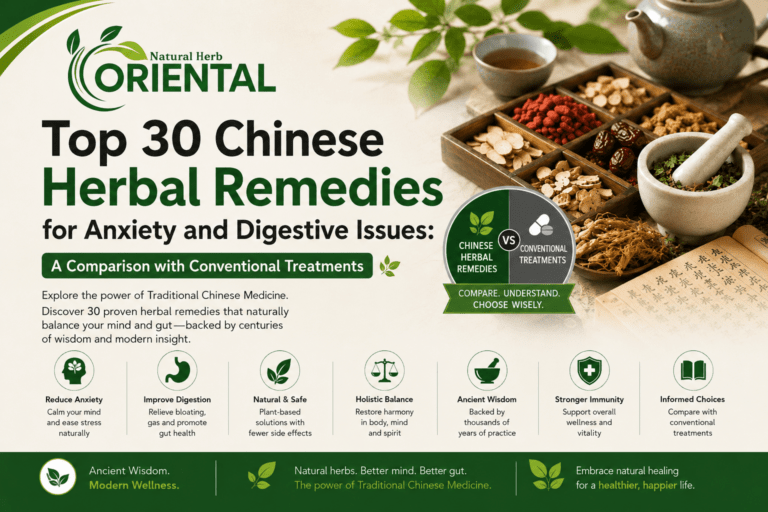
Top 30 Chinese Herbal Remedies for Anxiety and Digestive Issues: A Comparison with Conventional Treatments
Introduction to Chinese Herbal Medicine
Anxiety and digestive issues often occur together. Stress may contribute to nausea, bloating, indigestion, changes in appetite, constipation, diarrhoea or irritable bowel symptoms. At the same time, ongoing digestive discomfort can negatively affect sleep, mood and quality of life.
Conventional medicine frequently manages these concerns with condition-specific treatments such as psychotherapy, antidepressants, antacids, acid-reducing medicines, laxatives or antispasmodics. Traditional Chinese Medicine, commonly known as TCM, takes a broader approach by examining patterns involving digestion, sleep, energy, emotions and lifestyle.
Chinese herbal medicine does not usually rely on one herb for one symptom. A qualified practitioner may combine several ingredients into a personalized formula based on the individual’s overall health pattern.
How Anxiety and Digestion Are Connected in TCM
Traditional Chinese Medicine describes health through concepts such as Qi, Blood, Yin, Yang and the functional relationships between organ systems. Emotional stress may disrupt the smooth movement of Qi, while weak digestive function may contribute to fatigue, poor concentration and emotional sensitivity.
Common signs that a TCM practitioner may assess include:
- Stress-related bloating or abdominal discomfort
- Poor appetite during anxious periods
- Nausea, reflux or a sensation of tightness
- Loose stools or constipation
- Difficulty falling or staying asleep
- Fatigue, irritability or excessive worrying
- Headaches and muscular tension
Because people can experience similar symptoms for different reasons, professional TCM treatment is individualized.
Top 30 Chinese Herbal Remedies for Anxiety and Digestive Issues
Chinese Herbs Traditionally Used for Anxiety and Sleep
1. Suan Zao Ren – Ziziphus Seed
Traditionally used to calm the mind and support restful sleep, particularly when anxiety is accompanied by irritability or frequent waking.
2. Bai Zi Ren – Biota Seed
Used in TCM formulas for restlessness, poor sleep and emotional uneasiness. It may also support bowel regularity in certain patterns.
3. He Huan Pi – Albizia Bark
Often included in formulas designed to ease emotional tension, irritability and stress-related discomfort.
4. He Huan Hua – Albizia Flower
Traditionally associated with emotional balance and calming support during periods of stress.
5. Yuan Zhi – Polygala Root
Used to support mental clarity, memory and emotional calmness in appropriately selected formulas.
6. Fu Shen
A traditional ingredient used for restlessness, excessive worrying and sleep difficulties.
7. Long Yan Rou – Longan Fruit
Commonly used when anxiety occurs alongside fatigue, poor sleep, forgetfulness or reduced appetite.
8. Wu Wei Zi – Schisandra Fruit
Traditionally used to support resilience, concentration, sleep and the body’s response to physical or emotional strain.
9. Ling Zhi – Reishi Mushroom
Used in Chinese medicine to support calmness, energy, sleep and general wellbeing.
10. Ye Jiao Teng – Fleeceflower Vine
Frequently included in formulas for insomnia, restlessness and difficulty settling the mind at night.
Chinese Herbs Traditionally Used for Digestion
11. Chen Pi – Aged Tangerine Peel
Supports digestive movement and is traditionally used for bloating, fullness, nausea and reduced appetite.
12. Ban Xia – Pinellia Rhizome
A professionally processed herb used in formulas for nausea, vomiting, phlegm and digestive disharmony. It should not be self-administered.
13. Hou Po – Magnolia Bark
Traditionally used for abdominal fullness, gas, bloating and a feeling of pressure in the digestive system.
14. Sha Ren – Amomum Fruit
Used to support appetite and relieve nausea, abdominal discomfort and sluggish digestion.
15. Bai Zhu – Atractylodes Rhizome
Often prescribed for weak digestion, fatigue, loose stools and poor appetite.
16. Fu Ling – Poria
Supports digestion and fluid balance while also being used in formulas for restlessness and poor sleep.
17. Dang Shen – Codonopsis Root
Traditionally used to support digestive energy, appetite and recovery from fatigue.
18. Shan Yao – Chinese Yam
Used to strengthen digestion and support people experiencing weakness, loose stools or reduced appetite.
19. Mu Xiang – Aucklandia Root
Traditionally included in formulas for abdominal pain, bloating and digestive stagnation.
20. Shen Qu – Medicated Leaven
Used to support the digestion of food and relieve heaviness, fullness or discomfort after eating.
Chinese Herbs That May Support Both Stress and Digestion
21. Chai Hu – Bupleurum Root
Commonly used when emotional stress is associated with digestive discomfort, irritability or tension.
22. Bai Shao – White Peony Root
Traditionally used for muscular tension, abdominal discomfort and emotional imbalance.
23. Gan Cao – Licorice Root
Frequently used to harmonize herbal formulas and support digestive comfort. It may not be suitable for everyone, especially in large amounts or prolonged use.
24. Sheng Jiang – Fresh Ginger
Supports digestion, helps manage nausea and is commonly used to warm and harmonize herbal formulas.
25. Da Zao – Chinese Jujube
Traditionally used to nourish the body, support digestion and soften the effects of stronger herbs.
26. Bo He – Field Mint
Used for stress-related tension, headaches and digestive discomfort associated with constrained Qi.
27. Xiang Fu – Cyperus Rhizome
Traditionally prescribed for emotional stress, abdominal discomfort, bloating and menstrual-related tension.
28. Fo Shou – Finger Citron
Supports the movement of Qi and may be used for stress-related indigestion, chest tightness and bloating.
29. Mei Gui Hua – Rose Flower
Traditionally used for mild emotional tension and digestive discomfort linked with stress.
30. Huang Qi – Astragalus Root
Used to support energy, digestive strength and general resilience when fatigue or weakness is present.
Chinese Herbal Medicine vs Conventional Treatments
| Area | Chinese Herbal Medicine | Conventional Treatment |
|---|---|---|
| Approach | Pattern-based and individualized | Diagnosis and symptom-specific |
| Anxiety Care | Herbal formulas, acupuncture and lifestyle guidance | Psychotherapy, medication or combined care |
| Digestive Care | Formulas selected according to the digestive pattern | Diet changes, testing and condition-specific medication |
| Strength | Whole-person and personalized perspective | Clear diagnostic pathways and evidence-based acute care |
| Important Limitation | Herb quality, correct selection and interactions require professional oversight | Some medicines may cause side effects or may not address every lifestyle factor |
These approaches do not always need to compete. Integrative care may combine appropriate medical assessment with professionally supervised TCM treatment, nutrition, stress management and healthy lifestyle changes.
Effectiveness, Safety and Professional Guidance
Chinese herbal remedies are biologically active substances. “Natural” does not automatically mean risk-free. Herbs may cause allergic reactions, affect blood pressure or interact with anticoagulants, antidepressants, diabetes medication and other prescription treatments.
Speak with a qualified healthcare professional before using herbs if you:
- Take prescription medication
- Are pregnant or breastfeeding
- Have liver, kidney, heart or blood pressure problems
- Are preparing for surgery
- Experience severe or persistent anxiety
- Have unexplained weight loss, bleeding, severe abdominal pain or ongoing vomiting
Seek urgent medical support for suicidal thoughts, chest pain, vomiting blood, black stools, severe dehydration or sudden intense abdominal pain.
Why Choose The Oriental Herb?
At The Oriental Herb, Traditional Chinese Medicine is approached through personalized care. Rather than recommending the same product for everyone, a practitioner considers your symptoms, digestion, sleep, emotional health, lifestyle and medical history.
Your treatment plan may include a customized Chinese herbal formula, dietary recommendations, lifestyle guidance or other TCM services where appropriate.
Looking for Personalized TCM Support?
Speak with The Oriental Herb to explore a professionally guided approach to anxiety, digestive discomfort and overall wellbeing.
❓ Frequently Asked Questions
Can Chinese herbs help with anxiety?
Certain herbs are traditionally used to support calmness, sleep and emotional balance. However, the appropriate formula depends on the individual’s symptoms and should be selected by a qualified practitioner.
Can anxiety cause digestive problems?
Yes. Stress can influence gut movement, appetite, acid production and sensitivity, contributing to nausea, bloating, diarrhoea, constipation or indigestion.
Can Chinese herbal medicine help IBS?
TCM practitioners may use individualized herbal formulas to support people experiencing IBS-related symptoms. A medical diagnosis remains important because similar symptoms can have different causes.
Can I take Chinese herbs with antidepressants?
Do not combine herbs with antidepressants without professional guidance. Some herbs may influence medication effects or increase the risk of unwanted interactions.
How long does Chinese herbal treatment take?
The timeframe varies according to the condition, symptom severity, general health and treatment consistency. Chronic concerns may require a longer, closely monitored plan.
Are Chinese herbs safer than conventional medicine?
Neither approach is automatically safer in every situation. Safety depends on correct diagnosis, product quality, dosage, interactions and professional supervision.