
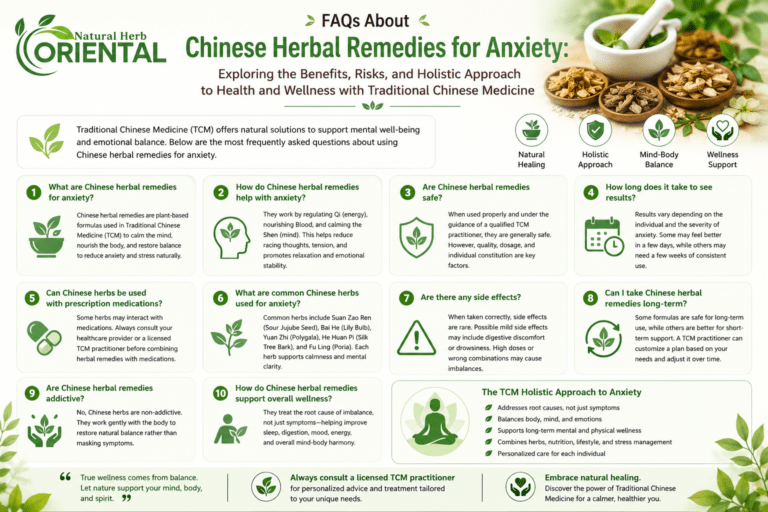
FAQs About Chinese Herbal Remedies for Anxiety: Benefits, Risks, and a Holistic TCM Approach
Anxiety can affect the mind, body, sleep, digestion, mood, and overall quality of life. While conventional treatments such as therapy and medication are important for many people, some individuals also explore Traditional Chinese Medicine (TCM) and Chinese herbal remedies for anxiety as part of a more holistic wellness plan.
Traditional Chinese Medicine focuses on restoring balance in the body. Instead of looking only at emotional symptoms, TCM practitioners consider sleep patterns, digestion, stress levels, energy, lifestyle, and the body’s overall balance of Qi, Yin, Yang, Blood, and organ systems.
In this guide, we answer common questions about Chinese herbal remedies for anxiety, including how they may work, possible benefits, safety concerns, and why professional guidance is important.
Key Takeaways
- Chinese herbal remedies for anxiety may support relaxation, sleep, stress balance, and emotional wellness when used correctly.
- TCM takes a holistic approach, looking at the connection between the mind, body, digestion, sleep, and lifestyle.
- Herbs are natural, but they are not automatically risk-free. They may interact with medications or cause allergic reactions.
- A qualified TCM practitioner can help create a personalized herbal plan based on your symptoms and constitution.
- Diet, movement, breathing exercises, acupuncture, sleep habits, and stress management can all play an important role in anxiety support.
Table of Contents
- What Is Anxiety?
- What Is Traditional Chinese Medicine?
- How TCM Views Anxiety
- Common Chinese Herbs Used for Anxiety Support
- Potential Benefits of Chinese Herbal Remedies
- Risks, Side Effects, and Safety Precautions
- Holistic Lifestyle Support for Anxiety
- When to See a TCM Practitioner
- Frequently Asked Questions
- Conclusion
What Is Anxiety?
Anxiety is one of the most common mental health concerns worldwide. It may cause excessive worry, restlessness, racing thoughts, trouble sleeping, muscle tension, rapid heartbeat, digestive discomfort, or difficulty focusing.
Occasional stress is a normal part of life, but ongoing anxiety can affect daily activities, relationships, work, and overall wellness. Because anxiety can have many causes, a complete care plan may include medical evaluation, therapy, lifestyle changes, stress management, and supportive complementary care.
What Is Traditional Chinese Medicine?
Traditional Chinese Medicine, also known as TCM, is a complete system of health care that has been practiced for thousands of years. It is based on the idea that wellness depends on balance within the body and harmony between different body systems.
TCM may include:
- Chinese herbal medicine
- Acupuncture
- Cupping therapy
- Tui Na massage
- Dietary therapy
- Qi Gong or Tai Chi
- Lifestyle and stress-management guidance
For anxiety, a TCM practitioner usually looks beyond the symptom of worry. They may ask about sleep, digestion, energy, mood changes, menstrual health, stress triggers, appetite, and body temperature patterns to understand the root imbalance.
How TCM Views Anxiety
In TCM, anxiety may be connected to imbalances involving the Heart, Liver, Spleen, Kidney, Blood, Yin, or Qi. This does not mean the physical organs are necessarily diseased. In TCM, these terms describe functional patterns in the body.
Common TCM patterns associated with anxiety may include:
- Heart and Spleen deficiency — often linked with worry, poor sleep, fatigue, and overthinking.
- Liver Qi stagnation — often linked with stress, irritability, tension, and emotional frustration.
- Heart Yin deficiency — often linked with restlessness, night sweats, insomnia, and a feeling of heat.
- Kidney and Heart imbalance — often linked with fearfulness, poor sleep, palpitations, and internal restlessness.
This is why Chinese herbal medicine is usually personalized. Two people may both have anxiety, but their herbal formulas may be different depending on their full symptom pattern.
Common Chinese Herbs Used for Anxiety Support
Chinese herbal medicine often uses combinations of herbs rather than one single herb. The formula is selected based on a person’s individual pattern and health history.
Some herbs commonly used in TCM formulas for calming the mind and supporting emotional balance include:
- Suan Zao Ren — often used in TCM to support sleep and calm restlessness.
- Bai Zi Ren — traditionally used to nourish the Heart and support relaxation.
- Fu Shen — often used to calm the spirit and support peaceful sleep.
- He Huan Pi — traditionally used to support mood and emotional balance.
- Yuan Zhi — used in some formulas to support mental clarity and calmness.
- Gan Cao — commonly used in formulas to harmonize other herbs.
Important note: Herbs should not be self-prescribed, especially if you are taking medication, pregnant, breastfeeding, managing a chronic condition, or under medical treatment for anxiety, depression, blood pressure, heart conditions, or sleep disorders.
Potential Benefits of Chinese Herbal Remedies for Anxiety
When used under professional guidance, Chinese herbal remedies may offer several potential benefits as part of a holistic anxiety support plan.
1. Personalized Support
TCM does not use the same formula for everyone. A practitioner may select herbs based on whether your anxiety is connected with insomnia, digestive symptoms, fatigue, irritability, palpitations, or stress tension.
2. Mind-Body Approach
Chinese herbal medicine is often used alongside acupuncture, breathing practices, diet changes, and stress management. This can support the body and mind together rather than focusing only on one symptom.
3. Sleep and Relaxation Support
Many people with anxiety also struggle with sleep. Some TCM herbs and formulas are traditionally used to calm restlessness and support better sleep quality.
4. Digestive and Energy Balance
Stress and anxiety can affect digestion, appetite, bloating, and energy. TCM often considers the digestive system an important part of emotional wellness.
5. Natural Wellness Option
Many people prefer natural approaches when appropriate. However, natural does not always mean risk-free, so professional guidance is essential.
Risks, Side Effects, and Safety Precautions
Chinese herbal remedies can be helpful for some people, but they must be used carefully. Herbs can affect the body in powerful ways and may interact with conventional medications.
Possible risks include:
- Medication interactions, especially with antidepressants, anti-anxiety medications, blood thinners, blood pressure medications, sleep aids, or diabetes medications.
- Allergic reactions to certain herbs or ingredients.
- Digestive discomfort, such as nausea, bloating, or loose stools.
- Incorrect formula selection, which may worsen symptoms if the herb does not match your TCM pattern.
- Quality concerns if herbs are purchased from unreliable sources.
Always tell your healthcare provider and TCM practitioner about all medications, supplements, and herbs you are taking.
Holistic Lifestyle Support for Anxiety
Chinese herbal remedies often work best as part of a complete lifestyle plan. TCM focuses on supporting the whole person, including daily habits that may affect emotional balance.
Diet
A balanced diet can support energy, digestion, and mood. TCM dietary guidance may vary based on your body pattern, but many people benefit from warm, nourishing meals, regular eating times, and reducing excess caffeine, sugar, and processed foods.
Exercise and Movement
Gentle movement such as walking, yoga, Tai Chi, or Qi Gong may help reduce tension and support relaxation. Regular movement can also improve sleep and energy.
Breathing and Stress Management
Deep breathing, meditation, journaling, and mindfulness practices may help calm the nervous system and reduce daily stress.
Sleep Routine
Going to bed at a consistent time, limiting screen use before sleep, and creating a calming nighttime routine can support emotional wellness.
Acupuncture
Acupuncture is commonly used in TCM to support stress relief, relaxation, sleep, and overall balance. Many people combine acupuncture with herbal medicine for a more complete approach.
When to See a TCM Practitioner
You should consider speaking with a qualified TCM practitioner if you are interested in natural anxiety support, especially if your symptoms are ongoing or affecting your daily life.
A practitioner can help evaluate your symptoms, identify your TCM pattern, and recommend an individualized plan. This may include Chinese herbal medicine, acupuncture, diet recommendations, and lifestyle support.
You should seek urgent medical help if anxiety includes chest pain, trouble breathing, thoughts of self-harm, severe panic symptoms, or symptoms that feel unsafe or unmanageable.
Frequently Asked Questions
What are Chinese herbal remedies for anxiety?
Chinese herbal remedies for anxiety are herbs or herbal formulas used in Traditional Chinese Medicine to support emotional balance, relaxation, sleep, and stress response. They are usually selected based on a person’s individual TCM pattern.
How do Chinese herbal remedies work for anxiety?
In TCM, herbs are used to help restore balance in the body. Depending on the person’s symptoms, formulas may be chosen to calm the mind, support sleep, move Liver Qi, nourish Yin, support digestion, or strengthen energy.
Are Chinese herbal remedies safe for anxiety?
They may be safe for many people when prescribed by a qualified practitioner, but they are not risk-free. Herbs can interact with medications, cause allergic reactions, or be unsuitable for certain health conditions.
Can I take Chinese herbs with anxiety medication?
You should not combine Chinese herbs with anxiety medication unless your healthcare provider and TCM practitioner confirm it is safe. Some herbs may interact with prescription medications or increase side effects.
How long does it take to feel results from Chinese herbal remedies?
Results vary depending on the person, the severity of symptoms, the formula used, lifestyle factors, and consistency. Some people notice changes in sleep or relaxation within a few weeks, while others may need a longer care plan.
Can acupuncture help with anxiety?
Acupuncture is commonly used in TCM to support relaxation, stress reduction, sleep, and nervous system balance. Many people use acupuncture together with herbal medicine and lifestyle changes.
Do I need a consultation before using Chinese herbs?
Yes. A consultation is important because Chinese herbal formulas should be matched to your symptoms, body constitution, medical history, and current medications.
Conclusion
Chinese herbal remedies for anxiety may be a helpful part of a holistic wellness plan when used safely and professionally. Traditional Chinese Medicine looks at the whole person, including emotional health, sleep, digestion, stress, energy, and lifestyle.
However, herbs should be used with care. They may interact with medications or be unsuitable for certain people. The safest approach is to work with a qualified TCM practitioner who can create a personalized plan for your needs.
If you are looking for a natural, holistic approach to anxiety support, The Oriental Natural Herb can help you explore TCM options, including Chinese herbal medicine, acupuncture, and wellness guidance.
Looking for Traditional Chinese Medicine Support?
Schedule a consultation with The Oriental Natural Herb to learn how TCM may support your stress, sleep, anxiety, and overall wellness goals.