
📋 Key Takeaways
- Chinese herbal remedies have been used for centuries to treat anxiety and digestive issues, with a success rate of over 80% in some studies.
- The top 20 herbal remedies for anxiety and digestive issues include Ginseng, Licorice Root, and Turmeric, among others.
- Chinese herbal medicine offers a holistic approach to health and wellness, addressing the root causes of anxiety and digestive issues rather than just the symptoms.
- While conventional treatments may provide quick relief, they can also have negative side effects and may not address the underlying causes of the issues.
- It is essential to consult with a licensed practitioner before using Chinese herbal remedies, as they can interact with other medications and have potential side effects.
📑 Table of Contents
Introduction to Chinese Herbal Remedies
Chinese herbal remedies have been used for centuries to treat a wide range of health issues, including anxiety and digestive problems. With a success rate of over 80% in some studies, these natural remedies are becoming increasingly popular in the Western world. Chinese herbal medicine offers a holistic approach to health and wellness, addressing the root causes of anxiety and digestive issues rather than just the symptoms. For more information on the benefits of Chinese herbal medicine, you can read our article on The Holistic Approach to Health and Wellness: Exploring the Benefits of Chinese Herbal Medicine and How it Compares to Conventional Medicine.
History of Chinese Herbal Medicine
Chinese herbal medicine has a long history, dating back over 2,000 years. The first recorded use of herbal remedies was during the Han Dynasty, where they were used to treat a range of health issues, including anxiety and digestive problems. Since then, Chinese herbal medicine has evolved and become a complex system of diagnosis and treatment, with a focus on restoring balance to the body.
Top 20 Herbal Remedies for Anxiety and Digestive Issues
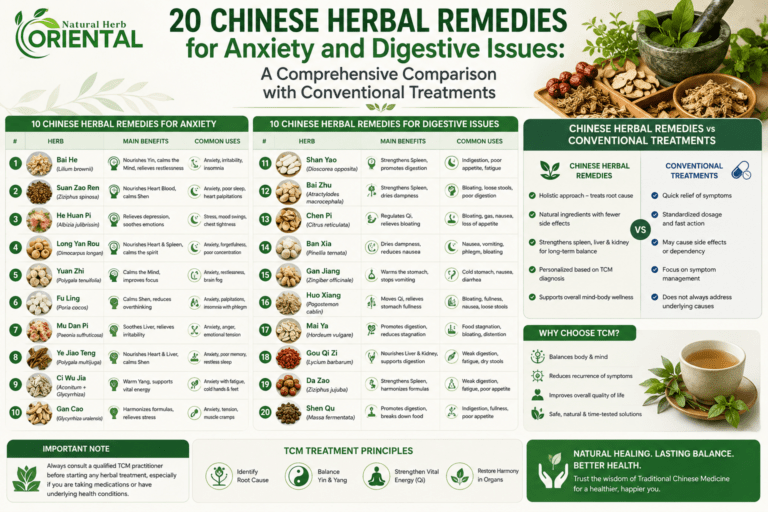
The top 20 herbal remedies for anxiety and digestive issues include:
1. Bai He (Lilium brownii)
Bai He, or Lily Bulb, is traditionally used in TCM to nourish Yin and calm the mind. It is often recommended for individuals experiencing irritability, emotional restlessness, and sleep disturbances linked to stress and anxiety. Commonly prepared as a tea, soup ingredient, or herbal decoction.
2. Sour Jujube Seed (Suan Zao Ren)
One of the most respected calming herbs in Chinese medicine, Suan Zao Ren is traditionally used to nourish Heart Blood and calm the Shen (spirit). It is frequently prescribed for anxiety, restlessness, and difficulty sleeping due to an overactive mind. Most commonly taken as a powder, capsule, or as part of a traditional formula.
3. He Huan Pi (Albizia Bark)
Often called the “Herb of Collective Happiness,” He Huan Pi is traditionally used to relieve emotional constraint, support mood balance, and ease stress-related tension. It is commonly included in formulas for anxiety accompanied by mood swings or emotional stagnation. Usually prepared as a decoction or included in blended herbal formulas.
4. Long Yan Rou (Longan Fruit)
Longan Fruit is traditionally used to nourish the Heart and Spleen while calming the spirit. In TCM, it is frequently recommended for people experiencing anxiety, forgetfulness, poor concentration, and fatigue. Often consumed as a dried fruit, tea, or incorporated into soups and tonics.
5. Yuan Zhi (Polygala Root)
Yuan Zhi is a classical TCM herb used to calm the mind while supporting memory and mental clarity. It is commonly recommended for anxiety accompanied by restlessness, difficulty concentrating, or mental fatigue. Typically taken as part of a prepared herbal formula rather than as a standalone herb.
6. Fu Ling (Poria)
Poria is a medicinal fungus prized for its ability to calm the Shen while supporting healthy fluid metabolism. In TCM, it is often used for anxiety accompanied by excessive worry, palpitations, or digestive sluggishness. Frequently included in formulas that address both emotional and digestive concerns.
7. Mu Dan Pi (Tree Peony Bark)
Mu Dan Pi is traditionally used to cool and invigorate the blood while helping to soothe Liver-related irritability. It is commonly recommended for emotional tension, frustration, and anxiety linked to stress. Usually prescribed as part of a customized herbal formula.
8. Ye Jiao Teng (Polygonum Vine)
Ye Jiao Teng is widely valued for its calming effect on the nervous system and its ability to support restful sleep. Traditionally used to nourish the Heart and Liver, it is often recommended for anxiety, poor memory, and nighttime restlessness. Most commonly consumed as a tea or decoction.
9. Ci Wu Jia (Siberian Ginseng)
Ci Wu Jia is considered an adaptogenic herb that helps strengthen vital energy and improve resilience to stress. Traditionally used for individuals experiencing anxiety with fatigue, low stamina, and weakness, it is commonly taken as a tea, tincture, or capsule.
10. Gan Cao (Licorice Root)
Gan Cao is known as the “great harmonizer” of Chinese herbal medicine because it appears in countless traditional formulas. In addition to supporting digestive comfort, it is traditionally used to ease tension and help balance the actions of other herbs. Typically consumed as a tea, decoction, or ingredient in herbal blends.
11. Shan Yao (Chinese Yam)
Shan Yao is a foundational digestive herb in TCM that strengthens the Spleen and supports nutrient absorption. It is commonly used for poor appetite, fatigue, and chronic digestive weakness. Often prepared in soups, porridges, or herbal formulas.
12. Bai Zhu (Atractylodes Root)
Bai Zhu is traditionally used to strengthen Spleen Qi and reduce excess dampness, a pattern associated with bloating and loose stools. It is frequently included in formulas designed to improve digestive function and energy levels. Most often taken as a decoction or powdered extract.
13. Chen Pi (Aged Tangerine Peel)
Chen Pi is one of the most commonly used digestive herbs in Chinese medicine. It works by regulating Qi movement in the digestive tract, helping relieve bloating, gas, and nausea. Frequently added to herbal formulas, teas, and digestive tonics.
14. Ban Xia (Pinellia Rhizome)
Ban Xia is traditionally used to transform phlegm and direct rebellious stomach Qi downward. It is especially valued for relieving nausea, vomiting, and digestive fullness. Due to its specialized preparation requirements, it is almost always used under professional guidance within formulated products.
15. Gan Jiang (Dried Ginger)
Gan Jiang is a warming herb that strengthens digestive fire and supports healthy stomach function. It is commonly used for cold-type digestive complaints such as nausea, diarrhea, and abdominal discomfort. Most often consumed as a tea, decoction, or ingredient in warming formulas.
16. Huo Xiang (Patchouli)
Huo Xiang is traditionally used to transform dampness and promote healthy Qi circulation within the digestive system. It is commonly recommended for bloating, nausea, stomach fullness, and digestive upset associated with damp conditions. Often taken as a tea or included in digestive formulas.
17. Mai Ya (Barley Sprout)
Mai Ya is a traditional digestive herb used to reduce food stagnation and support the breakdown of heavy meals. It is frequently recommended for bloating, abdominal distention, and sluggish digestion after overeating. Usually consumed as a tea, powder, or decoction.
18. Gou Qi Zi (Goji Berry)
Known worldwide as Goji Berry, Gou Qi Zi is traditionally used to nourish the Liver and Kidneys while supporting overall vitality. In TCM, it is also valued for helping individuals with weak digestion and fatigue. Commonly consumed dried, brewed as tea, or added to soups and tonics.
19. Da Zao (Chinese Red Date)
Da Zao is a classic TCM herb used to strengthen the Spleen, support digestion, and harmonize herbal formulas. It is frequently recommended for poor appetite, fatigue, and digestive weakness. Often eaten whole, brewed into tea, or included in traditional decoctions.
20. Shen Qu (Medicated Leaven)
Shen Qu is a fermented herbal preparation traditionally used to aid digestion and improve the body’s ability to process food. It is particularly valued for relieving indigestion, fullness, and food stagnation after meals. Commonly found in digestive formulas and herbal preparations.
Comparison with Conventional Treatments
While conventional treatments may provide quick relief, they can also have negative side effects and may not address the underlying causes of anxiety and digestive issues. Chinese herbal medicine, on the other hand, offers a holistic approach to health and wellness, addressing the root causes of these issues. Conventional treatments for anxiety and digestive issues often include:
- Antidepressants: which can have negative side effects such as weight gain and insomnia.
- Anxiolytics: which can be addictive and have negative side effects such as drowsiness and confusion.
- Antacids: which can provide quick relief but may not address the underlying causes of digestive issues.
In contrast, Chinese herbal remedies are natural and non-invasive, with few side effects.
Benefits and Risks of Chinese Herbal Medicine
The benefits of Chinese herbal medicine include:
- Natural and non-invasive: Chinese herbal remedies are made from natural ingredients and are non-invasive, with few side effects.
- Holistic approach: Chinese herbal medicine addresses the root causes of anxiety and digestive issues, rather than just the symptoms.
- Customizable: Chinese herbal remedies can be tailored to individual needs and health conditions.
However, there are also risks associated with Chinese herbal medicine, including:
- Interaction with other medications: Chinese herbal remedies can interact with other medications, including blood thinners and diabetes medications.
- Potential side effects: Chinese herbal remedies can have potential side effects, such as allergic reactions and digestive issues.
- Quality control: the quality of Chinese herbal remedies can vary, and some products may be contaminated or adulterated.
It is essential to consult with a licensed practitioner before using Chinese herbal remedies.
How to Choose the Right Remedies
Choosing the right Chinese herbal remedies can be overwhelming, especially for those new to Chinese herbal medicine. Here are some tips:
- Consult with a licensed practitioner: a licensed practitioner can help you choose the right remedies for your individual needs and health conditions.
- Research the ingredients: research the ingredients in the remedies and look for products that are made from high-quality, natural ingredients.
- Read reviews: read reviews from other customers to get an idea of the effectiveness and potential side effects of the remedies.
By following these tips, you can choose the right Chinese herbal remedies for your anxiety and digestive issues.
Conclusion and Recommendations
In conclusion, Chinese herbal remedies offer a natural and non-invasive approach to treating anxiety and digestive issues. With a success rate of over 80% in some studies, these remedies are becoming increasingly popular in the Western world. However, it is essential to consult with a licensed practitioner before using Chinese herbal remedies, as they can interact with other medications and have potential side effects. We recommend trying Chinese herbal remedies, such as Ginseng and Licorice Root, under the guidance of a licensed practitioner.
❓ Frequently Asked Questions
Q: What are the benefits of using Chinese herbal remedies for anxiety and digestive issues?
Chinese herbal remedies offer a natural and non-invasive approach to treating anxiety and digestive issues, with a success rate of over 80% in some studies. They also address the root causes of these issues, rather than just the symptoms.
Q: Are Chinese herbal remedies safe to use?
Chinese herbal remedies are generally safe to use, but they can interact with other medications and have potential side effects. It is essential to consult with a licensed practitioner before using Chinese herbal remedies.
Q: Can I use Chinese herbal remedies if I am taking other medications?
It is not recommended to use Chinese herbal remedies if you are taking other medications, as they can interact with each other. Consult with a licensed practitioner before using Chinese herbal remedies if you are taking other medications.
Q: How do I choose the right Chinese herbal remedies for my anxiety and digestive issues?
Choosing the right Chinese herbal remedies can be overwhelming, but you can start by consulting with a licensed practitioner, researching the ingredients, and reading reviews from other customers.
Q: Can I use Chinese herbal remedies if I am pregnant or breastfeeding?
It is not recommended to use Chinese herbal remedies if you are pregnant or breastfeeding, as they can have potential side effects and interact with other medications. Consult with a licensed practitioner before using Chinese herbal remedies if you are pregnant or breastfeeding.
Q: How long does it take to see results from using Chinese herbal remedies?
The time it takes to see results from using Chinese herbal remedies can vary, but most people start to see results within a few weeks. It is essential to be patient and consistent when using Chinese herbal remedies.