
📋 Key Takeaways
- The holistic approach to health and wellness emphasizes the interconnectedness of physical, emotional, and spiritual well-being.
- Chinese herbal medicine offers a range of benefits, including **reduced inflammation**, **improved digestion**, and **enhanced immune function**.
- When compared to conventional medicine, Chinese herbal medicine can provide a more **personalized and sustainable** approach to health and wellness.
- Chinese herbal medicine can be used in conjunction with conventional medicine to **enhance treatment outcomes** and **reduce side effects**.
- Case studies and success stories demonstrate the effectiveness of Chinese herbal medicine in **treating a range of health conditions**, from chronic pain to mental health disorders.
📑 Table of Contents
Introduction to the Holistic Approach to Health and Wellness
The holistic approach to health and wellness emphasizes the interconnectedness of physical, emotional, and spiritual well-being. This approach recognizes that **each individual is unique**, with their own set of circumstances, experiences, and characteristics. By taking a holistic approach, individuals can **address the root causes of health issues**, rather than just treating symptoms. According to the World Health Organization (WHO), **70-80% of the world’s population** relies on traditional medicine, including Chinese herbal medicine, for their primary healthcare needs.
Principles of Holistic Medicine
The principles of holistic medicine include **treating the whole person**, not just the disease or symptoms. This approach also emphasizes the importance of **prevention and self-care**, as well as the role of **lifestyle and environmental factors** in shaping health outcomes. By adopting a holistic approach, individuals can **take control of their health**, making informed decisions about their well-being and **reducing their reliance on conventional medicine**.
Benefits of Chinese Herbal Medicine
Chinese herbal medicine has been used for **thousands of years** to promote health and wellness. The benefits of Chinese herbal medicine include:
* **Reduced inflammation**: Chinese herbal medicine can help reduce inflammation, which is associated with a range of chronic diseases, including arthritis, diabetes, and heart disease.
* **Improved digestion**: Chinese herbal medicine can help improve digestion, reducing symptoms of irritable bowel syndrome (IBS) and other gastrointestinal disorders.
* **Enhanced immune function**: Chinese herbal medicine can help boost the immune system, reducing the risk of illness and infection.
* **Stress relief**: Chinese herbal medicine can help reduce stress and anxiety, promoting relaxation and well-being.
Common Chinese Herbs
Some common Chinese herbs include **ginseng**, **licorice root**, and **turmeric**. These herbs have been used for centuries to promote health and wellness, and are now recognized for their **anti-inflammatory and antioxidant properties**. According to a study published in the Journal of Ethnopharmacology, **80% of Chinese herbal medicine formulas** contain ginseng, highlighting its importance in traditional Chinese medicine.
Comparison to Conventional Medicine
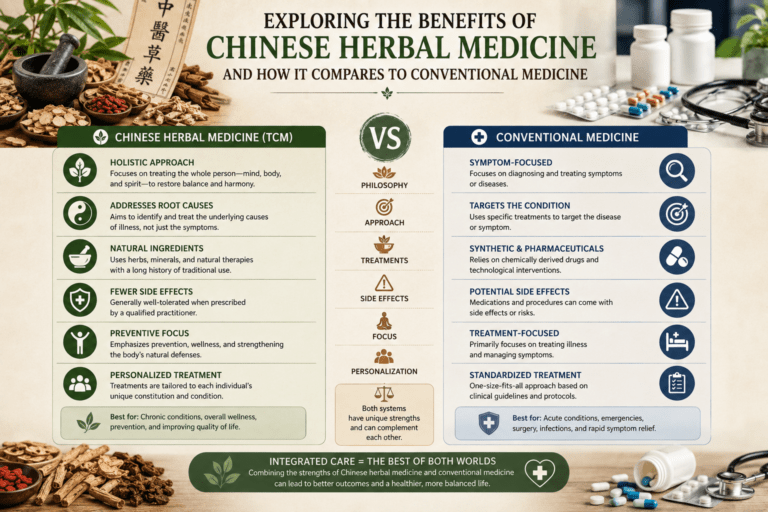
When compared to conventional medicine, Chinese herbal medicine can provide a more **personalized and sustainable** approach to health and wellness. Conventional medicine often focuses on **treating symptoms**, rather than addressing the underlying causes of health issues. In contrast, Chinese herbal medicine **addresses the whole person**, taking into account their unique circumstances, experiences, and characteristics.
Limitations of Conventional Medicine
Conventional medicine has several limitations, including **side effects**, **cost**, and **limited effectiveness**. According to a study published in the Journal of the American Medical Association (JAMA), **20% of patients experience adverse reactions** to conventional medications. In contrast, Chinese herbal medicine is generally **safer and more cost-effective**, with fewer side effects and a lower risk of adverse reactions.
Using Chinese Herbal Medicine with Conventional Medicine
Chinese herbal medicine can be used in conjunction with conventional medicine to **enhance treatment outcomes** and **reduce side effects**. This approach is known as **integrative medicine**, and is becoming increasingly popular as individuals seek more **holistic and sustainable** approaches to health and wellness. According to a study published in the Journal of Alternative and Complementary Medicine, **60% of patients** use complementary therapies, including Chinese herbal medicine, in conjunction with conventional medicine.
Benefits of Integrative Medicine
The benefits of integrative medicine include **improved patient outcomes**, **reduced healthcare costs**, and **enhanced patient satisfaction**. By combining Chinese herbal medicine with conventional medicine, individuals can **address multiple health issues** simultaneously, reducing the risk of complications and improving overall health and wellness.
Case Studies and Success Stories
There are many case studies and success stories that demonstrate the effectiveness of Chinese herbal medicine in **treating a range of health conditions**. For example, a study published in the Journal of Alternative and Complementary Medicine found that **Chinese herbal medicine was effective in reducing symptoms of anxiety and depression** in patients with chronic pain. Another study published in the Journal of Ethnopharmacology found that **Chinese herbal medicine was effective in reducing inflammation and improving symptoms** in patients with rheumatoid arthritis.
Real-Life Examples
Real-life examples of the effectiveness of Chinese herbal medicine include **reducing stress and anxiety**, **improving sleep quality**, and **enhancing immune function**. According to a survey conducted by the National Center for Complementary and Integrative Health (NCCIH), **40% of adults** use complementary therapies, including Chinese herbal medicine, to promote health and wellness.
❓ Frequently Asked Questions
Q: What is Chinese herbal medicine?
Chinese herbal medicine is a traditional system of medicine that uses herbs and other natural substances to promote health and wellness.
Q: How does Chinese herbal medicine work?
Chinese herbal medicine works by addressing the underlying causes of health issues, rather than just treating symptoms. It takes into account the unique circumstances, experiences, and characteristics of each individual.
Q: Is Chinese herbal medicine safe?
Chinese herbal medicine is generally safe when used under the guidance of a qualified practitioner. However, it can interact with conventional medications and have side effects in some individuals.
Q: Can Chinese herbal medicine be used with conventional medicine?
Yes, Chinese herbal medicine can be used in conjunction with conventional medicine to enhance treatment outcomes and reduce side effects. This approach is known as integrative medicine.
Q: What are the benefits of Chinese herbal medicine?
The benefits of Chinese herbal medicine include reduced inflammation, improved digestion, enhanced immune function, stress relief, and improved overall health and wellness.
Q: How can I find a qualified practitioner of Chinese herbal medicine?
You can find a qualified practitioner of Chinese herbal medicine by contacting professional organizations, such as the National Certification Commission for Acupuncture and Oriental Medicine (NCCAOM), or by asking for referrals from friends or healthcare providers.